Launch Boosts European Earth Monitoring and Connectivity
Why It Matters
The launch expands Europe’s sovereign Earth‑observation and data‑link capacity, bolstering disaster response, environmental monitoring and economic resilience across member states.
Key Takeaways
- •Seven IRIDE HEO satellites raise Italy's constellation to 31.
- •Greece's Hellenic Fire System adds four wildfire‑monitoring satellites.
- •Two CubeSats test 1 Gbps laser links for space communications.
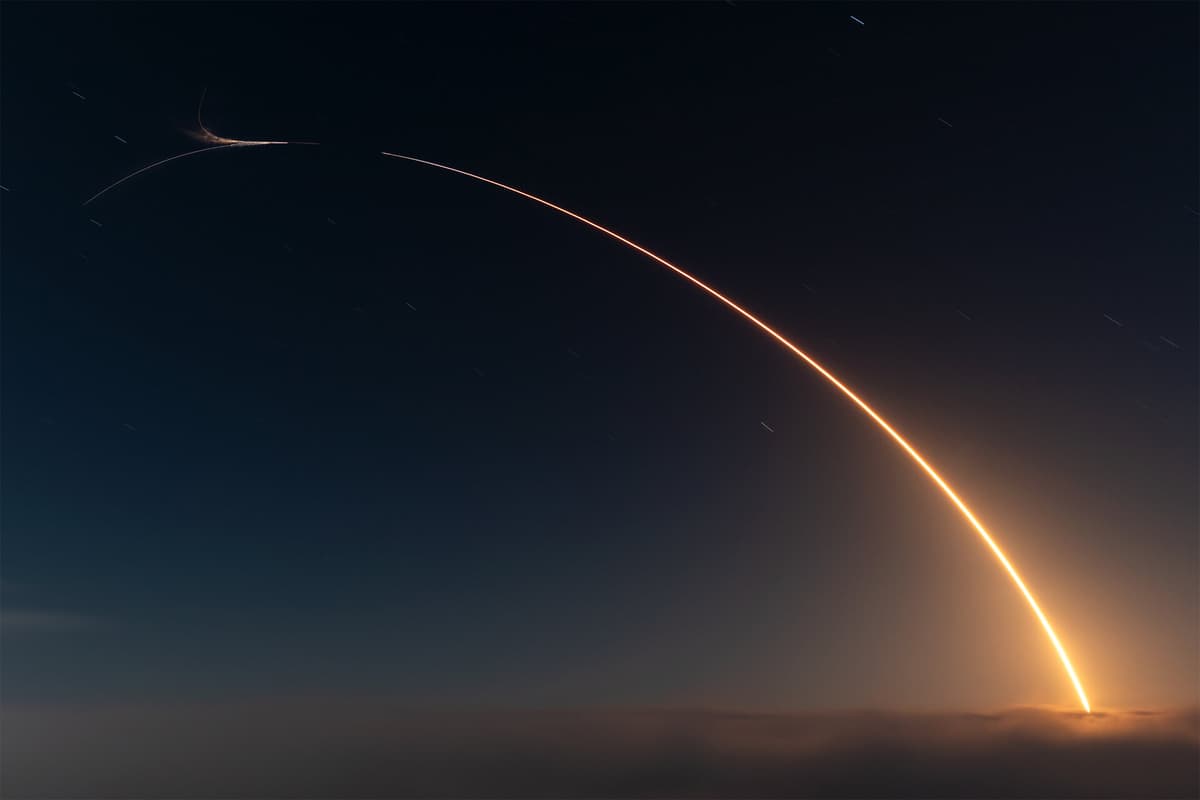
- •Falcon‑9 rideshare launch from Vandenberg showcases cost‑effective deployment.
- •ESA and EU recovery funds boost European sovereign space capabilities.
Pulse Analysis
The successful deployment of 13 European satellites aboard a single SpaceX Falcon‑9 rideshare marks a milestone for trans‑Atlantic cooperation in low‑cost access to orbit. By bundling Italy’s seven IRIDE Earth‑observation units, Greece’s four fire‑monitoring spacecraft and two experimental CubeSats, the mission demonstrates how shared launch slots can accelerate constellation growth while keeping budgets in check. The Vandenberg launch also underscores the strategic value of using proven commercial rockets to support ESA‑coordinated programmes, reinforcing Europe’s ability to field large‑scale satellite networks without building its own launch infrastructure.
IRIDE’s HEO constellation, now 31 satellites strong, is a cornerstone of Italy’s National Recovery and Resilience Plan. Developed by Argotec and overseen by ESA and the Italian Space Agency, the multispectral imagers feed high‑resolution data to ministries responsible for coastal management, land‑use planning and emergency response. The expanded fleet improves revisit times and spectral coverage, enabling more timely insights for flood monitoring, agricultural forecasting and security operations. By linking space‑derived intelligence directly to public‑sector decision‑makers, the programme illustrates how sovereign Earth‑observation assets can drive economic revitalisation and public‑service efficiency.
Greece’s Hellenic Fire System satellites constitute the first national constellation dedicated to real‑time wildfire detection, a capability previously limited to multinational assets. Coupled with the Helios and Selene CubeSats, which carry AAC Clyde Space’s CubeCAT laser terminals, the mission tests 1 Gbps optical downlinks that could become the backbone of future European small‑sat communication networks. The initiative, funded through the EU Recovery and Resilience Facility, not only strengthens Greece’s disaster‑response toolkit but also showcases a scalable model for other member states seeking autonomous, high‑performance space‑based connectivity.
Launch boosts European Earth monitoring and connectivity
Comments
Want to join the conversation?
Loading comments...