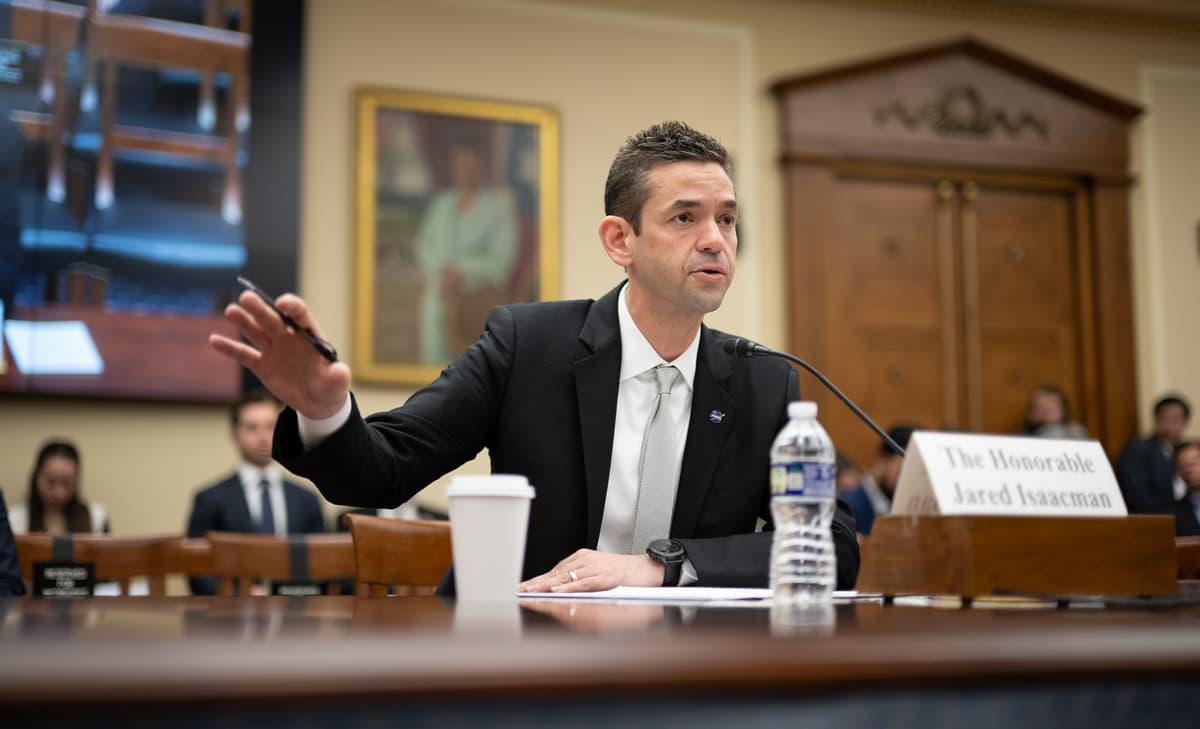
Lawmakers Promise to Reject Proposed NASA Cuts—Again
Why It Matters
NASA’s funding level directly shapes the United States’ ability to meet its lunar‑base timeline and sustain commercial low‑Earth‑orbit initiatives, influencing national space leadership. A congressional rebuff could force a higher budget, preserving critical programs and industry partnerships.
Key Takeaways
- •Trump admin proposes $18.8 B FY2027 NASA budget, $5.6 B cut.
- •House Science Committee chairs pledge to reject cuts, echoing past votes.
- •Cuts threaten Artemis lunar base, Artemis II crew morale, and science missions.
- •NASA admin emphasizes focusing resources on lunar, LEO, and science priorities.
- •Bipartisan opposition may force a higher budget, sustaining U.S. space leadership.
Pulse Analysis
The FY2027 budget request arrives at a crossroads for NASA, where the executive branch’s fiscal restraint clashes with Congress’s historic willingness to protect space funding. The administration’s $18.8 billion proposal mirrors last year’s request, aiming to shave $5.6 billion from the agency’s envelope. Yet, the legislative branch has repeatedly rebuffed similar cuts, viewing them as a threat to the nation’s strategic objectives in lunar exploration and scientific discovery. This pattern underscores the delicate balance between presidential budgeting authority and congressional oversight in shaping America’s space agenda.
Beyond the headline numbers, the proposed reductions raise concrete concerns for the Artemis program and downstream commercial activities. A lunar base on the south pole, a cornerstone of Artemis, demands sustained investment in lander development, habitat construction, and in‑situ resource utilization. Simultaneously, commercial low‑Earth‑orbit ventures—ranging from satellite constellations to lunar cargo services—rely on predictable NASA contracts. Science missions such as the Nancy Grace Roman Space Telescope and the Dragonfly probe to Titan also face funding volatility, potentially delaying data returns that drive academic and industry innovation. The budget squeeze could force NASA to prioritize short‑term deliverables over long‑term breakthroughs, reshaping the risk profile for private partners.
Politically, the bipartisan chorus from the House Science, Space and Technology Committee signals a robust defense of the agency’s fiscal health. Lawmakers argue that cutting nearly a quarter of NASA’s budget would send a demoralizing message after Artemis II’s historic lunar flyby. If Congress restores or even modestly raises the budget, NASA can maintain momentum on its lunar‑base roadmap, secure commercial partnerships, and keep U.S. leadership intact in a rapidly internationalizing space economy. The outcome will set the tone for future budget negotiations and the nation’s broader strategic posture in space.
Lawmakers Promise to Reject Proposed NASA Cuts—Again
Comments
Want to join the conversation?
Loading comments...