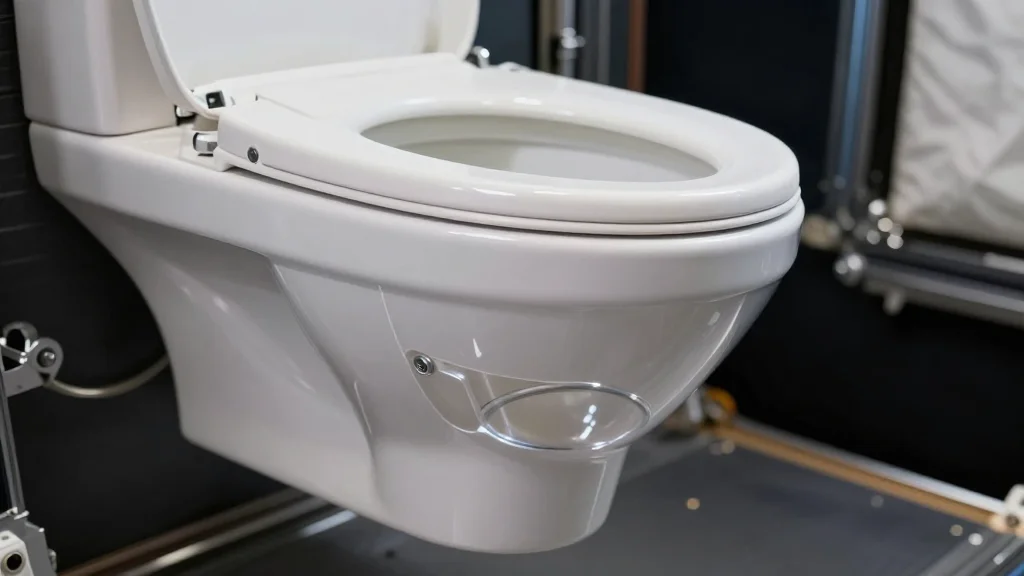

Why It Matters
Effective waste management is critical for crew health, mission duration, and launch cost, especially for long‑duration Mars flights where a failed toilet could become life‑threatening.
Key Takeaways
- •Apollo used condom‑like sleeves and bags; Shuttle added suction fans.
- •ISS urine processing recovers ~98% of water, reducing resupply needs.
- •Mars missions must store 3–4 tons of waste for up to two years.
- •Torrefaction can turn fecal waste into odorless char for shielding.
Pulse Analysis
The history of space sanitation reads like a series of engineering improvisations forced by the harsh realities of micro‑gravity. In the 1960s and 70s, astronauts coped with makeshift solutions—condom‑style urine collectors, antimicrobial powders, and vacuum‑sealed bags—while NASA experimented with thigh straps and suction cups to keep bodies anchored. The Space Shuttle refined the concept with a narrow, fan‑driven seat that could capture waste but still suffered from noisy airflow and lingering odors. Each iteration taught designers that gravity does more than pull; it stabilizes posture, separates waste, and seals it away from the cabin environment.
On the International Space Station, waste management became a life‑support priority rather than a convenience. The Urine Processing Assembly, first flown in 2008, now recovers roughly 98 % of urine water, dramatically cutting the need for costly resupply launches. Urine is mixed with antimicrobial agents and stored in tanks that are periodically vented, while solid waste remains in single‑use porous bags sealed in a hard‑walled cylinder for return to Earth. Despite these advances, odor control and the labor‑intensive bag‑handling process still rank among the crew’s least favorite daily tasks, highlighting the gap between functional hardware and habitability.
Looking ahead to crewed Mars missions, the stakes rise dramatically. A six‑month transit, a 700‑day surface stay, and a return trip demand waste systems that can survive two years of quiescence and operate in 0.38 g. Engineers are exploring torrefaction—a low‑temperature roasting process that converts fecal bags into odorless char, recovers water, and produces inert plastic tiles that could double as radiation shielding. Simultaneously, strategies for long‑term storage, biocide treatment, and partial‑gravity testing are under development to prevent microbial growth and ensure reliability. The success of these technologies will dictate not only crew comfort but also mission safety and the overall feasibility of sustained human presence on the Red Planet.
Let's talk space toilets
Comments
Want to join the conversation?
Loading comments...