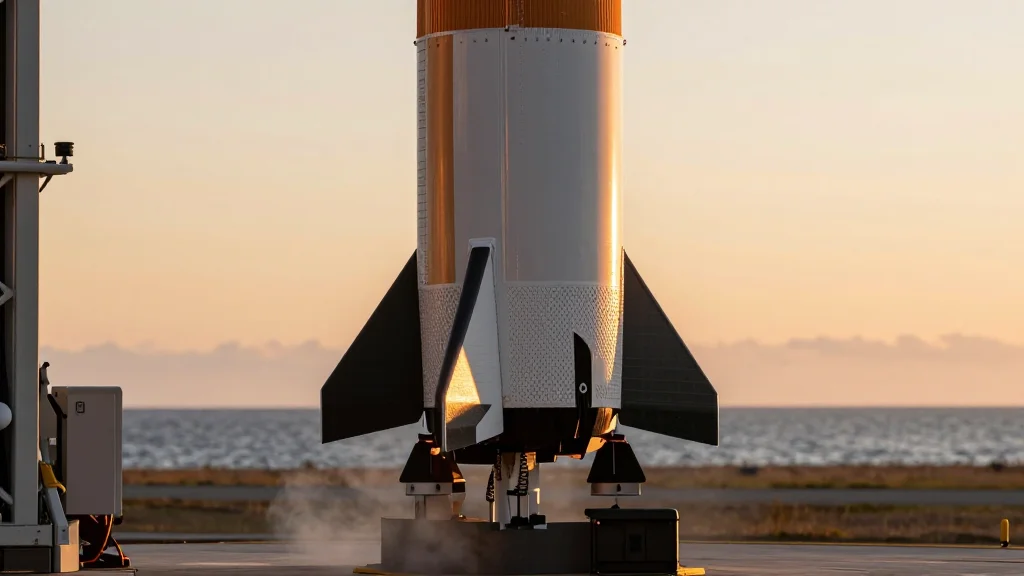
Live Coverage: SpaceX to Launch 24 Starlink Satellites on Falcon 9 Rocket From Vandenberg
Companies Mentioned
Why It Matters
The launch expands SpaceX’s broadband network, enhancing global internet coverage while demonstrating the cost‑saving power of reusable launch hardware. Successful recovery milestones reinforce the company’s competitive edge in the crowded satellite‑constellation market.
Key Takeaways
- •Starlink V2 Mini adds 24 satellites, boosting low‑Earth‑orbit capacity
- •Falcon 9 booster B1088 marks its 16th flight, reusing proven hardware
- •Landing will be 200th on “Of Course I Still Love You” ship
- •Mission lifts Starlink constellation past 10,000 satellites in orbit
- •Launch set for 8:37 a.m. PDT from Vandenberg SLC‑4E
Pulse Analysis
SpaceX’s latest Starlink V2 Mini deployment underscores the rapid evolution of low‑Earth‑orbit broadband. The Mini Optimized design packs higher throughput and more efficient power systems into a smaller form factor, allowing the company to densify coverage in underserved regions while keeping launch mass modest. By integrating these satellites into an already massive constellation, SpaceX can reduce latency and increase capacity, positioning its service as a viable alternative to terrestrial fiber in remote and emerging markets.
The mission also highlights the economic advantages of SpaceX’s reusable launch architecture. Booster B1088, on its 16th flight, exemplifies the company’s ability to turn a single rocket into a high‑frequency asset, slashing per‑kilogram launch costs. The planned landing marks the 200th touchdown on the drone ship “Of Course I Still Love You,” a milestone that reinforces confidence in autonomous recovery operations. Such milestones not only lower operational expenses but also free up launch windows for other customers, strengthening SpaceX’s market share in the commercial launch sector.
Beyond the technical feats, the expansion of the Starlink network has broader strategic implications. As the constellation surpasses 10,000 satellites, it challenges traditional telecom providers and prompts regulators to revisit spectrum allocation and space‑traffic management policies. Competitors like OneWeb and Amazon’s Project Kuiper are racing to close the gap, but SpaceX’s aggressive launch cadence and cost efficiencies give it a distinct lead. For investors and industry observers, the continued growth of Starlink signals a shift toward satellite‑based internet as a cornerstone of global connectivity infrastructure.
Live coverage: SpaceX to launch 24 Starlink satellites on Falcon 9 rocket from Vandenberg
Comments
Want to join the conversation?
Loading comments...