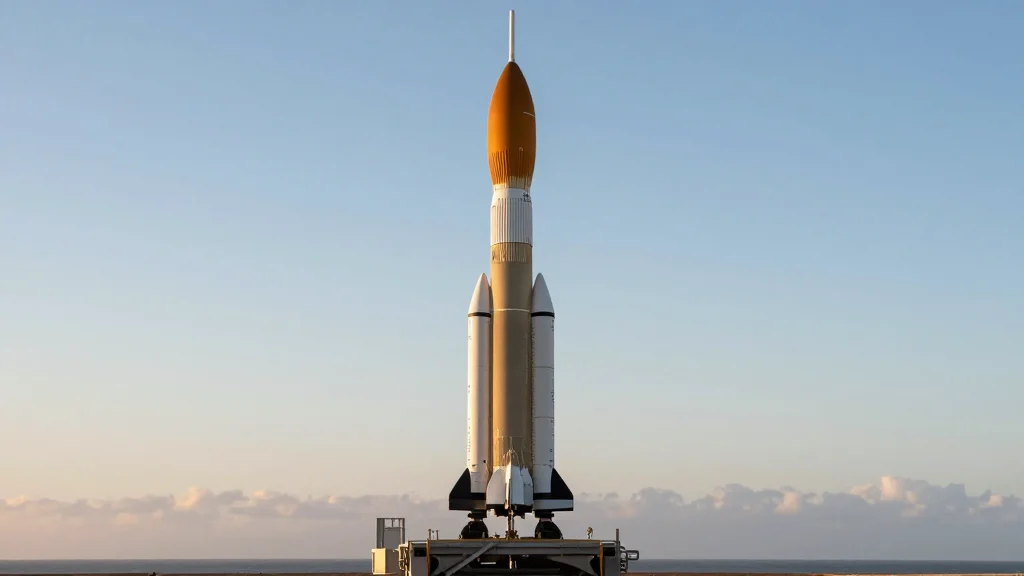
Live Coverage: SpaceX to Launch 29 Starlink Satellites on Falcon 9 Rocket From Cape Canaveral
Companies Mentioned
Why It Matters
Adding 29 satellites strengthens SpaceX’s global internet coverage and showcases the reliability of its reusable launch system, a competitive edge in the growing satellite‑ broadband market.
Key Takeaways
- •29 new Starlink satellites boost LEO megaconstellation beyond 10,000
- •Launch uses Falcon 9 booster B1085 on its 16th flight
- •Targeted drone‑ship landing marks 152nd touchdown on “A Shortfall of Gravitas.”
- •80% chance of favorable weather despite approaching tropical moisture
- •Successful mission reinforces SpaceX’s reusable launch cadence and broadband rollout
Pulse Analysis
SpaceX’s upcoming Starlink 10‑53 launch underscores the rapid scaling of its satellite‑internet ecosystem. With more than 10,000 satellites already orbiting, each additional batch of 29 units not only expands coverage footprints but also improves network redundancy and latency, crucial for rural and underserved markets. The timing aligns with heightened demand for reliable connectivity in remote work, IoT deployments, and disaster‑response scenarios, positioning Starlink as a de‑facto backbone for global broadband services.
From a technical standpoint, the mission highlights the maturity of SpaceX’s reusable launch architecture. Booster B1085, now on its 16th flight, carries a legacy that includes crewed NASA missions and commercial payloads, reflecting the company’s confidence in cross‑mission reliability. A successful landing on the drone ship “A Shortfall of Gravitas” would mark the 152nd touchdown on that vessel and push SpaceX’s total booster recoveries past 600, a benchmark that drives down launch costs and shortens turnaround times for subsequent missions.
Commercially, the launch reinforces SpaceX’s dominance in the satellite‑internet arena against rivals such as Amazon’s Project Kuiper and OneWeb. Consistent deployment cadence translates into faster revenue realization from subscription services and strengthens negotiating leverage with regulators worldwide. Moreover, the high probability of favorable weather despite seasonal tropical moisture demonstrates robust launch‑window planning, ensuring minimal delays that could otherwise impact earnings forecasts and market share growth.
Live coverage: SpaceX to launch 29 Starlink satellites on Falcon 9 rocket from Cape Canaveral
Comments
Want to join the conversation?
Loading comments...