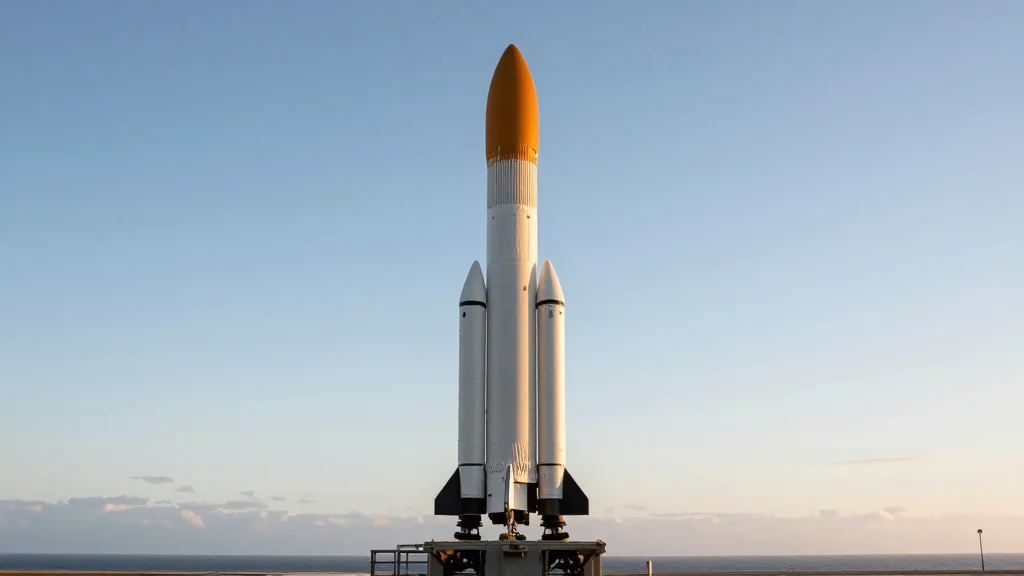
Live Coverage: SpaceX to Launch 50th Starlink Mission of 2026
Why It Matters
The launch underscores SpaceX’s relentless launch cadence and reusable‑rocket efficiency while expanding global broadband coverage, a key competitive edge in the satellite internet market.
Key Takeaways
- •50th Starlink launch of 2026 adds 24 satellites.
- •Booster B1082 on its 22nd flight attempts drone‑ship landing.
- •Landing would be 199th on “Of Course I Still Love You.”
- •Total SpaceX booster landings reach 617 after this mission.
- •Constellation exceeds 10,000 satellites, boosting global internet capacity.
Pulse Analysis
SpaceX’s upcoming Starlink 17‑41 mission illustrates the company’s aggressive scaling strategy. By adding 24 low‑Earth‑orbit satellites, the launch nudges the constellation beyond 10,000 units, a threshold that enhances network redundancy and reduces latency for users worldwide. The timing—mid‑2026—aligns with SpaceX’s goal of delivering near‑global broadband, positioning Starlink as a viable alternative to terrestrial ISPs in underserved regions.
The operational focus of this flight is the Falcon 9 first‑stage booster B1082, now on its 22nd flight. Reusing a booster this many times dramatically cuts launch costs, a savings that can be passed to customers or reinvested in further satellite production. A successful touchdown on the drone ship “Of Course I Still Love You” would be the 199th landing on that vessel and the 617th for SpaceX, reinforcing the reliability of autonomous recovery and cementing the company’s leadership in reusable launch technology.
For the broader satellite‑internet ecosystem, the mission signals intensified competition. As Starlink’s footprint expands, rivals such as OneWeb and Amazon’s Project Kuiper must accelerate their own deployments to capture market share. Regulators are also watching the rapid growth of megaconstellations for spectrum allocation and orbital debris mitigation. Ultimately, SpaceX’s high‑frequency launch cadence and proven reusability could drive down prices, accelerate global connectivity, and reshape the economics of space‑based broadband services.
Live coverage: SpaceX to launch 50th Starlink mission of 2026
Comments
Want to join the conversation?
Loading comments...