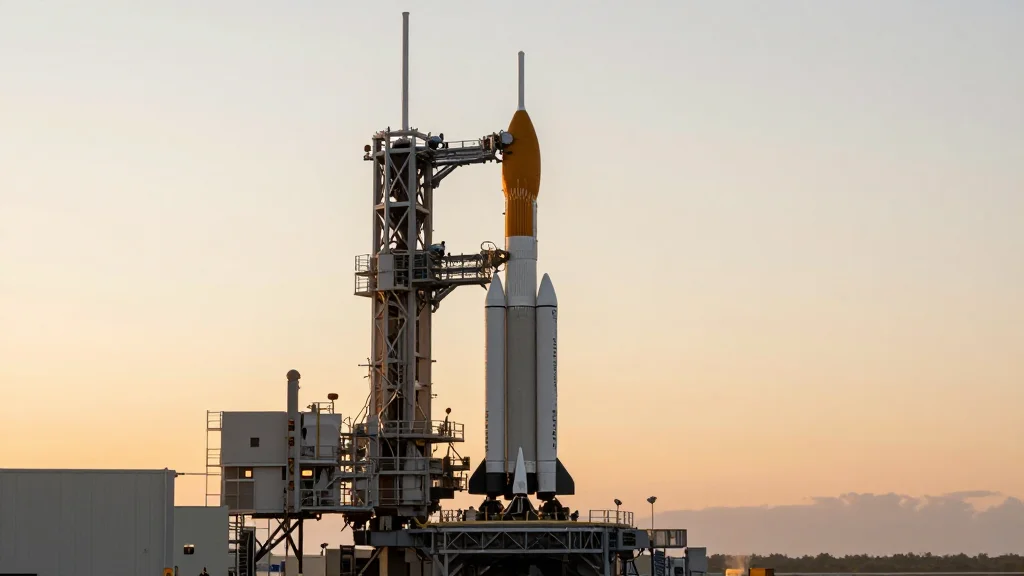
Live Coverage: SpaceX to Launch Intelligence-Gathering Satellites for the National Reconnaissance Office
Companies Mentioned
Why It Matters
The mission expands the NRO’s resilient LEO network, boosting revisit rates and reducing single points of failure for U.S. intelligence. It also demonstrates SpaceX’s growing role as a launch partner for classified government payloads.
Key Takeaways
- •NRO's NROL-179 mission launches undisclosed number of Starshield satellites
- •Falcon 9 booster B1103 makes third flight, targeting 35th LZ-4 landing
- •SpaceX's 14th NRO launch supports proliferated architecture of small LEO satellites
- •NRO plans hundreds of small satellites to increase revisit rates and coverage
- •Optical inter‑satellite links will enhance the Department of War's Space‑Data Network
Pulse Analysis
The National Reconnaissance Office has been quietly reshaping its space posture by moving away from a handful of large, geostationary platforms toward a ‘proliferated architecture’ of dozens, eventually hundreds, of small satellites in low‑Earth orbit. This distributed approach delivers higher revisit frequencies, finer spatial resolution, and inherent redundancy that mitigates the risk of a single satellite failure. By integrating electro‑optical, radar and relay payloads, the NRO can fuse multiple data streams in near‑real time, a capability that aligns with the Department of Defense’s push for rapid, data‑driven decision making on the modern battlefield.
SpaceX’s Falcon 9 remains the workhorse enabling this shift, offering a cost‑effective, reusable launch solution that the NRO has come to rely on. The upcoming NROL‑179 flight will reuse booster B1103 for its third mission, targeting the 35th landing at Vandenberg’s Landing Zone 4 and bringing SpaceX’s total booster recoveries to over 600. This high cadence of re‑flight not only drives down per‑kilogram launch costs but also shortens the procurement timeline for classified payloads, reinforcing SpaceX’s position as the de‑facto launch provider for U.S. intelligence satellites.
The inclusion of inter‑satellite optical communications in the new constellation signals a broader trend toward autonomous, mesh‑networked space assets. Such links allow data to hop between satellites before downlink, reducing latency and preserving bandwidth for high‑value imagery and signals intelligence. For the Department of War’s emerging Space‑Data Network, this architecture promises a resilient, secure conduit for battlefield‑relevant information. As more government agencies adopt similar proliferated constellations, commercial operators may find new markets for compatible payloads and services, accelerating innovation across the entire space ecosystem.
Live coverage: SpaceX to launch intelligence-gathering satellites for the National Reconnaissance Office
Comments
Want to join the conversation?
Loading comments...