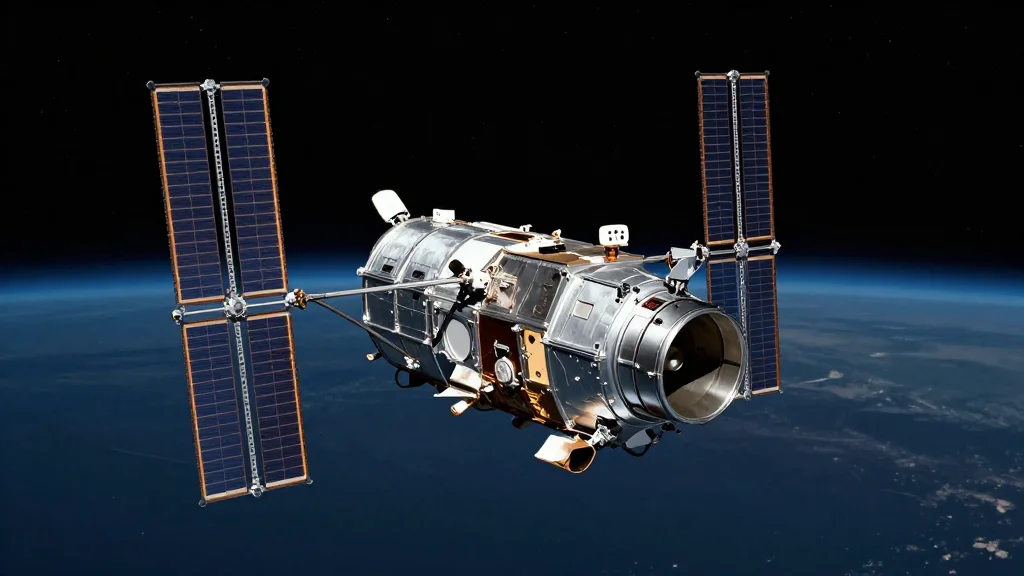
Lockheed Martin Planning Next-Generation Space Dominance Demos On Orbit
Why It Matters
The demos will give the U.S. defense a faster, more flexible way to conduct on‑orbit maneuvering and surveillance, bolstering space dominance amid rising threats. They also cement Lockheed Martin’s role as a primary supplier for the Space Force’s upcoming RG‑XX constellation.
Key Takeaways
- •Vanguard demo scheduled late 2028; Sentinel early 2029.
- •Both systems share ~70% common subsystems for plug‑and‑play flexibility.
- •Sentinel offers higher ΔV and optional on‑orbit refueling for complex missions.
- •Demonstrations support $1.8 billion RG‑XX space domain awareness program.
- •Early adopters signal demand, shaping design and procurement.
Pulse Analysis
The U.S. Space Force has made clear its appetite for rapid, on‑orbit capabilities that can counter emerging threats in the contested space domain. By funding its own demonstrations, Lockheed Martin is answering that call with Vanguard and Sentinel, two spacecraft designed to operate in geosynchronous orbit and execute rendezvous and proximity operations (RPO). These missions are not just technical exercises; they serve as proof points for the broader RG‑XX constellation, a $1.8 billion program aimed at continuous space‑domain awareness and surveillance.
Vanguard and Sentinel embody a modular architecture that reuses roughly 70 percent of core subsystems—guidance, navigation, control, power, and propulsion—across different size classes. This plug‑and‑play approach, developed in partnership with Terran Orbital, reduces development cycles and lowers costs while allowing customers to tailor capabilities to specific missions. Sentinel’s higher delta‑V budget and optional on‑orbit refueling give it the maneuverability needed for complex, long‑duration tasks, whereas Vanguard offers a compact, high‑throughput option ideal for constellation deployment.
For the defense industry, Lockheed Martin’s proactive stance signals a shift toward commercially driven, rapid‑deployment space assets. Early adopters are already feeding requirements back into the design loop, creating a demand signal that could accelerate procurement timelines. As rival nations invest heavily in anti‑satellite technologies, the ability to quickly field adaptable, resilient spacecraft will be a decisive factor in maintaining U.S. space superiority. Lockheed’s dual‑track demonstration strategy positions it to capture a sizable share of future Space Force contracts and set new standards for modular, mission‑flexible satellite platforms.
Lockheed Martin Planning Next-Generation Space Dominance Demos On Orbit
Comments
Want to join the conversation?
Loading comments...