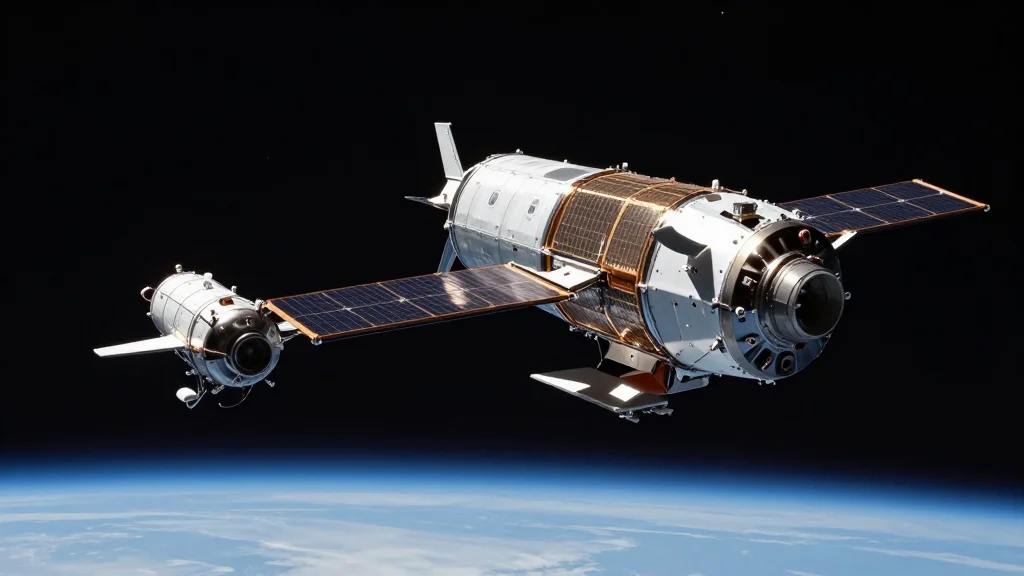
Lockheed Martin Self‑Funds Vanguard and Sentinel Satellites to Demonstrate Orbital Warfare

Companies Mentioned
Why It Matters
The Vanguard and Sentinel programs illustrate how the United States is moving from a passive space‑monitoring posture to an active, contested‑space strategy. By fielding satellites capable of autonomous maneuvering and on‑orbit refueling, the Space Force gains tools to protect critical assets and deter adversary actions. For the broader SpaceTech ecosystem, Lockheed’s self‑funded demos could accelerate the adoption of modular satellite designs, lowering development costs and shortening acquisition cycles for both military and commercial operators. Moreover, the initiative underscores a growing trend where prime contractors invest their own capital to de‑risk technologies before government procurement, potentially reshaping the defense acquisition model. If successful, the approach may encourage more private‑sector risk‑taking, spurring innovation across the orbital warfare domain and influencing allied nations’ space‑defense strategies.
Key Takeaways
- •Lockheed Martin self‑funds Vanguard and Sentinel satellite platforms
- •Vanguard launch targeted for late 2028; Sentinel for early 2029
- •Both platforms share ~70 % of subsystems, leveraging Terran Orbital tech
- •Sentinel serves as baseline for Space Force RG‑XX geosynchronous constellation
- •Demonstrations aim to prove rendezvous, proximity operations and on‑orbit refueling
Pulse Analysis
Lockheed Martin’s decision to bankroll the Vanguard and Sentinel demonstrations reflects a strategic bet that the Space Force will prioritize rapid fielding of orbital warfare capabilities over traditional, slower procurement cycles. By internalizing development costs, Lockheed reduces the fiscal risk for the government while positioning itself as the default supplier for next‑generation space combat assets. This mirrors a broader defense trend where large primes absorb early‑stage risk to capture long‑term contract value, a model that has proven effective in hypersonic and autonomous weapons programs.
The modular, plug‑and‑play architecture highlighted by Tim Lynch could become a new industry standard if the Space Force adopts it for future constellations. Shared subsystems lower unit costs and enable faster re‑configuration, a critical advantage when facing near‑peer adversaries that can target satellites with kinetic or directed‑energy weapons. Competitors will need to match this flexibility, likely accelerating their own modular satellite initiatives and pushing the market toward more interoperable designs.
Looking ahead, the success of these demos could unlock a cascade of follow‑on contracts not only for the Space Force but also for allied services and commercial customers seeking resilient, maneuverable platforms. However, the timeline remains vulnerable to launch slot constraints and evolving threat assessments. If delays occur, Lockheed may need to adjust its roadmap, potentially opening a window for rivals to capture market share. The next few years will therefore be a litmus test for whether self‑funded, technology‑first approaches can reshape the procurement landscape in the contested space domain.
Lockheed Martin Self‑Funds Vanguard and Sentinel Satellites to Demonstrate Orbital Warfare
Comments
Want to join the conversation?
Loading comments...