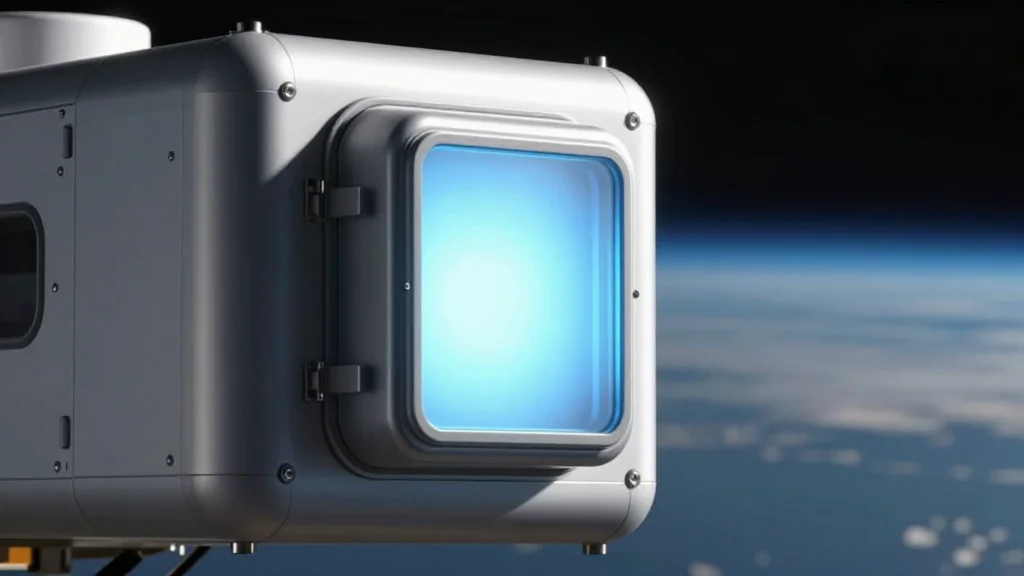
Lonestar Expands Launch Plans for Orbital Data Storage Payload
Companies Mentioned
Why It Matters
Space‑based data vaults offer a tamper‑proof layer of protection that traditional data centers cannot match, positioning Lonestar to capture high‑value contracts in defense and finance. The move signals a broader shift toward satellite‑enabled cyber‑resilience solutions.
Key Takeaways
- •Lonestar’s StarVault targets launch autumn 2026 on LizzieSat‑4
- •Sidus Space increased payloads from one to two modules
- •Demand from governments and banks exceeds Lonestar’s forecasts
- •StarVault combines key escrow with orbital storage for resilience
- •Launch showcases feasibility of commercial space‑based data vaults
Pulse Analysis
The emergence of space‑based data storage marks a pivotal evolution in cyber‑security architecture. Traditional data centers, even those fortified with air‑gap strategies, remain vulnerable to physical attacks, natural disasters, and sophisticated cyber‑intrusions. By situating encrypted data in low‑Earth orbit, platforms like Lonestar’s StarVault provide an immutable, geographically isolated repository that can survive terrestrial disruptions. This concept aligns with growing concerns over sovereign data protection, especially as regulatory frameworks such as the EU’s GDPR and the U.S. CISA directives demand robust, jurisdiction‑aware storage solutions.
Lonestar’s partnership with Sidus Space amplifies the technical credibility of the venture. Sidus, known for its modular satellite bus designs, will integrate two dedicated storage payloads onto the LizzieSat‑4 platform, a first for commercial orbital data vaults. The dual‑payload approach not only offers redundancy but also enables scalable capacity as client demand rises. Engineering challenges—such as radiation hardening, thermal management, and secure key escrow in space—are being addressed through Lonestar’s proprietary cryptographic hardware, positioning the company ahead of nascent competitors.
The market implications are substantial. Governments seeking to safeguard classified intelligence, financial institutions protecting transaction ledgers, and critical‑infrastructure operators defending SCADA data are all potential customers willing to pay premium fees for immutable, off‑planet storage. Analysts project the niche could reach several hundred million dollars within the next five years, especially as satellite launch costs continue to decline. Lonestar’s accelerated launch schedule signals confidence in commercializing this technology, potentially catalyzing a new segment of the space‑economy focused on data resilience rather than traditional communications or imaging services.
Lonestar Expands Launch Plans for Orbital Data Storage Payload
Comments
Want to join the conversation?
Loading comments...