Lunar Dust Study Links Space Weathering to Changes in Moon Ultraviolet Brightness
•March 5, 2026
0
Why It Matters
Understanding UV reflectance changes enables more accurate remote‑sensing of lunar ice, directly supporting future exploration and resource utilization. The work also provides a benchmark for interpreting space‑weathering effects on other airless bodies.
Key Takeaways
- •Space weathering darkens lunar far‑UV reflectance.
- •Nanophase iron abundance correlates with UV brightness loss.
- •Findings improve LRO‑LAMP ice detection accuracy.
- •Apollo samples remain vital for lunar surface studies.
- •Advanced TEM reveals atomic‑scale weathering features.
Pulse Analysis
Space weathering—continuous bombardment by solar wind particles and micrometeoroids—has long been recognized as a key modifier of airless planetary surfaces. By altering mineral chemistry and creating nanophase iron, it changes optical properties across the spectrum, particularly in the far‑ultraviolet where subtle variations can signal compositional differences. Recent advances in microscopy now allow scientists to probe these effects at the atomic level, offering fresh insights that extend beyond traditional visible‑light analyses.
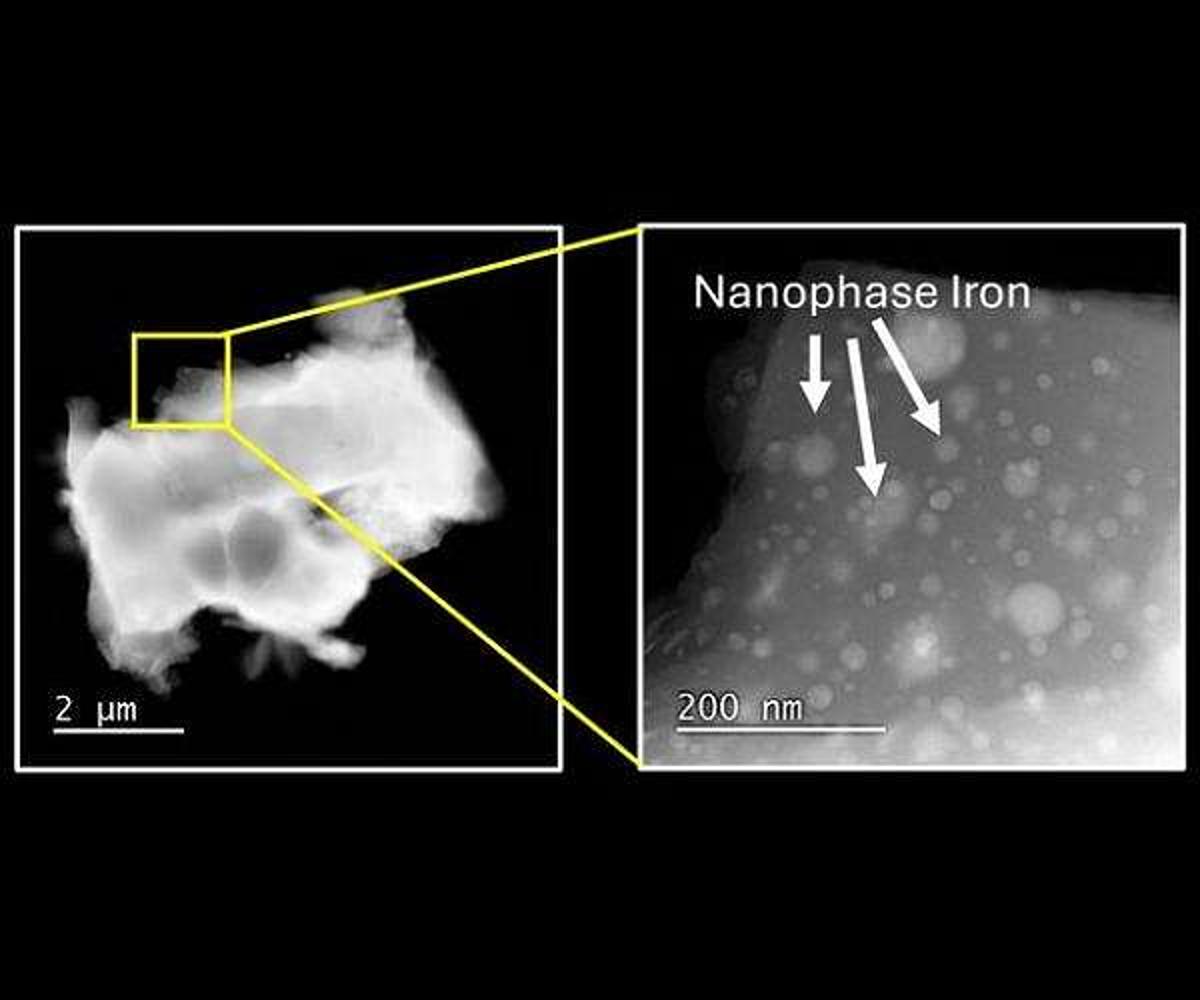
In the new study, SwRI and UT San Antonio leveraged a state‑of‑the‑art transmission electron microscope to image individual atoms within Apollo‑era grains. The researchers quantified nanophase‑iron particles, finding that heavily weathered grain rims host dense iron inclusions that suppress FUV reflectance, while fresher grains remain brighter. By correlating nanophase‑iron concentration with measured UV spectra, the team produced a robust calibration curve that links microscopic weathering signatures to macroscopic remote‑sensing observations.
These findings have immediate practical implications for NASA’s Lunar Reconnaissance Orbiter LAMP instrument, which relies on far‑UV measurements to detect water‑ice in permanently shadowed craters. Accurate correction for regolith darkening improves ice abundance estimates and reduces false positives. Moreover, the methodology sets a precedent for interpreting UV data from future missions to the Moon, Mercury, and asteroids, where space weathering similarly obscures surface composition. As lunar exploration accelerates, such refined models will be essential for site selection, in‑situ resource utilization, and scientific discovery.
Lunar dust study links space weathering to changes in Moon ultraviolet brightness
0
Comments
Want to join the conversation?
Loading comments...