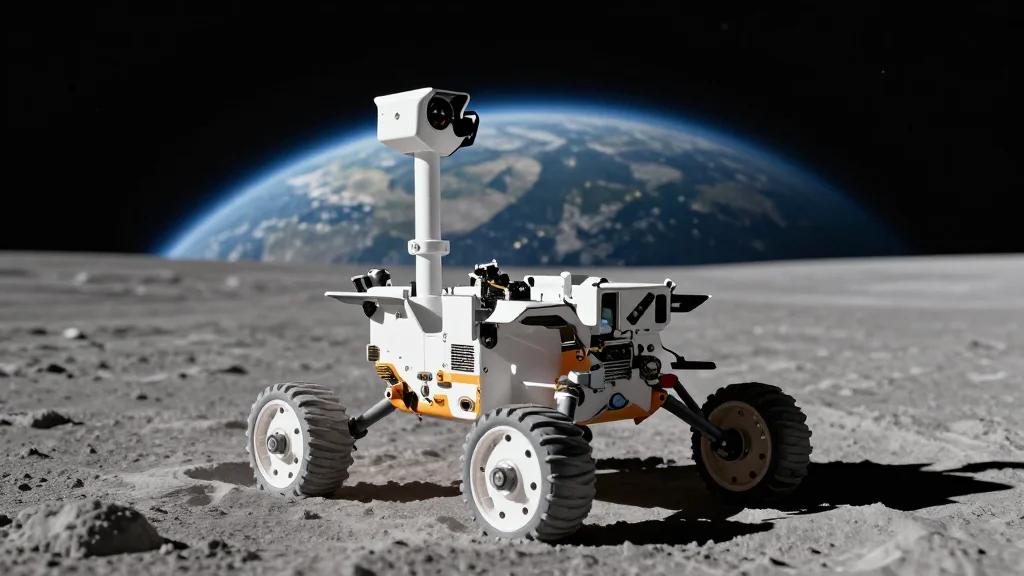
Lunar Outpost Secures $30 Million Series B to Mass‑Produce Moon Rovers

Companies Mentioned
Why It Matters
Lunar Outpost’s Series B round underscores a pivotal shift: private firms are now financing the hardware that will underpin a sustained human presence on the Moon. By moving from prototype to mass‑production, the company helps lower the cost per kilogram of lunar payloads, making frequent surface missions economically feasible. The funding also highlights the growing role of venture capital in de‑risking space infrastructure, a trend that could accelerate the timeline for commercial lunar habitats, resource extraction, and eventually, Mars‑bound logistics. The broader implication for the SpaceTech ecosystem is the emergence of a lunar supply chain that mirrors terrestrial manufacturing networks. As more firms secure capital to produce standardized, interoperable rovers and related subsystems, the industry may see the first true economies of scale in off‑world production, driving down prices and spurring a wave of ancillary services—from data analytics to maintenance robotics.
Key Takeaways
- •Lunar Outpost closed a $30 million Series B round led by Industrious Ventures.
- •Funding will scale production of Pegasus (small) and Eagle (large) lunar rovers.
- •Company reports eight fully contracted lunar/cislunar missions before 2030.
- •NASA plans to spend about $20 billion on a permanent Moon base over the next seven years.
- •Lunar Outpost aims to shift lunar mission cadence from annual to near‑monthly within a few years.
Pulse Analysis
The infusion of $30 million into Lunar Outpost marks a watershed moment for the lunar robotics niche, moving it from a boutique engineering exercise to a nascent manufacturing sector. Historically, lunar surface hardware has been dominated by government‑run programs with long development cycles and limited production runs. By attracting venture capital, Lunar Outpost is betting that the market will soon demand repeatable, off‑the‑shelf mobility solutions—an assumption that aligns with NASA’s Artemis roadmap, which envisions a permanent base supported by a steady stream of cargo and crew flights.
From a competitive standpoint, the company’s focus on autonomous swarm control (Starweave) could be a differentiator. If Lunar Outpost can demonstrate reliable, coordinated operation of multiple rovers, it may unlock new mission architectures where a fleet of small units performs tasks traditionally assigned to a single, larger vehicle. This could reduce launch mass, lower risk, and enable more flexible surface operations, giving Lunar Outpost a strategic edge over rivals that still rely on single‑unit designs.
Looking forward, the real test will be the company’s ability to transition from prototype to volume production while meeting NASA’s stringent safety and reliability standards. Success would not only validate the venture‑capital model for deep‑space hardware but also catalyze a broader ecosystem of lunar suppliers—fuel depots, construction robots, and even lunar‑based manufacturing. Conversely, any delay or failure to secure the upcoming Lunar Terrain Vehicle Services award could stall momentum, leaving the market open for other players to capture the emerging demand. The next six months, therefore, will be critical in determining whether Lunar Outpost becomes a cornerstone of the lunar economy or a cautionary tale of premature scaling.
Lunar Outpost Secures $30 Million Series B to Mass‑Produce Moon Rovers
Comments
Want to join the conversation?
Loading comments...