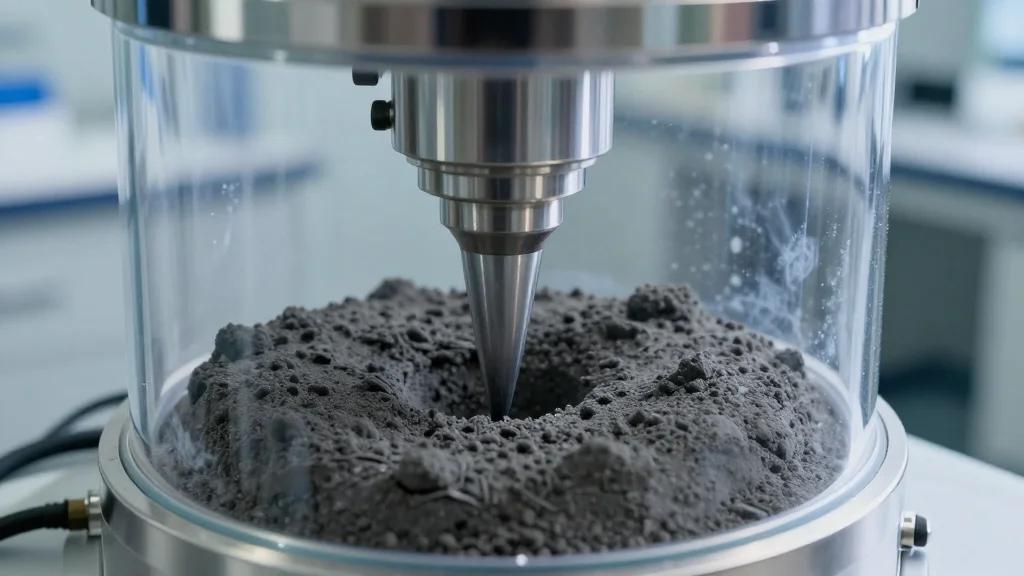
Lunar Soil Test Chamber Paves Way for Future Moon Construction
Companies Mentioned
Why It Matters
Accurate lunar soil data de‑risks habitat and lander design, accelerating the timeline for sustainable moon infrastructure and broader off‑world construction initiatives.
Key Takeaways
- •Chamber replicates lunar vacuum and temperature for testing
- •Enables calibrated cone‑penetration data for polar regolith
- •Supports broader geotechnical sensor integration beyond CPT
- •Reduces risk for lunar habitat and lander design
- •Concept adaptable for Mars soil simulant testing
Pulse Analysis
The push for permanent lunar outposts hinges on understanding the Moon’s regolith, yet most existing data stem from Apollo missions limited to equatorial sites. Engineers require the same level of soil insight they use on Earth—strength, stiffness, and cohesion—to design foundations for habitats, power plants, and extraction facilities. Without calibrated measurements, structures risk failure under the Moon’s extreme thermal cycles and low‑gravity environment, especially in the polar regions where future water‑ice mining and habitation are planned.
The Environment Controlled Calibration Chamber, a joint effort between NGI and APVacuum, recreates the Moon’s near‑vacuum and temperature extremes while housing lunar soil simulants. By allowing cone‑penetration testers and other geotechnical sensors to operate under authentic conditions, the chamber produces data that can be directly translated to in‑situ performance. Its modular design accommodates a range of instruments, from traditional CPT rigs to novel acoustic and radar probes, ensuring that future missions can validate multiple sensing technologies before launch, thereby cutting development costs and schedule risk.
Beyond lunar applications, the chamber’s flexible architecture positions it as a testbed for Martian and asteroid soil studies, where vacuum and temperature control are equally critical. ESA’s Open Space Innovation Platform funding underscores a strategic shift toward reusable, cross‑planetary testing infrastructure, supporting both governmental exploration and emerging commercial ventures. As accurate geotechnical data become a commodity, stakeholders—from habitat manufacturers to resource extraction firms—gain a reliable foundation for designing the next generation of off‑world infrastructure.
Lunar soil test chamber paves way for future moon construction
Comments
Want to join the conversation?
Loading comments...