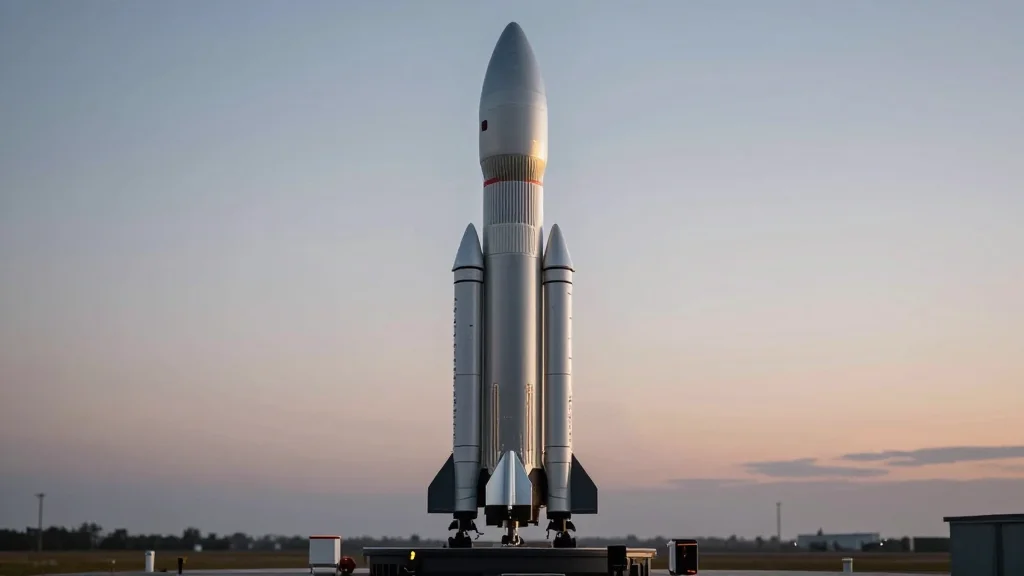
MaiaSpace CEO Says “Start Later, Run Faster” As Launcher Works Toward First Mission
Why It Matters
MaiaSpace’s accelerated timeline and cost strategy could reshape Europe’s launch ecosystem, offering a home‑grown alternative to U.S. providers and strengthening the continent’s strategic autonomy in space.
Key Takeaways
- •MaiaSpace targets first launch by end of 2026, ahead of 2027 deadline
- •Secured multi-launch deal with Eutelsat OneWeb, covering >50% of early flights
- •Development leverages ArianeGroup’s Prometheus engine to halve typical timeline
- •Aims to cut launch vehicle cost by roughly threefold versus traditional builds
- •Plans iterative flights, with recovery attempts starting on 8th or 9th mission
Pulse Analysis
Europe’s launch landscape has long been dominated by legacy programs and a handful of newcomers struggling to reach orbit. MaiaSpace’s recent multi‑launch agreement with Eutelsat OneWeb signals a rare vote of confidence for a pre‑flight vehicle, especially as the contract promises to fill more than half of the company’s launch manifest for the first three years. This partnership not only provides a steady revenue stream but also positions MaiaSpace as a credible contender in a market where commercial demand is accelerating, driven by megaconstellations and government satellite programs.
Technically, MaiaSpace is betting on speed over novelty. Rather than designing a brand‑new engine, the firm is integrating ArianeGroup’s Prometheus engine—already in advanced development—to sidestep years of propulsion R&D. Coupled with an agile, iterative test plan that foregoes full performance on the inaugural flight, the company expects to compress a typical decade‑long development cycle into five years. Cost‑wise, the strategy targets a three‑fold reduction versus traditional European launch projects, a figure that could make European launch services price‑competitive with U.S. heavyweights like SpaceX.
From a business perspective, MaiaSpace’s roadmap acknowledges the harsh economics of the launch sector. Early flights will likely operate at a loss, but the firm plans to offer discounted rates to attract customers and build a diversified client base beyond a single anchor. By aiming for profitability around 2030, the company hopes to prove that a European launch provider can be both technically reliable and financially sustainable, reinforcing Europe’s strategic independence while remaining competitive on the global stage.
MaiaSpace CEO Says “Start Later, Run Faster” as Launcher Works Toward First Mission
Comments
Want to join the conversation?
Loading comments...