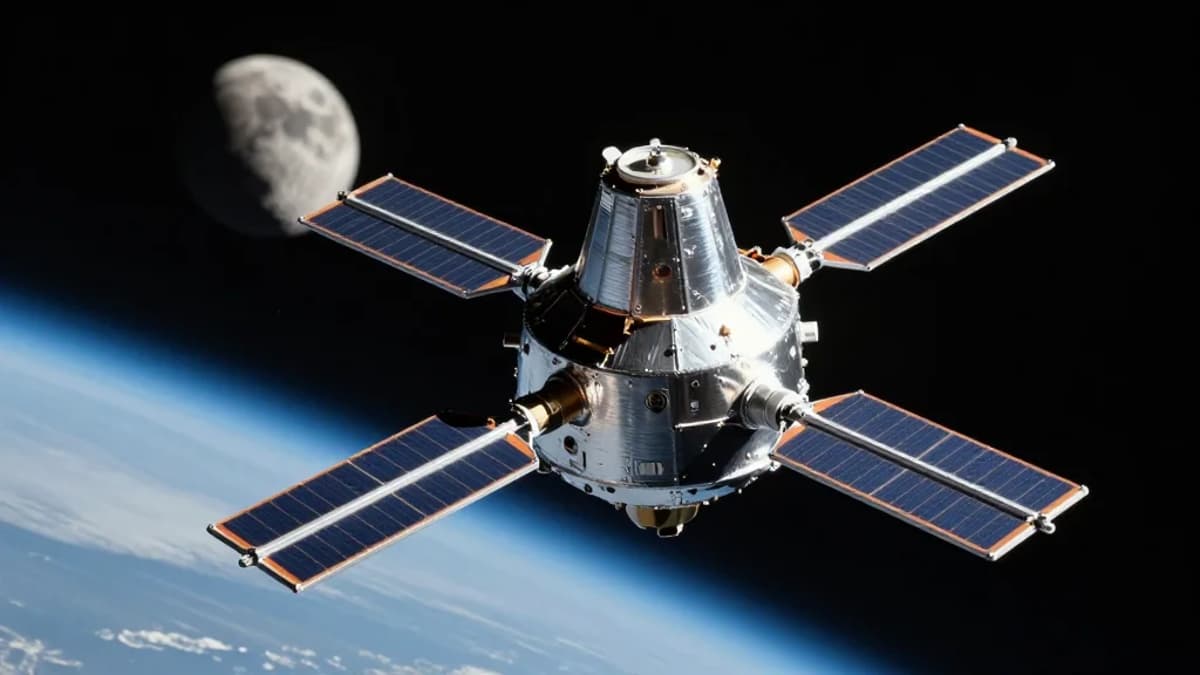
Why It Matters
Pioneer 4 proved the U.S. could achieve interplanetary flight, bolstering confidence during the early space race and providing the first American measurements of Earth's radiation belts.
Key Takeaways
- •Pioneer 4 launched March 3 1959 on Juno II rocket.
- •First U.S. probe to achieve heliocentric orbit.
- •Missed lunar photography due to over‑burned second stage.
- •Returned 82 hours of radiation‑belt data.
- •Set record for farthest distance from Earth at launch.
Pulse Analysis
The launch of Pioneer 4 on 3 March 1959 marked a turning point in the early Cold War space race. Coming just 18 months after the Soviet Union’s Sputnik, the United States pressed the Juno II launch vehicle—derived from the Redstone missile—to demonstrate deep‑space capability. At only 13 pounds, the probe embodied the minimalist design philosophy of the Jet Propulsion Laboratory, carrying a simple camera and Geiger‑Müller tubes to study the lunar environment and space radiation. Its successful lift‑off from Cape Canaveral signaled that American engineering could reach beyond low‑Earth orbit.
Although Pioneer 4 missed its primary lunar‑photography objective, the mission still delivered valuable scientific returns. A mis‑timed second‑stage burn extended the trajectory, carrying the spacecraft 60 000 km past the Moon and into a heliocentric path—the first for a U.S. probe. During its 82‑hour contact window the onboard Geiger counters mapped the inner radiation belts, confirming earlier Soviet measurements and refining models of the Van Allen zones. The record‑breaking distance also proved that the Juno II could propel payloads well beyond geostationary altitude, expanding design margins for future deep‑space missions.
The Pioneer 4 experience informed the architecture of subsequent American lunar programs, notably the Ranger and Surveyor series that eventually paved the way for Apollo. Engineers incorporated more robust guidance systems and redundant telemetry to avoid the second‑stage over‑burn that plagued Pioneer 4. Moreover, the radiation‑belt data helped shape spacecraft shielding standards still used in modern satellite design. In hindsight, Pioneer 4’s modest budget and brief operational life belie its outsized legacy: it demonstrated that a small, cost‑effective probe could venture into interplanetary space, a principle that underpins today’s CubeSat and small‑satellite missions.
March 3, 1959: Pioneer 4 launches
0
Comments
Want to join the conversation?
Loading comments...