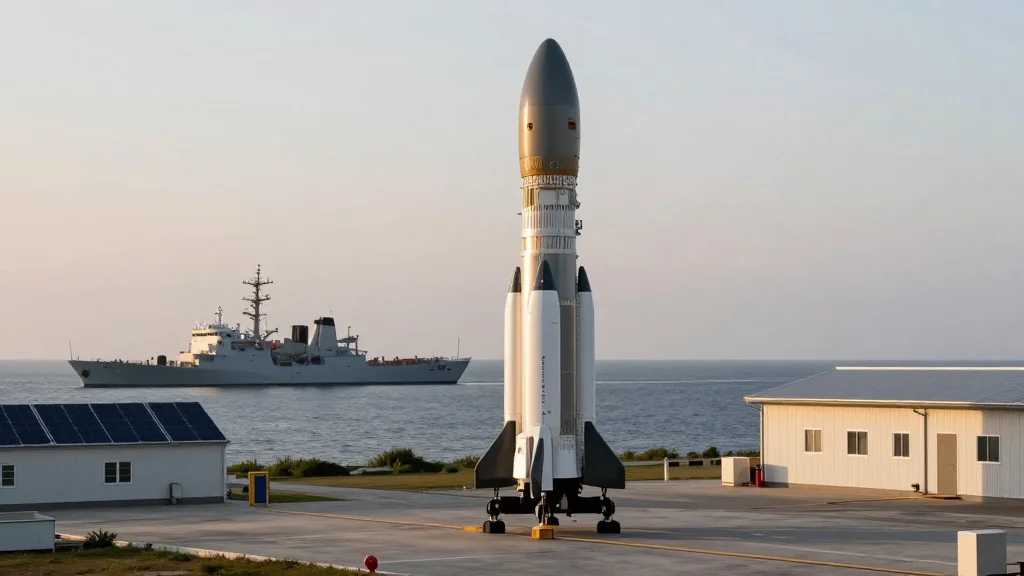
Maritime Launch Services Details Next Phases of Spaceport Nova Scotia Construction
Why It Matters
The DND lease provides a stable revenue stream that underpins MLS’s capital‑intensive build‑out, accelerating Canada’s sovereign launch capability. Timely infrastructure delivery positions Nova Scotia as a competitive hub for small‑satellite launches in North America.
Key Takeaways
- •Civil construction restarted March; first phase road work ends next week.
- •Utility Hub design completed; tendering begins next week, power by late fall.
- •Site entrance facility tender slated for late June; integration design due July.
- •Road extension to four pads starts August, aiming for September completion.
- •DND $200 million lease proceeds; construction milestones remain unchanged.
Pulse Analysis
Canada has long lagged behind the United States and Europe in offering domestic launch services, forcing satellite operators to rely on overseas facilities. Maritime Launch Services is poised to change that calculus by pairing a $200 million Department of National Defence lease with a growing pipeline of commercial customers such as Isar Aerospace. The partnership not only secures a reliable cash flow for MLS but also signals federal confidence in building a sovereign launch capability that can serve both defense and civilian markets.
The construction roadmap at Spaceport Nova Scotia reflects a methodical, phased approach. After restarting civil works in March, MLS completed the initial road network that connects the central hub to future launch pads. The next milestone is the Utility Hub, the nerve centre for power, water, fibre‑optic connectivity and cryogenic gases, with tendering set for next week and full electrical service expected by late fall. Parallel procurement for the site entrance control point and the first launch‑vehicle integration building will move forward in June and July, respectively, ensuring that critical infrastructure is in place before the road extensions to the four pads begin in August.
If MLS meets its aggressive schedule, Nova Scotia could become the go‑to gateway for small‑satellite missions across North America, attracting Atlantic‑region suppliers and creating high‑skill jobs. The project also positions Canada to compete with emerging launch sites in the United Kingdom, Australia and Brazil, especially as the global market for dedicated small‑payload launches expands. While medium‑lift capabilities remain a longer‑term goal, the current focus on reliable, low‑cost access for microsatellites lays a solid foundation for future growth and broader economic diversification in the Atlantic provinces.
Maritime Launch Services details next phases of Spaceport Nova Scotia construction
Comments
Want to join the conversation?
Loading comments...