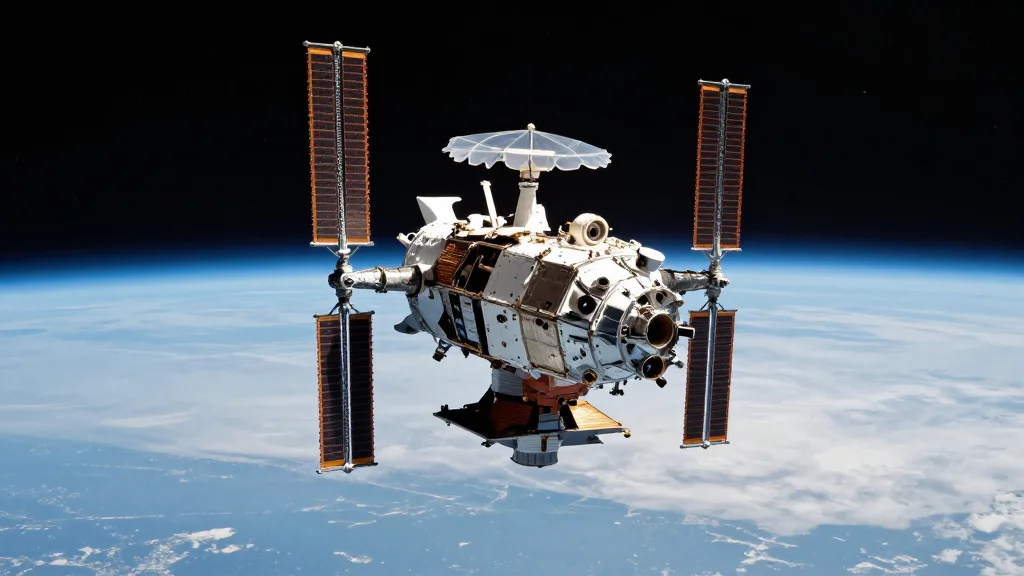
Why It Matters
Skylab demonstrated that large orbital habitats could be built, repaired, and operated, directly influencing the engineering and contingency strategies of later stations such as Mir and the International Space Station.
Key Takeaways
- •Skylab launched at 170,000 lb, the heaviest payload to date
- •Micrometeoroid shield tore off, jamming one solar array
- •Second solar array broke off during second‑stage separation
- •Crew launched 11 days later after intensive repair training
- •Skylab operated three missions before uncontrolled re‑entry in 1979
Pulse Analysis
The launch of Skylab in May 1973 marked a watershed moment for American spaceflight, arriving at the height of the Cold War space race. Unlike the earlier Apollo missions focused on lunar exploration, Skylab was designed as a long‑duration orbital laboratory, equipped with a galley, shower, and scientific instruments. Its unprecedented mass—170,000 lb—tested the limits of the Saturn V launch vehicle and set new standards for payload integration, signaling NASA’s shift toward sustained human presence in low‑Earth orbit.
Technical setbacks emerged almost immediately when the micrometeoroid shield, which also served as a thermal blanket, detached 63 seconds after liftoff. The torn shield wrapped around one solar array, immobilizing it, while the other array was sheared off by rocket exhaust during stage separation. The loss of the shield caused internal temperatures to soar, threatening equipment and supplies. NASA engineers and the slated crew rapidly devised a repair plan, including a makeshift sunshade and procedures to free the jammed array. The crew’s launch on May 25, after intensive training, showcased the agency’s ability to adapt under pressure and highlighted the importance of on‑orbit servicing capabilities.
Skylab’s three successful missions laid the groundwork for future orbital habitats. Lessons learned about thermal protection, solar power redundancy, and crew‑driven repairs informed the design of the Soviet Mir station and later the International Space Station, where modular construction and on‑orbit maintenance are routine. Moreover, Skylab’s legacy persists in today’s commercial ventures; companies building private space stations cite its pioneering solutions to power, thermal control, and habitability as foundational knowledge. The program proved that large, complex structures could survive and function in space, a principle that underpins the burgeoning low‑Earth‑orbit economy.
May 14, 1973: Skylab launches
Comments
Want to join the conversation?
Loading comments...