May 20, 1990: Hubble’s First Light
Companies Mentioned

Why It Matters
Hubble’s first light proved that space‑based optics could deliver markedly clearer data, reshaping observational astronomy and justifying massive public‑private investment in future telescopes.
Key Takeaways
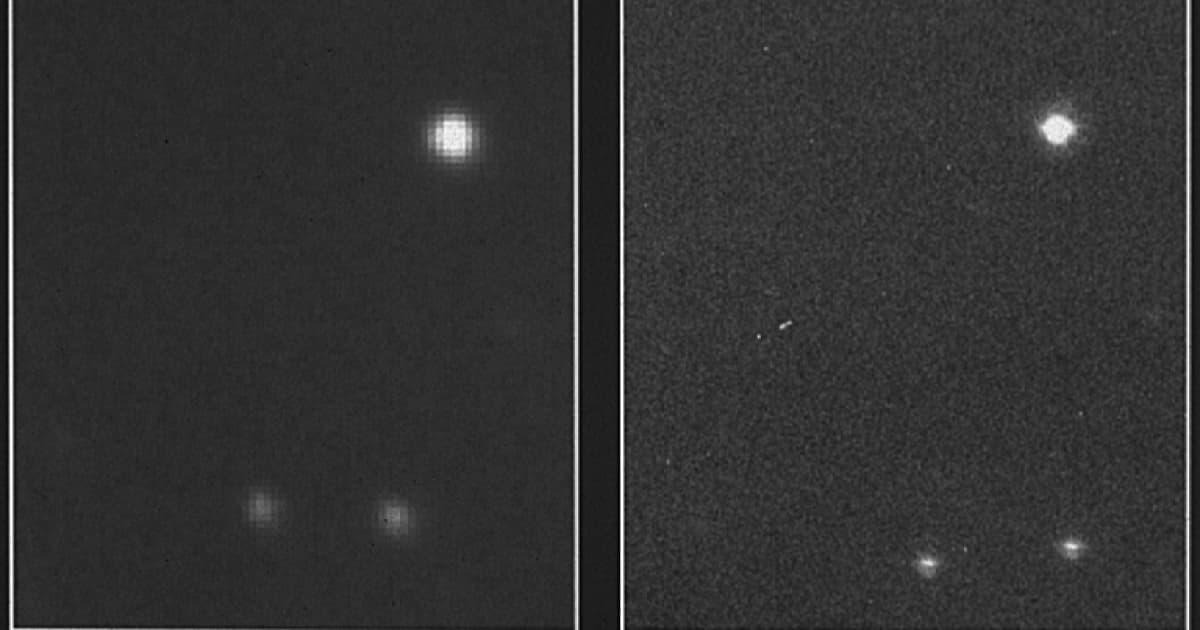
- •Hubble's first image 50% sharper than top ground observatory
- •First light captured 30‑second exposure of star HD 96755
- •Mirror flaw discovered a month later, fixed in 1993
- •Servicing Mission 1 restored full optical performance
Pulse Analysis
The Hubble Space Telescope’s debut was the culmination of more than 40 years of engineering, political negotiation, and budgetary juggling. Launched aboard Discovery, Hubble’s Wide Field and Planetary Camera recorded its inaugural exposure of star HD 96755, not to chase new science but to verify focus and alignment. By juxtaposing that image with a ground‑based counterpart from Las Campanas, NASA highlighted a striking 50 % improvement in sharpness—an early, tangible proof that removing atmospheric turbulence unlocks unprecedented detail.
That early performance set a new benchmark for astronomical observation. Space‑based platforms avoid the blurring, light‑pollution, and weather constraints that limit even the world’s premier terrestrial observatories. The clearer view enabled researchers to resolve faint structures, refine distance measurements, and detect phenomena invisible from Earth. Hubble’s success spurred a wave of investment in high‑resolution imaging, influencing sectors from Earth‑monitoring satellites to commercial space optics, and cemented the business case for costly, long‑duration space missions.
The subsequent discovery of a spherical‑aberration defect in Hubble’s primary mirror underscored the risks inherent in ambitious aerospace projects. The flaw, identified just weeks after first light, prompted the historic Servicing Mission 1 in December 1993, which installed corrective optics and restored Hubble’s full capability. This episode demonstrated the value of in‑orbit servicing, a lesson that informs today’s design strategies for the James Webb Space Telescope and upcoming commercial platforms. Ultimately, Hubble’s first light not only transformed scientific practice but also validated a model of iterative, high‑stakes engineering that continues to drive the space industry forward.
May 20, 1990: Hubble’s first light
Comments
Want to join the conversation?
Loading comments...