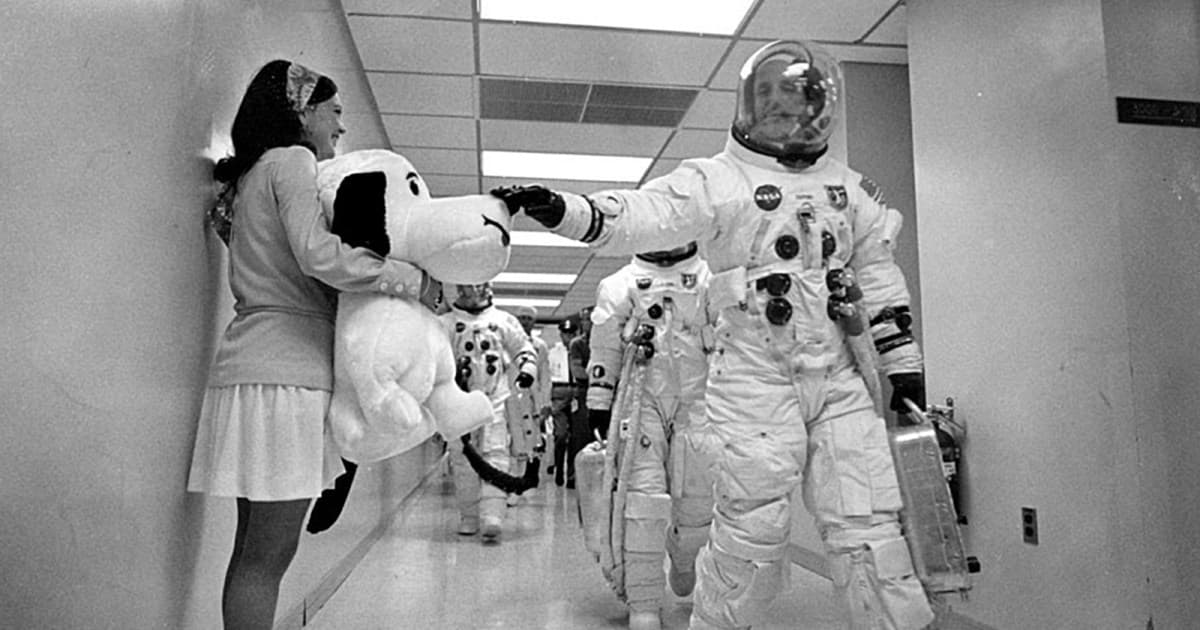
May 22, 1969: Snoopy’s Closest Approach to the Moon
Why It Matters
Apollo 10 proved that all critical spacecraft systems could operate safely just above the Moon’s surface, dramatically lowering the technical risk for Apollo 11’s historic landing.
Key Takeaways
- •Apollo 10’s LM “Snoopy” descended to 9 mi (14 km) above Moon
- •Mission delivered 19 live color TV broadcasts from lunar vicinity
- •Radar, flight‑control and docking systems were fully validated
- •Descent module remained in lunar orbit; ascent stage entered solar orbit
- •Apollo 10’s success reduced risk for historic Apollo 11 landing
Pulse Analysis
The Apollo 10 mission marked a pivotal moment in NASA’s lunar program, acting as the ultimate “wet‑run” before humanity set foot on the Moon. By replicating every maneuver of the upcoming Apollo 11 flight—except the final touchdown—the crew demonstrated that the Saturn V launch vehicle, Command‑Service Module, and Lunar Module could work together flawlessly in the harsh environment of cislunar space. This confidence boost was essential for policymakers and the public, who were watching a nation race to achieve a geopolitical milestone during the Cold War.
Technical validation was the heart of Apollo 10’s objectives. The LM “Snoopy” performed a low‑altitude pass at roughly 9 miles above the Sea of Tranquility, allowing engineers to fine‑tune radar altimeters, verify flight‑control algorithms, and rehearse the critical docking sequence between the LM and Command Module. The mission also generated a trove of scientific data on lunar gravity variations and dust behavior, while the 19 live color television broadcasts gave millions a real‑time glimpse of the Moon’s surface, sharpening public interest and justifying continued investment in the program.
The legacy of Apollo 10 extends beyond its immediate contribution to Apollo 11. Its successful execution proved that crewed proximity operations could be conducted safely, a lesson that underpins modern lunar gateway concepts and upcoming Artemis missions. By leaving the descent stage in lunar orbit and sending the ascent stage into a solar trajectory, the mission also demonstrated early strategies for spacecraft disposal and resource management—principles that remain relevant as commercial entities plan sustainable lunar exploration. In essence, Apollo 10’s meticulous testing laid the groundwork for the next generation of deep‑space endeavors, reinforcing the value of incremental, high‑risk rehearsals in achieving breakthrough achievements.
May 22, 1969: Snoopy’s closest approach to the Moon
Comments
Want to join the conversation?
Loading comments...