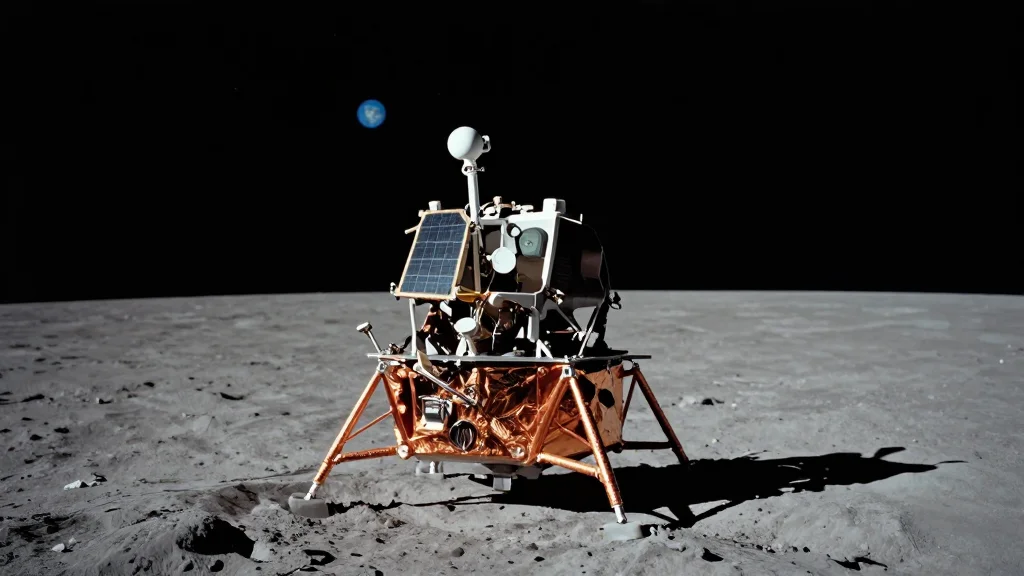
May 4, 1967: Surveyor 3 Last Contact
Why It Matters
The mission validated the safety of the Moon’s regolith for Apollo astronauts and gave engineers critical data that shaped crewed landing designs. Its recovered hardware offered unique scientific insight into lunar dust effects on equipment.
Key Takeaways
- •Surveyor 3 landed April 20, 1967 after two lunar rebounds.
- •Transmitted 6,300+ photos and thermal data before silence.
- •Lost contact May 4, 1967; Apollo 12 retrieved camera 2.5 years later.
- •Data proved lunar surface could support crewed Apollo landings.
Pulse Analysis
The Surveyor program was NASA’s first systematic effort to de‑risk lunar landings. Surveyor 3, launched on April 17, 1967, carried a suite of instruments designed to measure surface composition, thermal conductivity, and radar reflectivity. Its camera captured over 6,300 high‑resolution images, revealing a surprisingly fine‑grained regolith that could support the weight of a lunar module. The probe’s successful transmission of thermal data confirmed that temperature swings would not jeopardize astronaut safety, directly informing the design of Apollo’s descent stage.
When Surveyor 3 went silent on May 4, 1967, the data already gathered had reshaped mission planning. Engineers used the thermal and mechanical readings to refine landing gear shock absorbers and to calibrate the Lunar Module’s ascent engine thrust margins. The confirmation that the surface could bear foot traffic gave NASA confidence to schedule crewed lunar missions, accelerating the timeline that culminated in Apollo 11’s historic landing less than two years later. The mission’s legacy is evident in modern lunar lander concepts, which still reference Surveyor’s surface‑property benchmarks.
Apollo 12’s 1969 retrieval of Surveyor 3’s camera and soil scoop offered a rare hands‑on examination of long‑exposed hardware. Analysis revealed that lunar dust adhered tenaciously to moving parts, prompting later spacecraft designs to incorporate dust‑mitigation features such as protective covers and electrostatic cleaning systems. The recovered samples also provided a baseline for comparing lunar regolith evolution over time, a valuable reference for upcoming Artemis missions and private lunar ventures. Surveyor 3’s brief but data‑rich existence thus continues to influence contemporary lunar exploration strategies.
May 4, 1967: Surveyor 3 last contact
Comments
Want to join the conversation?
Loading comments...