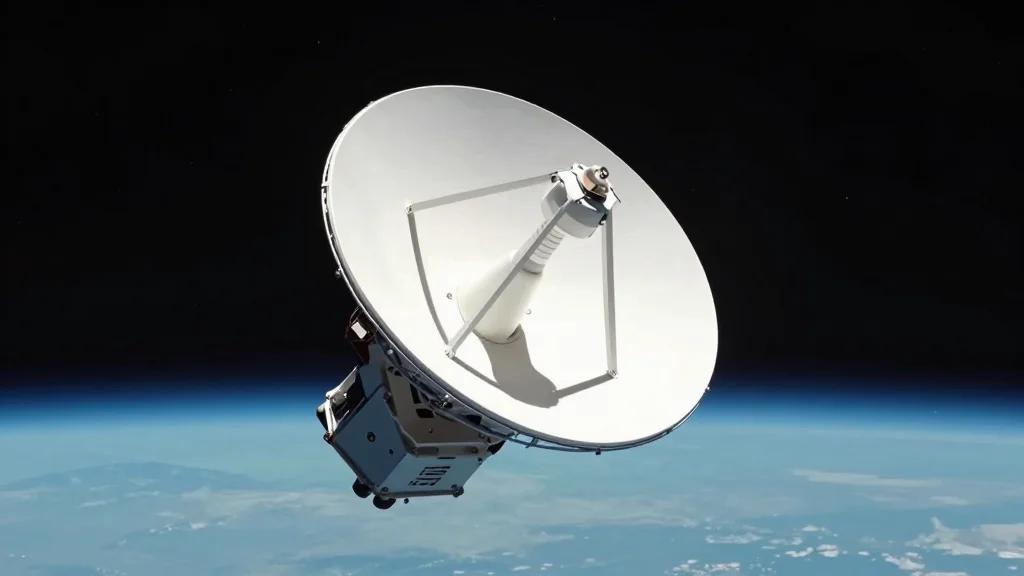
MDA Space Secures 41 Early Customers for CHORUS SAR Constellation

Companies Mentioned
Why It Matters
The CHORUS commitments demonstrate that customers are willing to back a new SAR architecture that blends wide‑area detection with pinpoint imaging, a capability that could reshape how defence and commercial users conduct surveillance. By securing a diversified, global customer base before launch, MDA Space reduces the commercial risk associated with deploying a costly dual‑satellite system, potentially accelerating the adoption of GEO‑based SAR constellations across the industry. If MDA can translate its letters of interest into long‑term contracts, the company will set a benchmark for revenue predictability in a market traditionally dominated by one‑off sales. This could encourage other satellite operators to pursue similar hybrid models, intensifying competition and driving innovation in sensor miniaturization, data processing, and real‑time delivery.
Key Takeaways
- •41 early customer commitments announced for CHORUS, including nine signed contracts
- •32 letters of interest span five global regions
- •CHORUS pairs a C‑band SAR with an X‑band sensor from ICEYE for 700‑km swaths and sub‑metre imaging
- •Launch slated for late 2026 on a SpaceX Falcon 9
- •MDA aims to replace retiring RADARSAT‑2 with the new hybrid constellation
Pulse Analysis
MDA Space's early‑commitment tally is more than a marketing win; it signals a strategic shift in the SAR market toward integrated, multi‑band constellations. Historically, SAR providers have competed on either resolution or coverage, but CHORUS blurs that line by delivering both in a single orbital package. This hybrid approach could force rivals like Capella Space and Umbra to reconsider their product roadmaps, potentially leading to joint‑venture sensor pairings or the development of on‑board cueing algorithms that mimic CHORUS's "tipping and cueing" capability.
From a financial perspective, the conversion rate of letters of interest to firm contracts will be a key metric for investors. The SAR market has seen pricing pressure as launch costs decline and constellations proliferate. By locking in a diversified customer base early, MDA can smooth revenue streams and justify the capital outlay required for the dual‑satellite build, which is likely in the high‑hundreds of millions of dollars. The partnership with ICEYE also spreads risk and leverages ICEYE's proven X‑band heritage, but it introduces dependency on a third‑party supplier for a critical payload component.
Looking forward, the success of CHORUS will hinge on operational performance after launch—specifically, the latency between wide‑area detection and high‑resolution cueing. If MDA can deliver near‑real‑time data to defence and commercial users, it will set a new service standard that could redefine procurement criteria for satellite‑based surveillance. Conversely, any shortfall in cueing speed or image quality could erode the trust that underpins the 41 early commitments, underscoring the high stakes of this inaugural deployment.
MDA Space Secures 41 Early Customers for CHORUS SAR Constellation
Comments
Want to join the conversation?
Loading comments...