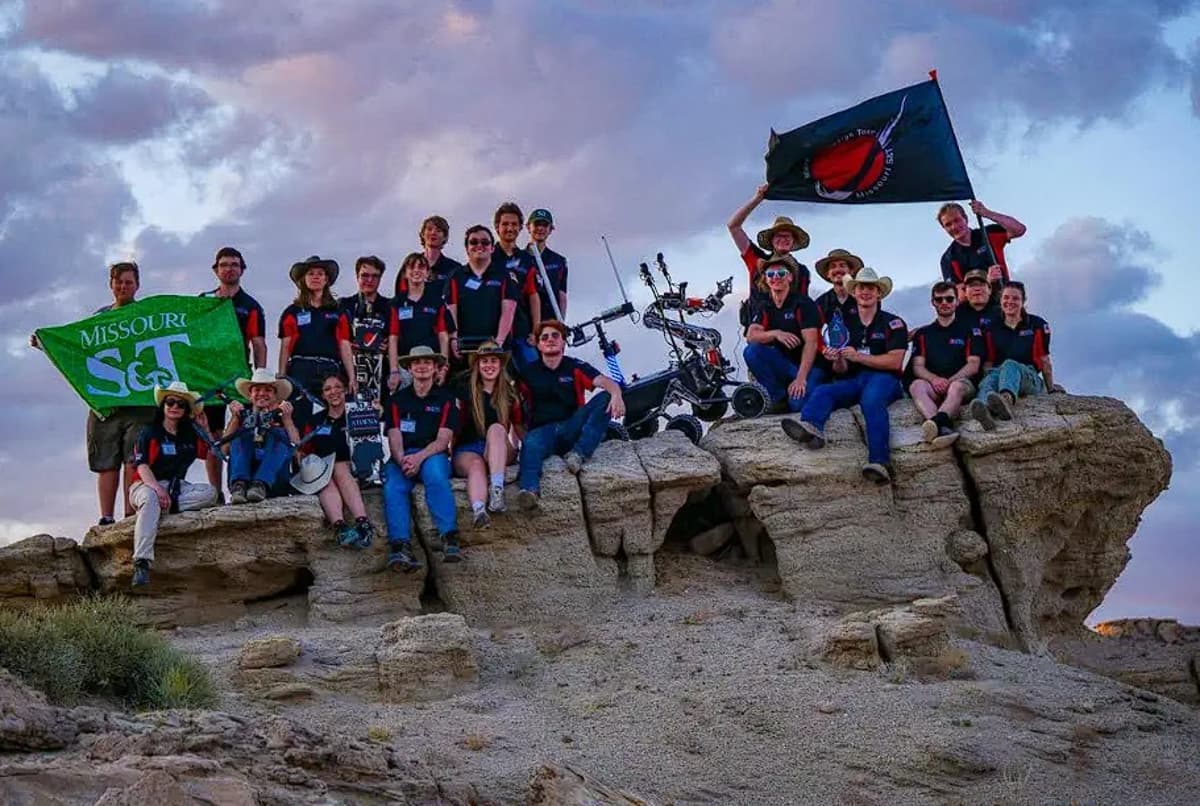
Missouri S&T’s Mars Rover Design Team Wins University Rover Challenge for Second Year in a Row

Why It Matters
The win showcases Missouri S&T’s engineering talent, boosting its reputation in robotics and attracting research funding, while highlighting the growing importance of student‑led autonomous systems for space exploration.
Key Takeaways
- •Athena scored 90.57/100 system acceptance, highest ever for team
- •Perfect 100 scores in equipment‑servicing and delivery missions
- •Final tally 469.57 points, 50+ ahead of second place
- •Team emphasized people development, earning judges’ praise
- •Competition featured 35 teams from 10+ countries
Pulse Analysis
The University Rover Challenge, hosted each summer at the Mars Desert Research Station in Utah, simulates the harsh conditions of Martian exploration. Over 35 university teams from North America, Europe, and Asia converge to demonstrate autonomous navigation, scientific sampling, and payload delivery on rugged terrain. Missouri University of Science and Technology (Missouri S&T) entered the 2024 contest with a newly assembled roster and a rover christened Athena. By securing a second consecutive victory, the school reinforces its standing among the elite STEM institutions that consistently produce high‑performance robotics programs.
Athena’s performance was reflected in a 90.57‑point system acceptance rating and flawless 100‑point scores in both equipment‑servicing and delivery tasks, pushing the team’s final tally to 469.57 points—more than 50 points ahead of the nearest rival. The rover’s ability to traverse soft sand, negotiate steep slopes, and execute autonomous waypoints demonstrated a mature integration of mechanical design, sensor fusion, and software control. Moreover, the team’s emphasis on leadership development and interdisciplinary collaboration earned judges’ commendations, underscoring how student‑run projects can match professional standards.
The victory positions Missouri S&T as a recruiting magnet for aerospace firms and NASA’s next generation of rover engineers. Industry partners increasingly seek university teams that can deliver end‑to‑end solutions, from concept sketches to field‑tested hardware, reducing development risk for commercial lunar and Martian missions. As autonomous systems become central to planetary exploration, the skill set cultivated by the Athena crew—systems engineering, real‑time navigation, and cross‑disciplinary teamwork—will be in high demand. Continued success in the University Rover Challenge therefore translates into stronger research grants, corporate sponsorships, and a pipeline of talent ready for the space economy.
Missouri S&T’s Mars Rover Design Team wins University Rover Challenge for second year in a row
Comments
Want to join the conversation?
Loading comments...