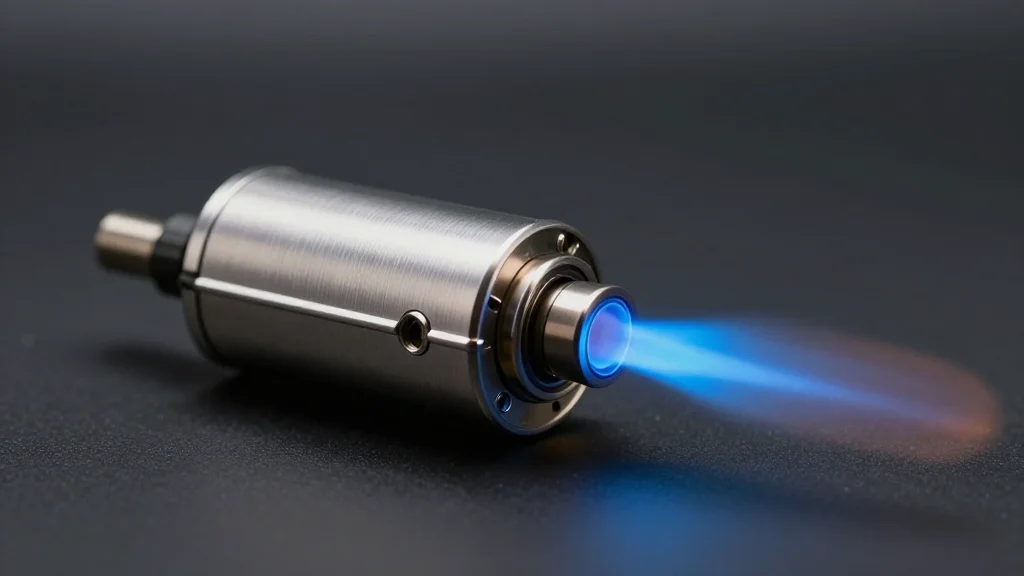
MIT’s Hybrid Micro‑Thruster Paves Way for Mars‑Bound CubeSats

Companies Mentioned
Why It Matters
The MIT hybrid thruster could democratize interplanetary access, allowing universities, startups, and emerging space nations to field missions that were previously limited to large, expensive spacecraft. By using a single, non‑toxic propellant for both high‑thrust maneuvers and efficient cruise phases, the technology reduces launch mass, simplifies spacecraft design, and cuts operational costs, potentially spurring a wave of scientific payloads to Mars, the Moon, and asteroids. Beyond cost, the environmental benefit of replacing hydrazine with ASCENT addresses growing regulatory and safety concerns. As space traffic increases, greener propulsion options become a strategic advantage, positioning MIT and its partners to set new industry standards for sustainable small‑sat operations.
Key Takeaways
- •MIT’s hybrid thruster combines chemical and electric propulsion on a single ASCENT fuel source.
- •Tested thrust‑to‑power ratio: 40‑65 µN per watt; specific impulse: 600 seconds.
- •Only 1 gram of ASCENT propellant used in laboratory demonstration.
- •Technology slated for NASA’s Green Propulsion Dual Mode mission, targeting launch in late 2026.
- •Potential to enable affordable CubeSat missions to Mars, lunar surface, and deep‑space destinations.
Pulse Analysis
MIT’s hybrid micro‑thruster arrives at a pivotal moment when the small‑sat market is maturing from low‑Earth‑orbit constellations to deep‑space ambitions. Historically, the trade‑off between rapid, high‑thrust chemical burns and the fuel‑efficient but low‑thrust electric engines forced designers to carry two separate propellant systems, inflating mass and complexity. By unifying these under ASCENT, MIT not only solves a technical bottleneck but also aligns with the industry’s shift toward greener, less hazardous fuels.
From a competitive standpoint, the technology could erode the advantage of incumbents that rely on traditional hydrazine or separate electric propulsion modules. Companies like Rocket Lab, which already offers integrated propulsion for larger payloads, may need to adapt their product lines to accommodate hybrid solutions for the sub‑10‑kg segment. Moreover, the successful GPDM flight would provide a flight‑heritage data set that could accelerate certification processes, making the thruster attractive to both government agencies and commercial customers seeking rapid, low‑cost interplanetary access.
Looking ahead, scalability will be the litmus test. While the current thrust levels are sufficient for CubeSat‑scale missions, larger scientific or commercial payloads will demand higher thrust while preserving the efficiency gains. If MIT can demonstrate modular scaling—perhaps by clustering multiple thruster units—the technology could underpin a new class of “micro‑interplanetary” spacecraft, reshaping mission architectures and opening up markets such as asteroid mining, planetary reconnaissance, and even crewed logistics support for lunar habitats.
MIT’s Hybrid Micro‑Thruster Paves Way for Mars‑Bound CubeSats
Comments
Want to join the conversation?
Loading comments...