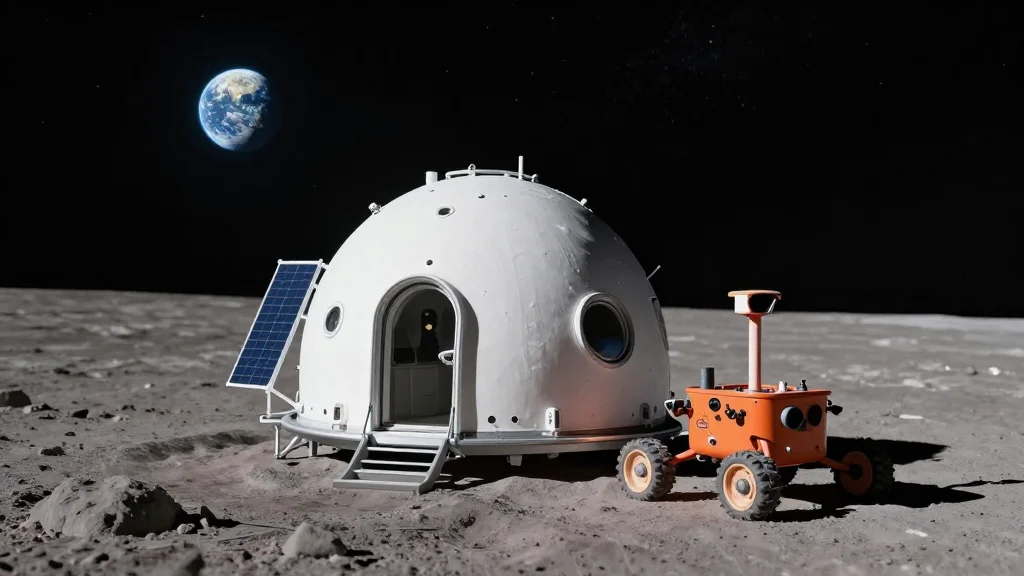
Moon Base: America’s Plan to Establish a Permanent Outpost on the Lunar South Pole
Companies Mentioned


Why It Matters
Moon Base creates a new, long‑term market for lunar logistics, commercial hardware, and international collaboration, positioning the U.S. as the gateway for deep‑space commerce and research.
Key Takeaways
- •NASA commits $30 billion through 2032 for Moon Base development.
- •Phase 3 aims to deliver 150,000 kg cargo annually by 2030s.
- •67 Artemis Accords nations eligible to contribute payloads and tech.
- •Commercial firms will supply habitats, rovers, and surface power systems.
- •Moon Base targets permanent habitation at lunar South Pole by 2035.
Pulse Analysis
The Moon Base announcement revives the ambition first voiced by President Reagan in 1984, when he called for a permanent space station. Decades later, NASA is translating that vision into a lunar outpost, echoing the International Space Station’s legacy of long‑duration habitation but moving the frontier from low Earth orbit to the Moon’s South Pole. By structuring the program in three phases—initial robotic scouting, infrastructure build‑out, and crewed habitation—NASA signals a commitment to a continuous presence that will outlast any single administration.
What sets Moon Base apart is its commercial scaffolding. Unlike the ISS, which relied almost entirely on government‑built modules, the lunar program contracts multiple private companies to deliver habitats, rovers, power generators and surface construction services. This model reduces political risk, accelerates technology maturation, and creates a nascent lunar supply chain that can be leveraged for future missions. Companies such as Blue Origin, Firefly and Astrolab are already positioned to profit from recurring cargo contracts, turning space exploration into a sustainable business.
Strategically, the outpost opens a new market for lunar resources, scientific research, and deep‑space logistics. With 67 nations under the Artemis Accords poised to contribute, the base becomes a multinational hub that can attract research funding, commercial mining ventures, and tourism. Moreover, the infrastructure—high‑capacity cargo delivery, in‑situ resource extraction and nuclear surface power—lays the groundwork for Mars expeditions and broader solar‑system commerce. In essence, Moon Base is not just a scientific milestone; it is a catalyst for a commercial space economy that could reshape global industry over the next half‑century.
Moon Base: America’s Plan to Establish a Permanent Outpost on the Lunar South Pole
Comments
Want to join the conversation?
Loading comments...