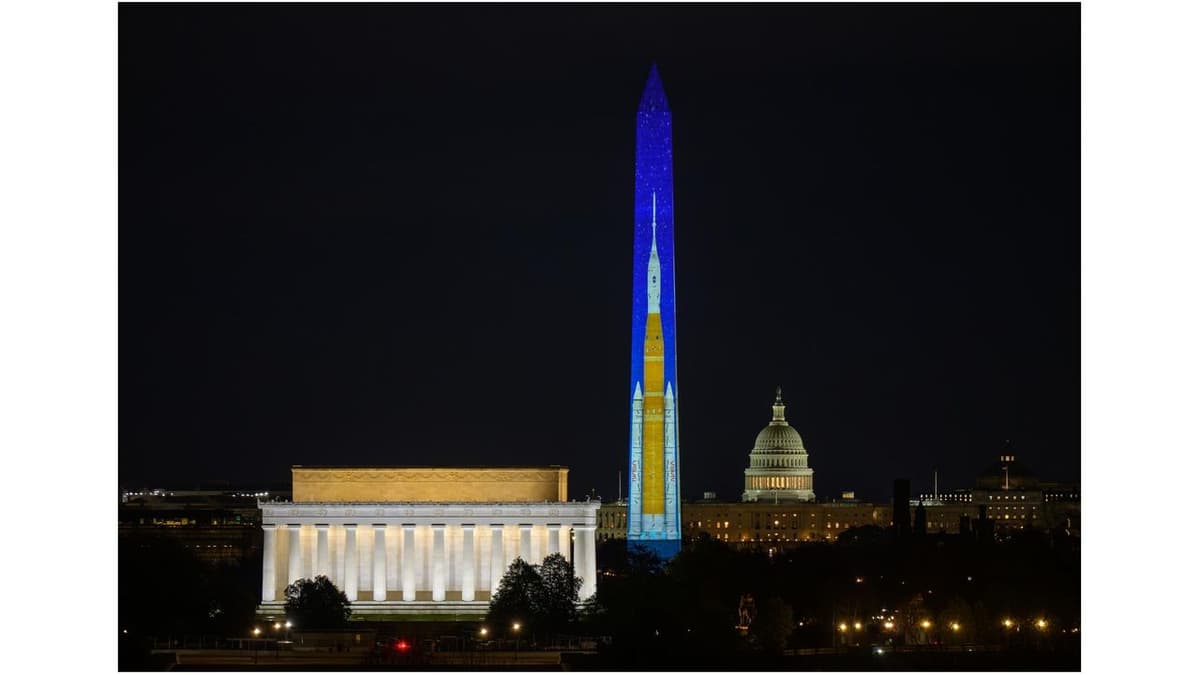
Moon Fever Hits DC as Artemis 2 Rocket 'Candle' Lights up Washington Monument Just 1 Month Before Launch (Photos)
•January 10, 2026
0
Companies Mentioned


Why It Matters
Artemis 2 revives U.S. crewed lunar exploration, driving commercial and geopolitical momentum in space. The public spectacle reinforces national pride and stakeholder support ahead of a critical mission timeline.
Key Takeaways
- •Artemis 2 scheduled launch Feb 6 2026
- •Washington Monument projected Saturn V for 250th anniversary
- •Crew includes first Black person beyond low Earth orbit
- •First woman to travel beyond low Earth orbit
- •Over 50 nations signed Artemis Accords for sustainable space
Pulse Analysis
The light‑show on the Washington Monument served as more than a festive New Year’s display; it was a strategic outreach effort linking America’s founding narrative to its next great adventure in space. By projecting the iconic Saturn V on all sides of the monument, Freedom 250 and NASA created a visual bridge between historic milestones and the upcoming Artemis 2 launch, generating media buzz and public enthusiasm that can translate into political and budgetary support for the program.
Artemis 2 represents a pivotal step for NASA, deploying the powerful Space Launch System and the Orion crew capsule on a ten‑day lunar flyby. The crew’s composition—featuring the first Black astronaut to leave low Earth orbit, the first woman to travel beyond it, and a Canadian specialist—highlights NASA’s commitment to diversity and international partnership. The mission will validate critical systems, from the SLS’s heavy‑lift capabilities to Orion’s life‑support architecture, setting the stage for Artemis 3’s planned lunar landing and a sustained presence on the Moon.
Beyond the immediate mission, Artemis 2 is a catalyst for a broader lunar economy. The Artemis Accords, signed by more than 50 nations, establish norms for responsible exploration, while private‑sector involvement—such as Canada’s contribution of the Canadarm3—demonstrates a growing commercial ecosystem. Success will accelerate plans for lunar habitats, resource extraction, and nuclear power generation, ultimately feeding into NASA’s long‑term goal of sending humans to Mars. The Washington Monument projection, therefore, is a symbolic reminder that the United States is once again positioning itself at the forefront of deep‑space exploration.
Moon fever hits DC as Artemis 2 rocket 'candle' lights up Washington Monument just 1 month before launch (photos)
0
Comments
Want to join the conversation?
Loading comments...