Moon Landings Could Contaminate Evidence About Life's Beginnings on Earth. Here's How
•January 26, 2026
0
Companies Mentioned

Why It Matters
Contamination of lunar polar ice threatens a unique archive of early solar‑system chemistry, impacting research on life’s origins and necessitating new protection policies for upcoming missions.
Key Takeaways
- •Methane exhaust can traverse entire lunar surface.
- •54% of exhaust trapped in polar cold traps.
- •12% reaches opposite pole within two lunar days.
- •Contamination threatens ancient ice preserving prebiotic molecules.
- •Findings will shape planetary‑protection guidelines for lunar missions.
Pulse Analysis
The permanently shadowed craters at the Moon’s north and south poles hold water ice and trapped organics that have survived for billions of years, making them a unique time capsule for studying the early solar system and the origins of life on Earth. Because the lunar environment lacks atmosphere and geological activity, these deposits remain largely untouched, offering scientists a rare chance to analyze pristine pre‑biotic material delivered by comets and asteroids. Any modern contaminant introduced by lander exhaust threatens to obscure or destroy that invaluable record, raising urgent planetary‑protection concerns.
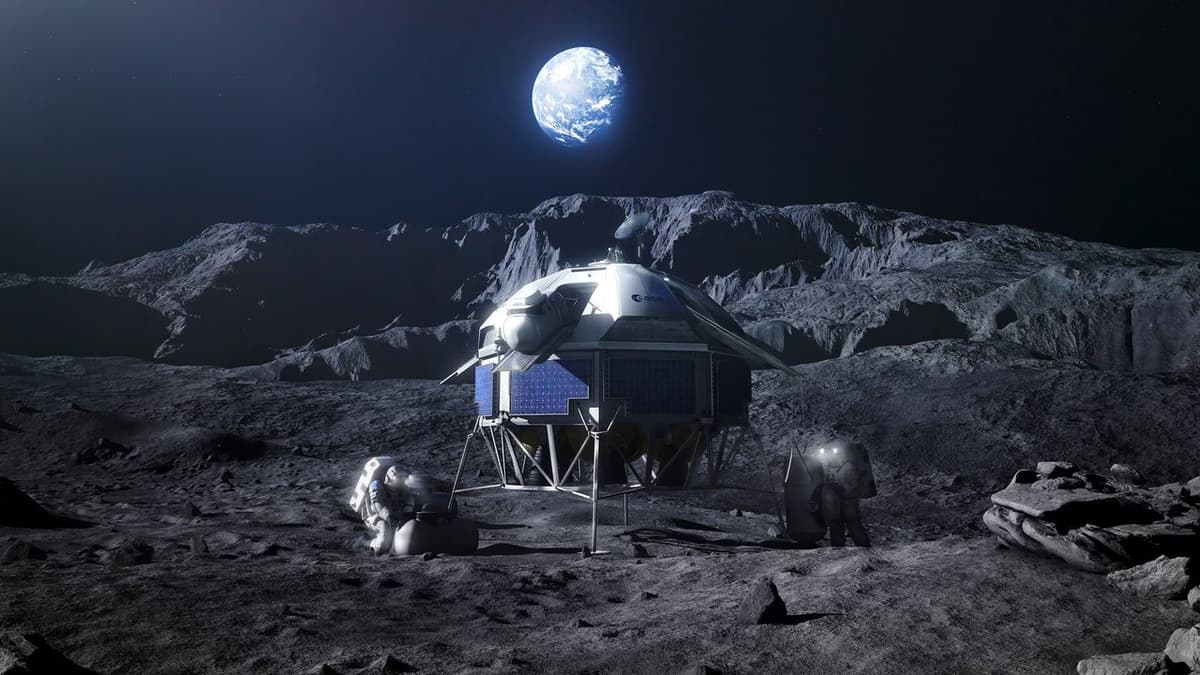
Recent modeling by Francisca Paiva’s team shows that methane, the primary by‑product of many common propellants, behaves ballistically on the airless Moon, hopping across the surface and accumulating in the cold traps. In simulations based on ESA’s Argonaut lander, more than half of the released methane settled in polar regions within seven lunar days, with a measurable fraction reaching the opposite pole in under two days. These findings imply that even brief descent burns can disperse contaminants globally, prompting mission planners to reconsider propellant choices, descent trajectories, and active mitigation measures such as exhaust capture or alternative landing sites.
The study adds a new dimension to existing planetary‑protection frameworks that already regulate contamination of Earth’s fragile ecosystems, such as Antarctica. Space agencies may soon adopt stricter outbound‑contamination protocols, require in‑situ monitoring of exhaust deposits, and develop “clean‑landing” technologies that minimize organic release. Private companies planning commercial lunar bases will also need to factor these constraints into cost and schedule estimates. By safeguarding the Moon’s pristine ice, the international community can preserve a scientific resource that could finally illuminate how life’s building blocks arrived on our planet.
Moon landings could contaminate evidence about life's beginnings on Earth. Here's how
0
Comments
Want to join the conversation?
Loading comments...