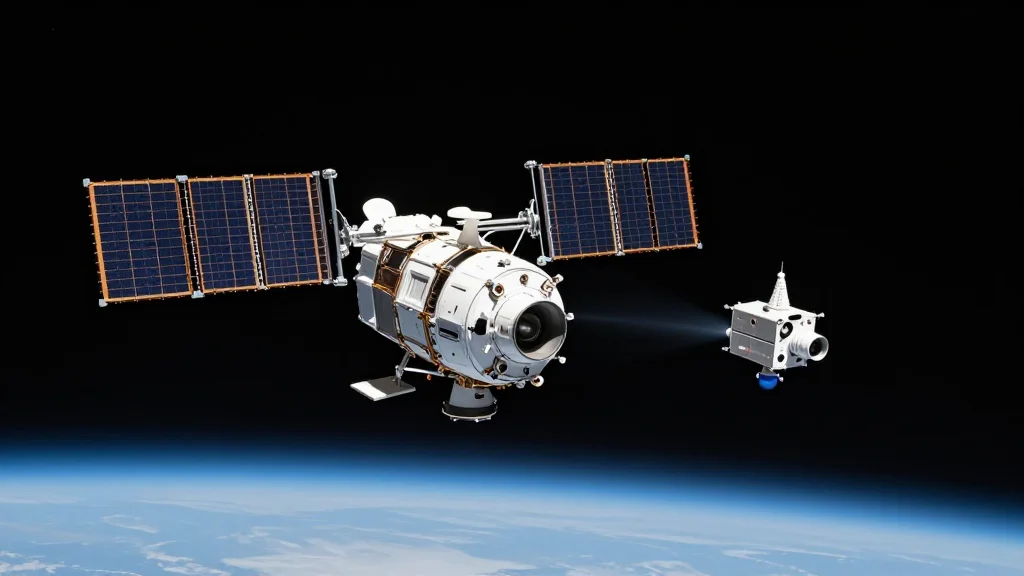
Multiple Russian, Chinese, and American Satellites in Maneuvering Dance in Orbit
Why It Matters
The activity raises strategic tension and collision risk, while confirming that high‑precision rendezvous capabilities are becoming a core military tool that will soon spill into the private sector.
Key Takeaways
- •Russian Cosmos trio achieved sub‑3‑meter separation in LEO
- •U.S. USA‑325 approached Kosmos‑2589 within 13 km in GEO
- •China’s TJS‑10 positioned near U.S. AEHF satellite at 92.4° E
- •RPO expertise is expected to flow into commercial debris‑removal services
Pulse Analysis
The latest wave of satellite proximity operations underscores how space has become a contested arena for intelligence gathering. In April 2026, Russia demonstrated ultra‑close formation flying with Cosmos‑2581, 2582 and 2583, maintaining a 3‑meter gap that rivals any civilian rendezvous mission. Simultaneously, the United States deployed USA‑325, an alleged inspector satellite, to shadow the Russian Kosmos‑2589 in geostationary orbit, closing to within 13 kilometers under favorable lighting. China’s TJS‑10 followed a similar playbook, positioning itself near the U.S. AEHF communications payload at 92.4° E, suggesting a coordinated “inspection” choreography among the three powers.
These maneuvers are more than geopolitical theater; they reveal a rapid maturation of high‑precision orbital control. Proximity operations require accurate propulsion, advanced navigation, and real‑time situational awareness—capabilities that were once the exclusive domain of national security programs. As nations test these techniques, the risk of inadvertent collisions rises, prompting calls for tighter space traffic management and clearer norms for on‑orbit behavior. The close approaches also expose vulnerabilities in satellite shielding and command‑and‑control, potentially encouraging the development of defensive counter‑measures.
Looking ahead, the expertise honed in these military drills is expected to cascade into the commercial sector. Companies eyeing on‑orbit servicing, satellite refueling, and active debris removal will leverage the same RPO technology, accelerating a new market for space logistics. Policymakers must balance the benefits of a vibrant commercial ecosystem with the need to prevent an arms‑race‑like escalation in space. Establishing transparent guidelines and shared data repositories could mitigate risks while fostering innovation, ensuring that the orbital commons remain sustainable for both defense and civilian uses.
Multiple Russian, Chinese, and American satellites in maneuvering dance in orbit
Comments
Want to join the conversation?
Loading comments...