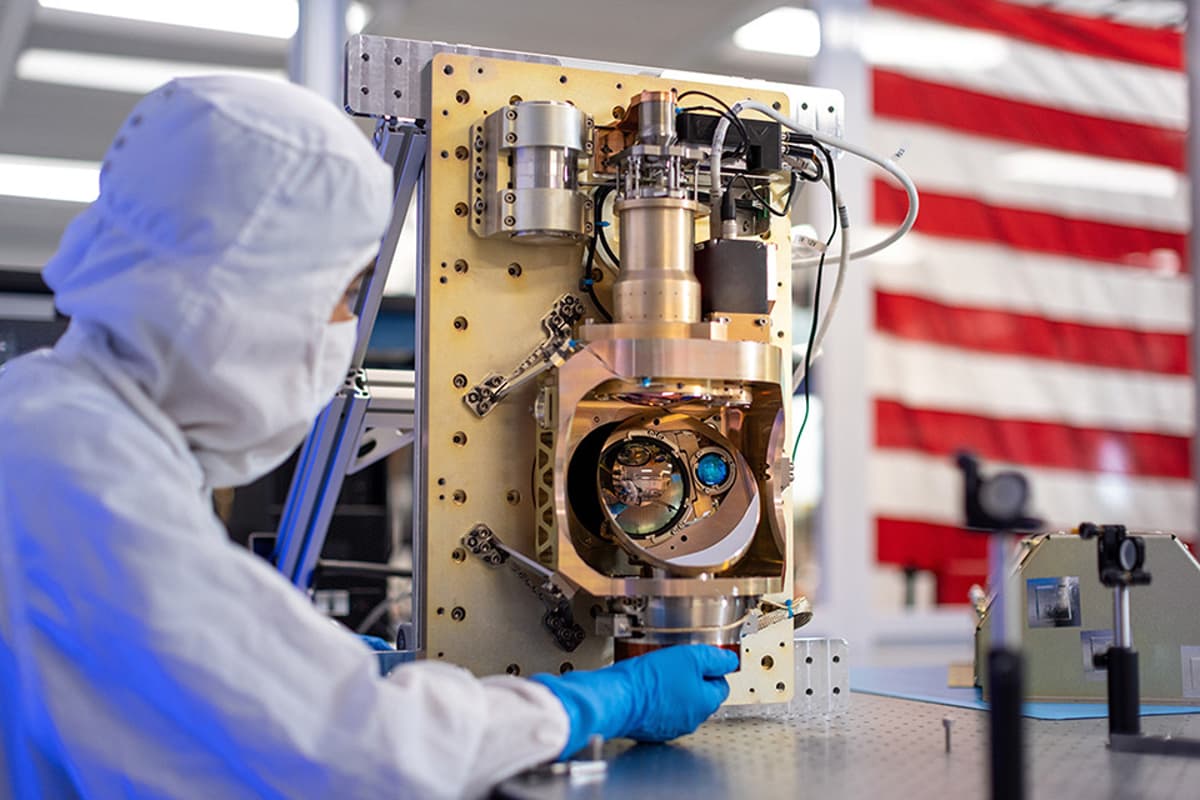
Muon Space Scales Workforce Following Transition to Constellation-Scale Manufacturing
Companies Mentioned
Why It Matters
The move positions Muon Space to meet growing defense and commercial demand for fast‑turnaround, outcome‑focused satellite constellations, reshaping how the U.S. government procures space data services.
Key Takeaways
- •Muon Space raised $146 M Series B to fund constellation production.
- •New 130,000‑sq‑ft facility targets 500 satellites per year.
- •Secured $151 B MDA SHIELD IDIQ and $44.6 M Space Force SBIR contracts.
- •MuSat‑XL integrates zinc thrusters and Starlink laser terminals for rapid deployment.
Pulse Analysis
Muon Space’s recent $146 million Series B injection and a new 130,000‑square‑foot manufacturing hub signal a decisive pivot toward constellation‑scale production. By automating its "Mission Foundry" workflow, the Silicon Valley firm aims to compress satellite development cycles from years to months, a capability that aligns with the defense sector’s appetite for rapid, data‑as‑a‑service solutions. The facility’s projected output of 500 units annually will support a growing pipeline of multi‑mission constellations, positioning Muon as a key supplier for both government and commercial customers seeking high‑cadence intelligence.
The company’s defense backlog underscores the strategic relevance of its technology. Winning a seat in the Missile Defense Agency’s $151 billion SHIELD IDIQ program and a $44.6 million Space Force SBIR Phase III award for environmental monitoring satellites demonstrates confidence in Muon’s vertically integrated Muon Halo stack. These contracts not only provide steady revenue but also validate the DaaS model, where clients pay for actionable data rather than hardware, accelerating adoption across the U.S. military’s proliferated satellite architectures.
Looking ahead, Muon’s MuSat‑XL platform combines zinc‑based thrusters, larger payload bays, and upcoming Starlink mini‑laser terminals to deliver persistent optical connectivity—a potential game‑changer for real‑time tactical data. With a 20‑satellite launch manifest slated for the next 20 months and orbital tests of Starlink‑linked optical links planned for 2027, Muon is set to influence the broader market’s shift toward integrated, outcome‑driven space services. Competitors will need comparable manufacturing agility and in‑house component production to keep pace.
Muon Space Scales Workforce Following Transition to Constellation-Scale Manufacturing
Comments
Want to join the conversation?
Loading comments...