NanoAvionics to Launch Trio of Milestone Payloads on SpaceX CAS500-2 Mission
Why It Matters
The flight validates low‑cost, rapid‑deployment platforms for high‑value research and national‑security applications, accelerating commercial and governmental adoption of advanced small‑sat technologies.
Key Takeaways
- •SNAPPY is the first CubeSat neutrino detector, testing solar‑neutrino feasibility
- •QUBE II demonstrates quantum key exchange from an 8U CubeSat to ground
- •Eycore‑1 pilots European X‑band SAR on NanoAvionics MP42 bus
- •Mission targets 510 km sun‑synchronous orbit, deploying satellites 75‑82 min after launch
- •Payloads aim to de‑risk sovereign defense imaging and secure communications
Pulse Analysis
The launch of SNAPPY marks a watershed moment for particle‑physics research in low‑Earth orbit. By fitting a neutrino detector into a 3U CubeSat, the project proves that even the most demanding scientific instruments can be miniaturized, opening pathways for future missions that could monitor solar activity or test fundamental physics closer to the Sun. This approach dramatically reduces development costs and launch fees, making space‑based particle experiments accessible to universities and smaller agencies.
Quantum communications are poised to become a cornerstone of secure data transmission, and QUBE II’s demonstration of quantum‑key distribution from an 8U CubeSat is a critical step toward that future. The payload’s compact optical terminal proves that un‑hackable links can be established without the massive infrastructure traditionally required for ground‑based quantum networks. As governments and enterprises seek quantum‑grade security, the ability to field such capabilities on a small, affordable satellite will likely spur a new market segment for commercial quantum‑satellite services.
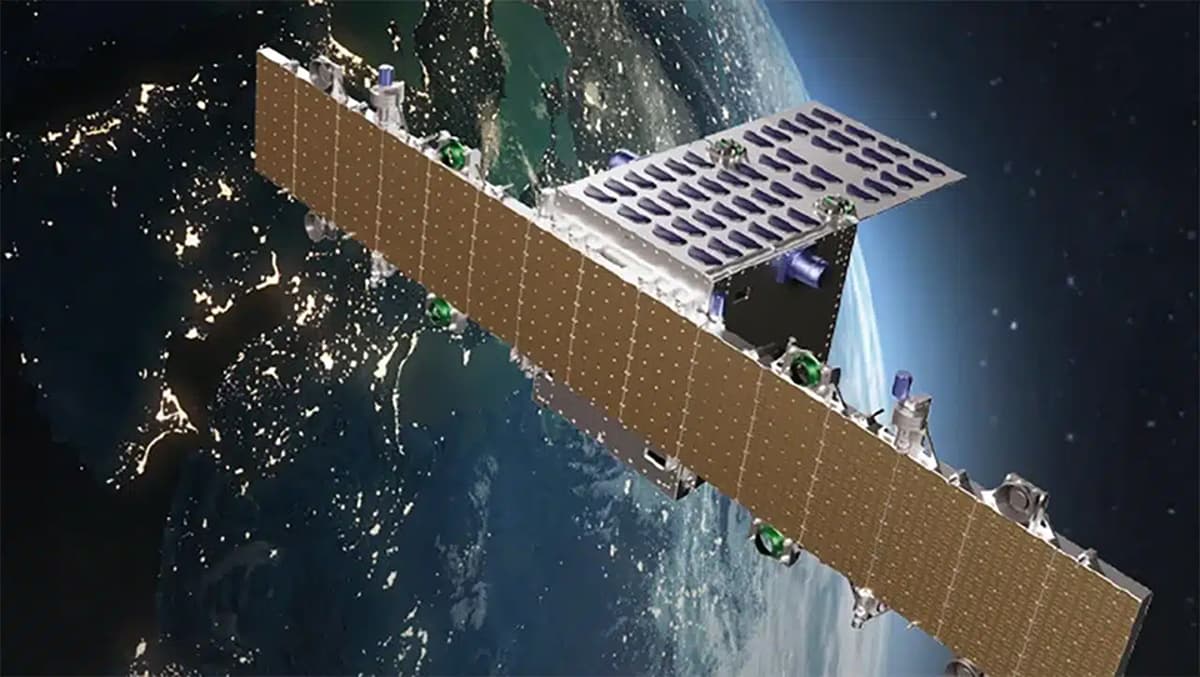
Eycore‑1’s X‑band synthetic‑aperture radar showcases Europe’s drive for sovereign imaging capability without relying on external providers. Integrated onto NanoAvionics’ proven MP42 bus, the SAR demonstrator delivers sub‑meter resolution, supporting NATO and allied defense needs while also offering rapid disaster‑response imaging. By proving the deployable phased‑array antenna in orbit, the mission de‑risks the technology for future larger SAR constellations, promising cost‑effective, high‑frequency revisit rates that could reshape both military reconnaissance and civilian remote‑sensing markets.
NanoAvionics to Launch Trio of Milestone Payloads on SpaceX CAS500-2 Mission
Comments
Want to join the conversation?
Loading comments...