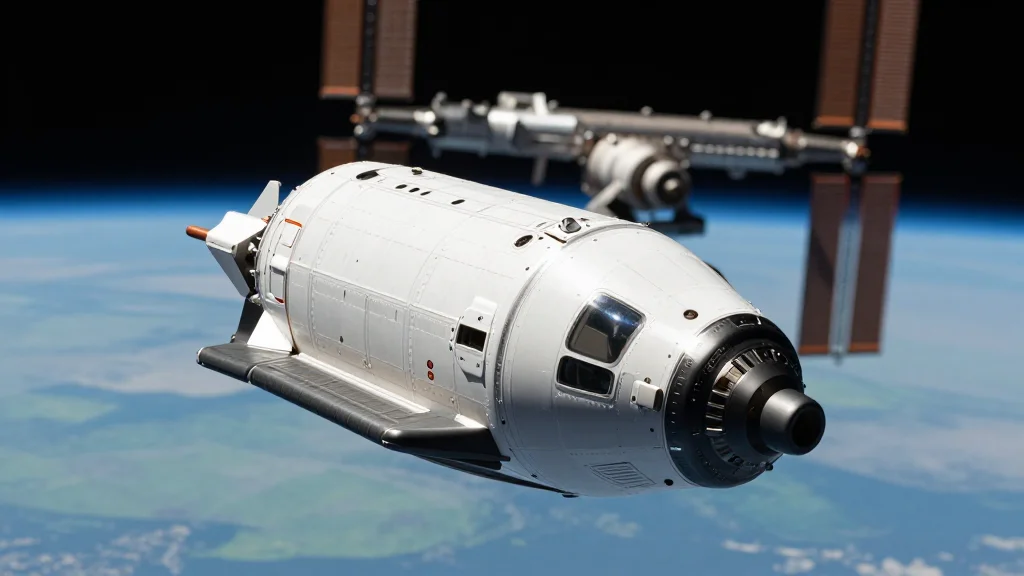
NASA Adds Six Crew‑Dragon Missions to SpaceX Contract, Extending ISS Crew Access to 2030


Why It Matters
Extending SpaceX’s Crew‑Dragon missions safeguards continuous crew access to the ISS as the station nears the end of its operational life, preventing a potential gap that could jeopardize scientific research and international partnerships. The move also underscores the strategic risk NASA faces in relying on a single certified provider, highlighting the urgency for Boeing to resolve Starliner’s certification hurdles. By securing a six‑month rotation cadence, NASA maximizes the station’s utilization, ensuring that experiments, commercial activities, and diplomatic commitments proceed without interruption. The contract expansion reshapes the commercial crew market by reinforcing SpaceX’s dominant position and potentially influencing future government procurement strategies. Investors and suppliers tied to crewed launch services will monitor Boeing’s progress closely, as any breakthrough could re‑introduce competition and affect pricing, innovation, and the broader ecosystem of low‑Earth‑orbit infrastructure.
Key Takeaways
- •NASA filed a May 18 procurement request to add six post‑certification Crew‑Dragon missions to SpaceX’s contract.
- •The new missions will extend crewed ISS access through late 2030, covering three years at a six‑month cadence.
- •NASA’s last contract expansion in 2022 added five missions for $1.4 billion; monetary terms for the new add‑on were not disclosed.
- •Boeing’s CST‑100 Starliner remains uncertified for crewed flight, with only a cargo‑only Starliner‑1 mission planned this year.
- •The extension solidifies SpaceX’s status as the sole NASA‑certified crew transport system, influencing future market dynamics.
Pulse Analysis
NASA’s decision to lock in six additional Crew‑Dragon flights is a textbook case of risk‑averse procurement in a high‑stakes environment. By opting for a sole‑source amendment, the agency sidesteps the uncertainty of a dual‑provider model that, until now, has been hampered by Starliner’s certification delays. Historically, NASA’s commercial crew strategy hinged on competition to drive down costs and spur innovation. However, the practical reality of a single certified vehicle forces a trade‑off: reliability versus market competition.
From a financial perspective, the lack of disclosed pricing suggests NASA may be leveraging the existing contract framework to avoid renegotiating rates, potentially securing favorable terms based on the 2022 $1.4 billion extension. If the new missions are priced similarly, the agency could be committing roughly $1.7 billion for the six PCMs, a modest incremental cost compared with the expense of developing a parallel crew system. This fiscal prudence aligns with broader budget constraints while preserving the ISS’s scientific output.
Looking ahead, the extension’s impact will ripple through the emerging low‑Earth‑orbit economy. Private operators eyeing ISS‑derived platforms—such as Axiom Space’s commercial modules—will benefit from a predictable crew schedule, reducing operational risk. Conversely, Boeing faces a narrowing window to prove Starliner’s viability before the ISS retires, after which the agency may pivot to lunar‑orbit or deep‑space crew transport contracts. The pressure could accelerate certification milestones, but it also risks a scenario where Boeing’s investment yields limited returns if the market shifts toward lunar and Mars architectures. In sum, NASA’s move stabilizes the near‑term crew transport landscape while sharpening the strategic imperative for Boeing to catch up, setting the stage for a new competitive dynamic in the post‑ISS era.
NASA Adds Six Crew‑Dragon Missions to SpaceX Contract, Extending ISS Crew Access to 2030
Comments
Want to join the conversation?
Loading comments...