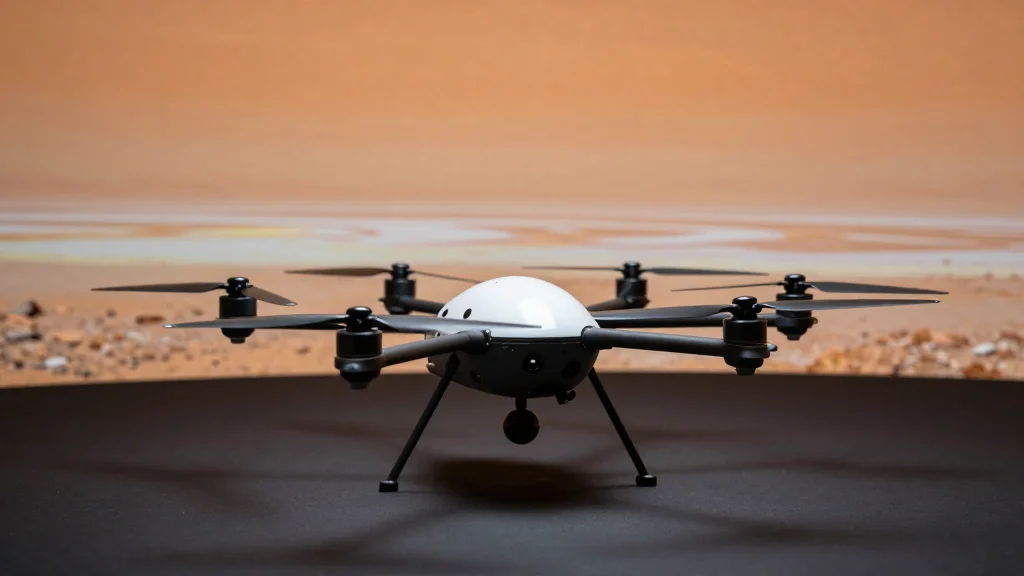
NASA Advances Dragonfly with Honeycomb Panel Assembly and Parachute Drop Tests

Why It Matters
Dragonfly represents the first autonomous aerial vehicle designed for another world, pushing the envelope of robotics, materials science, and planetary chemistry. Its ability to traverse Titan’s thick atmosphere and conduct in‑situ analysis could unlock clues about prebiotic chemistry that are inaccessible to orbiters or static landers. Success would validate a new class of exploration platforms, encouraging both government and commercial investors to pursue similar missions to other bodies with atmospheres, such as Venus or Mars. The mission also serves as a technology demonstrator for lightweight honeycomb structures and high‑performance parachutes, components that could be repurposed for Earth‑orbiting satellites, reusable launch vehicles, and even terrestrial aerospace applications. By proving these technologies at scale, Dragonfly helps de‑risk future high‑cost deep‑space endeavors, potentially accelerating the timeline for crewed missions to the outer planets.
Key Takeaways
- •NASA began assembling honeycomb panels for Dragonfly’s main body, a key step in structural integration.
- •Parachute drop tests were completed, confirming deployment performance for Titan’s dense atmosphere.
- •The $3.35 billion mission targets a launch as early as 2028, aiming to explore Titan’s organic chemistry.
- •Charles Malespin highlighted the octocopter design’s suitability for Titan’s 1.5‑times‑Earth‑pressure atmosphere.
- •Melissa Trainer emphasized the chemistry lab’s ability to detect trace organics in melt‑pool samples.
Pulse Analysis
Dragonfly’s recent milestones illustrate a maturation of NASA’s approach to planetary exploration: rather than relying on single‑point landers, the agency is betting on mobility and in‑situ analysis to maximize scientific return. The honeycomb panel assembly reflects a broader industry trend toward lightweight, high‑strength composites that can reduce launch mass—a critical cost driver for deep‑space missions. As private launch providers drive down payload prices, the ability to shave even a few kilograms translates into significant budget savings, making ambitious missions like Dragonfly more financially viable.
From a competitive standpoint, Dragonfly sets a high bar for commercial entrants eyeing the same niche. Companies such as SpaceX and Blue Origin have expressed interest in developing planetary aerial platforms, but they lack the extensive heritage of NASA’s rover and lander programs. The successful parachute validation also provides a reusable entry‑system template that could be adapted for cargo delivery to bodies with atmospheres, opening new markets for payload delivery services.
Looking forward, the mission’s success will hinge on the integration of its complex subsystems—flight control, sample handling, and power management—under Titan’s extreme temperature swings. If Dragonfly can demonstrate reliable operation in a simulated environment, it will not only secure its own scientific objectives but also act as a proof‑of‑concept for future missions to Venus, where a dense atmosphere similarly favors aerial platforms. The upcoming system‑level tests will be closely watched by both the scientific community and investors, as they will either cement confidence in high‑risk, high‑reward exploration architectures or prompt a reassessment of the cost‑benefit balance for such endeavors.
NASA Advances Dragonfly with Honeycomb Panel Assembly and Parachute Drop Tests
Comments
Want to join the conversation?
Loading comments...