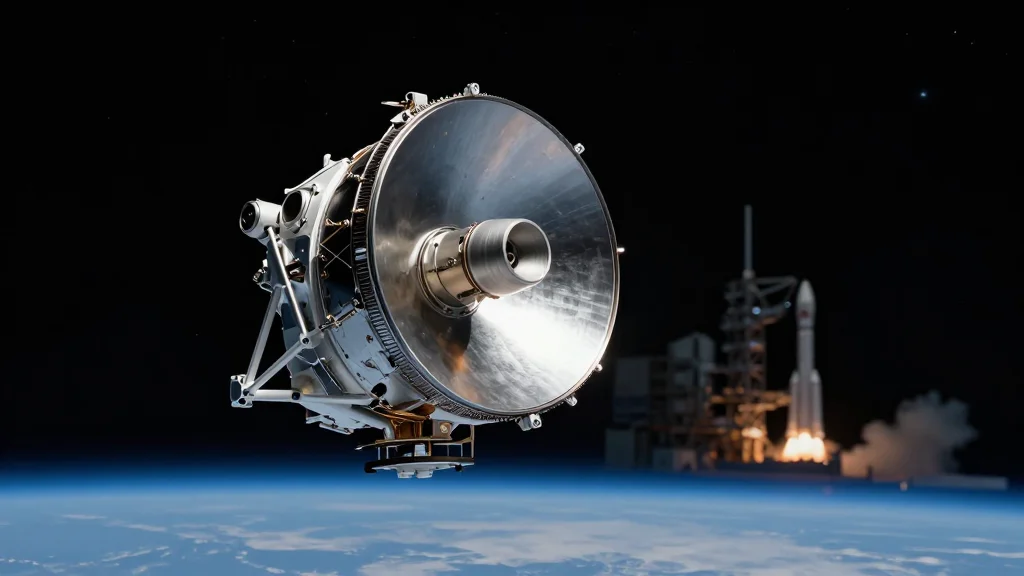
NASA Advances Roman Space Telescope Launch to Aug. 30 2026, Eight Months Ahead of Schedule

Companies Mentioned
Why It Matters
Launching the Roman Space Telescope eight months early accelerates the timeline for critical dark‑energy measurements, potentially reshaping cosmological models before the next generation of ground‑based observatories comes online. Its expansive field of view will also democratize access to high‑resolution infrared data, enabling a broader range of researchers to conduct exoplanet surveys and galaxy evolution studies. By securing an early launch slot, NASA reduces schedule risk and preserves launch capacity for other flagship missions, reinforcing the agency’s ability to deliver multiple high‑impact science programs in parallel. The telescope’s placement at L2, alongside the James Webb Space Telescope, creates a synergistic observatory pair that can cross‑validate findings and enable coordinated campaigns. This partnership enhances the scientific return of both missions and solidifies NASA’s leadership in space‑based infrared astronomy for the coming decade.
Key Takeaways
- •Launch date set for Aug. 30 2026, eight months earlier than the originally planned September window.
- •Final inspection of the 7.9‑foot primary mirror completed at Goddard in late May.
- •Roman’s field of view is 100× larger than Hubble, boosting survey efficiency.
- •Telescope will launch on a SpaceX Falcon Heavy and head to the Sun‑Earth L2 point.
- •Early launch reduces schedule conflict with other NASA flagship missions.
Pulse Analysis
NASA’s decision to advance the Roman launch reflects a strategic balancing act between scientific ambition and operational pragmatism. Historically, flagship missions have suffered from schedule creep that erodes budget margins and delays scientific returns. By front‑loading the launch, NASA not only mitigates these risks but also capitalizes on a relatively quiet launch period, ensuring Falcon Heavy availability without competing for slots later in the year.
From a market perspective, the early launch may also influence the commercial launch sector. SpaceX’s Falcon Heavy has demonstrated reliability, but its cadence is still limited by payload demand. Securing a high‑profile NASA payload ahead of other customers showcases the rocket’s capability to handle large, complex observatories, potentially attracting additional government and commercial contracts.
Looking ahead, Roman’s data will likely feed into the next wave of cosmological surveys, complementing ground‑based projects like the Vera C. Rubin Observatory. The synergy between space‑based infrared observations and terrestrial optical surveys could tighten constraints on dark energy parameters, a key objective for the astrophysics community. Moreover, the mission’s open‑data policy will empower a new generation of researchers, fostering innovation and potentially accelerating discoveries in exoplanet science and galaxy formation.
NASA Advances Roman Space Telescope Launch to Aug. 30 2026, Eight Months Ahead of Schedule
Comments
Want to join the conversation?
Loading comments...