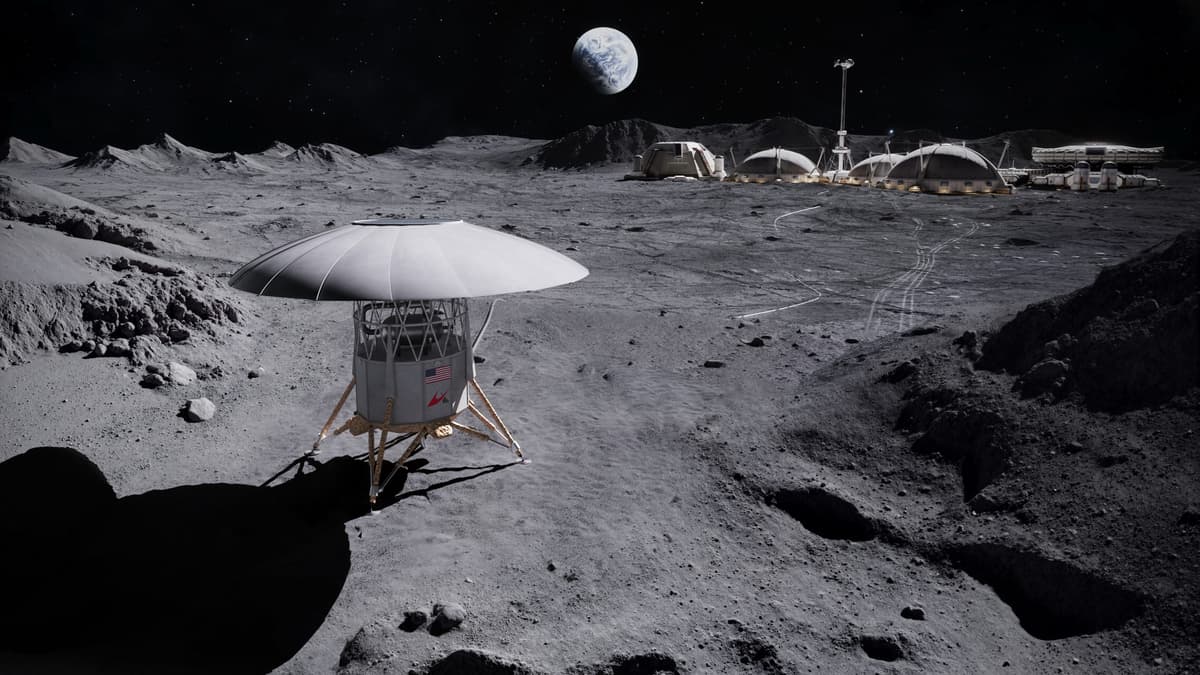
NASA and DOE to Collaborate on Lunar Nuclear Reactor Development
•January 25, 2026
0
Companies Mentioned


Why It Matters
The agreement secures critical nuclear‑energy expertise and fuel supply, enabling sustainable power for Artemis habitats and accelerating commercial lunar infrastructure.
Key Takeaways
- •NASA targets 100 kW lunar reactor by 2029
- •DOE to supply 400 kg HALEU fuel for demonstrations
- •Launch services shifted to NASA’s Human Landing System
- •Final proposal deadline expected early 2026
- •Public‑private partnership aims to power Artemis habitats
Pulse Analysis
The NASA‑DOE memorandum of understanding formalizes a next‑generation lunar power strategy centered on the Fission Surface Power (FSP) program. By mandating a 100‑kilowatt reactor capable of operating in the harsh lunar environment, the agencies are setting a clear performance benchmark that aligns with Artemis objectives. DOE’s role extends beyond safety oversight; it will contribute design expertise and deliver approximately 400 kilograms of high‑assay low‑enriched uranium (HALEU), a fuel type gaining traction in terrestrial micro‑reactor development. This synergy leverages decades of joint experience, from the KRUSTY demonstrator to recent cooperative agreements, ensuring that technical risk is shared and mitigated.
From an industry perspective, the revised Announcement for Partnership Proposals (AFPP) reshapes commercial participation. Companies no longer bear launch and landing responsibilities, as NASA will provide these services through the Human Landing System (HLS) program, reducing cost barriers and focusing contractor effort on reactor design and integration. The explicit HALEU requirement also standardizes fuel handling, addressing proliferation concerns while opening pathways for domestic fuel production. With the final AFPP slated for early 2026, firms have a defined window to submit proposals, positioning the market for a competitive burst of innovation in compact nuclear technology.
Strategically, a reliable lunar power source is a linchpin for sustained presence on the Moon and a springboard to Mars. Continuous 100‑kilowatt output enables habitats, scientific payloads, and in‑situ resource processing, reducing reliance on solar arrays that suffer from lunar night cycles. Moreover, mastering HALEU‑based reactors could accelerate terrestrial applications, creating a feedback loop between space and Earth energy sectors. The NASA‑DOE collaboration thus not only underpins the next phase of human exploration but also signals a broader shift toward nuclear solutions in the emerging space economy.
NASA and DOE to collaborate on lunar nuclear reactor development
0
Comments
Want to join the conversation?
Loading comments...