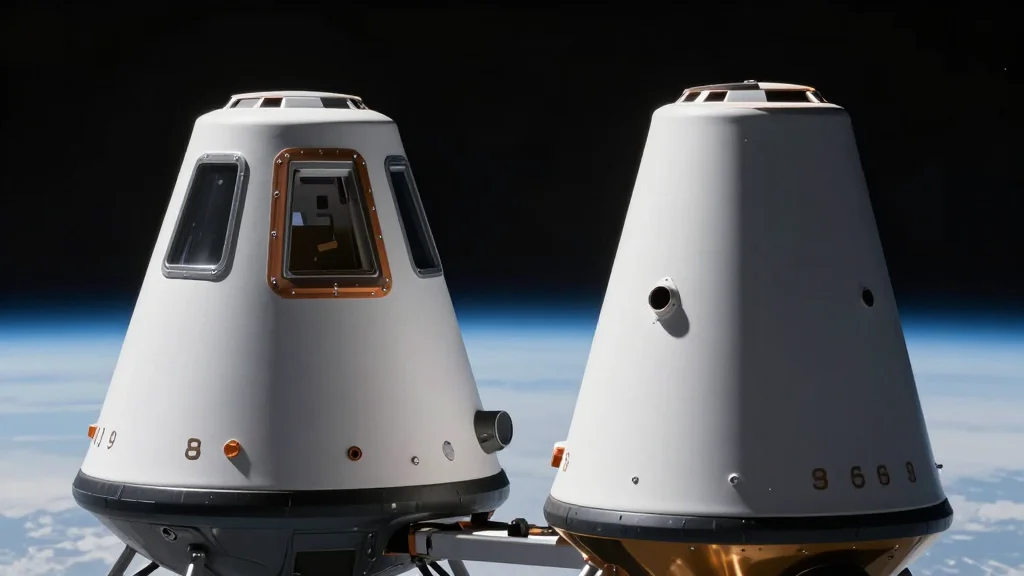
NASA Announces Artemis III Crew, Sets Stage for 2027 Lunar Lander Test

Companies Mentioned


Why It Matters
Artemis III is the pivotal bridge between NASA’s uncrewed test flights and the agency’s goal of a sustainable lunar foothold. By validating commercial lander docking in orbit, the mission reduces technical risk for the first crewed Moon landing, potentially accelerating the timeline for a permanent lunar base. The competition between SpaceX and Blue Origin also signals a shift toward a market‑driven approach to deep‑space exploration, where performance, cost, and reliability will dictate future government contracts. The crew’s selection, even without disclosed names, highlights NASA’s emphasis on experience and diversity within its astronaut corps, reinforcing the agency’s commitment to a broad talent pool for long‑duration missions. Successful execution will boost confidence among international partners and private investors, encouraging further investment in lunar infrastructure, in‑situ resource utilization, and the emerging lunar economy.
Key Takeaways
- •NASA announced a four‑astronaut Artemis III crew on June 9, 2026.
- •Mission slated for late 2027 will test SpaceX and Blue Origin lunar landers in low‑Earth orbit.
- •Crew composition: commander, pilot, and two mission specialists drawn from NASA’s active corps.
- •Artemis III follows Artemis II’s 2026 lunar flyby and precedes the first crewed Moon landing planned for Artemis IV.
- •Successful docking will validate the Lunar Gateway concept and influence billions of dollars in future HLS contracts.
Pulse Analysis
The Artemis III crew announcement is less about individual astronauts and more about the strategic inflection point it creates for the commercial space sector. NASA’s decision to test both SpaceX’s and Blue Origin’s HLS on a single flight reflects a pragmatic risk‑sharing approach: it forces the two companies to meet a common set of performance metrics while giving NASA comparative data to inform its long‑term procurement strategy. Historically, NASA has alternated between single‑vendor contracts (e.g., the Apollo program) and competitive procurement (e.g., the Commercial Crew Program). Artemis III leans toward the latter, suggesting the agency expects rapid iteration and cost reductions from market competition.
From a market perspective, the test flight could unlock a cascade of downstream contracts. If either lander demonstrates superior thermal management, payload capacity, or reusability, NASA may award a larger share of the HLS budget—estimated in the low‑single‑digit‑billion‑dollar range—to that provider. This would not only boost the winner’s balance sheet but also set a benchmark for future private‑sector lunar services, from habitat construction to in‑situ resource extraction. Conversely, a failure or delay could stall the entire Artemis timeline, prompting Congress to reassess funding levels and potentially shift focus back to government‑built hardware.
Finally, the crew announcement re‑energizes public interest in lunar exploration. By streaming the briefing live and emphasizing the crew’s role in a historic test, NASA is cultivating a narrative that positions the Artemis program as a collaborative, commercial‑driven venture rather than a solely government‑run effort. This narrative is crucial for maintaining political and fiscal support as the agency pushes toward a permanent lunar presence and, eventually, crewed missions to Mars.
NASA Announces Artemis III Crew, Sets Stage for 2027 Lunar Lander Test
Comments
Want to join the conversation?
Loading comments...