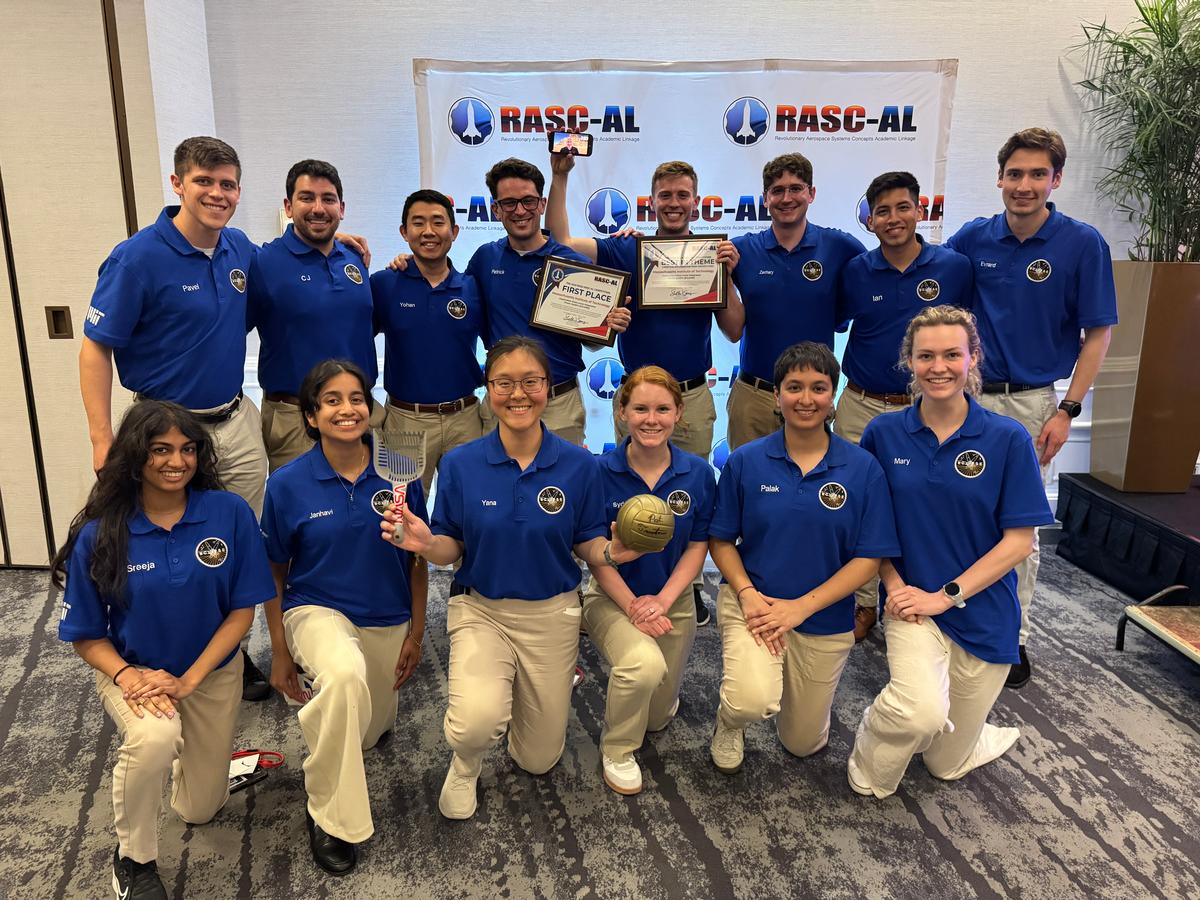
NASA Announces Winners of 2026 University Innovation Competition
Why It Matters
RASC-AL accelerates the pipeline of technically proficient talent and validates university‑level concepts that can feed directly into NASA’s Artemis and Mars exploration roadmaps, reducing development risk and cost.
Key Takeaways
- •MIT won first place with Exploration-Class Lunar Integrated Power System.
- •MIT also secured second place for Mars Exploration Layered Infrastructure.
- •Virginia Tech took third with Mars Pylon Network concept.
- •Competition nurtures workforce development for Artemis and future missions.
- •Awards highlighted excellence in communications, lunar power, and prototype development.
Pulse Analysis
The Revolutionary Aerospace Systems Concepts – Academic Linkage (RASC-AL) program has become a cornerstone of NASA’s strategy to bridge academia and agency mission needs. By inviting university teams to develop full‑scale mission concepts, NASA extracts fresh perspectives on power systems, habitat infrastructure, and surface operations that might otherwise remain in the research lab. The competition’s rigorous evaluation—covering technical rigor, communication clarity, and systems thinking—mirrors the agency’s own review processes, giving students a realistic taste of aerospace engineering at the highest level.
This year’s winners underscore the relevance of lunar and Martian technologies to NASA’s near‑term goals. MIT’s ECLIPSE project proposes an integrated power architecture capable of sustaining long‑duration lunar habitats, directly supporting Artemis base‑camp plans. Their second‑place Mars layered infrastructure concept tackles the logistical challenges of building a resilient Martian settlement, aligning with the agency’s long‑range vision for human presence on the Red Planet. Virginia Tech’s Mars Pylon Network offers a modular approach to surface mobility and resource distribution, highlighting how student innovation can complement NASA’s own architecture studies.
Beyond the immediate technical outcomes, RASC-AL serves as a talent incubator for the aerospace sector. Participants gain hands‑on experience with mission architecture, systems engineering, and technical communication—skills that are in high demand as NASA expands its commercial partnerships and deep‑space ambitions. The cross‑agency collaboration, managed by the National Institute of Aerospace and NASA’s Tournament Lab, ensures that the competition remains aligned with evolving agency priorities, making it a vital pipeline for the next generation of space engineers and innovators.
NASA Announces Winners of 2026 University Innovation Competition
Comments
Want to join the conversation?
Loading comments...