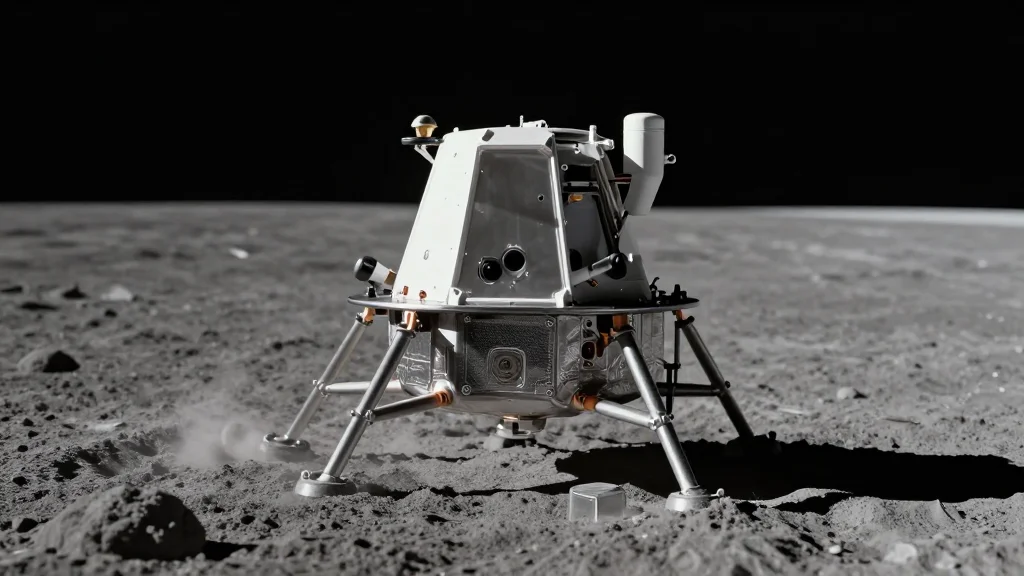
NASA Awards $200M+ Lunar Rover Contracts to Blue Origin, Astrolab and Lunar Outpost

Companies Mentioned

Why It Matters
The contracts mark a decisive shift from NASA‑led hardware development to a commercial‑first supply chain for lunar exploration. By funding multiple vendors, the agency spreads technical risk and creates a marketplace that can sustain a permanent presence on the Moon, a prerequisite for future Mars missions. The rover and lander capabilities will also enable scientific experiments, resource prospecting, and infrastructure construction that were previously limited to short‑duration robotic missions. Beyond the Artemis program, the influx of private capital and the demonstrated viability of CLPS contracts could attract additional investors to the burgeoning SpaceTech ecosystem, spurring new startups focused on lunar habitats, power systems and surface manufacturing. The competitive dynamics between Blue Origin and SpaceX, in particular, may compress development schedules and lower launch costs, benefitting both government and commercial customers seeking lunar services.
Key Takeaways
- •NASA awarded Blue Origin a contract valued at $188 million (some reports cite $468 million) for the Mark 1 Endurance cargo lander.
- •Astrolab and Lunar Outpost each received roughly $220 million to build crewed lunar terrain vehicles.
- •The LTVs will travel up to 6 mph, carry up to 2,000 lb, and have a 200‑km range with autonomous navigation.
- •Contracts are part of the CLPS program supporting Artemis IV crewed landing targeted for 2028.
- •Blue Origin’s lander will target the Shackleton Connecting Ridge near the lunar South Pole.
Pulse Analysis
NASA’s latest CLPS awards illustrate a maturing lunar logistics ecosystem that mirrors the commercial cargo model that has transformed low‑Earth orbit. By diversifying suppliers, the agency not only mitigates the risk of a single‑point failure but also creates a price‑competition loop that could drive down the $10‑$15 million per‑kilogram launch cost that has historically hampered lunar operations. The Blue Origin contract, despite the reported figure variance, underscores the company’s strategic pivot from sub‑orbital tourism to deep‑space cargo, a move that may be essential for its long‑term viability as SpaceX dominates crewed launch services.
The rover contracts signal a recognition that surface mobility is as critical as launch capability. Historically, lunar rovers have been government‑built and limited in number; handing their development to private firms introduces rapid‑iteration cycles and the potential for modular, upgradable designs. If Astrolab and Lunar Outpost can deliver operational LTVs by 2027, they will set a new baseline for what a lunar surface fleet looks like—one that can be expanded with additional payloads such as drilling rigs, 3‑D printers, or even small nuclear reactors.
Looking ahead, the success of these contracts will be measured not just by hardware delivery but by the data they generate for subsequent missions. Autonomous navigation, dust mitigation, and power management on the lunar night are all technology gaps that, once closed, will lower the barrier for commercial entities to propose their own lunar habitats or mining ventures. In that sense, the $200 million‑plus contracts are less about the dollar amount and more about unlocking a cascade of downstream investments that could finally make a self‑sustaining lunar economy a reality.
NASA Awards $200M+ Lunar Rover Contracts to Blue Origin, Astrolab and Lunar Outpost
Comments
Want to join the conversation?
Loading comments...