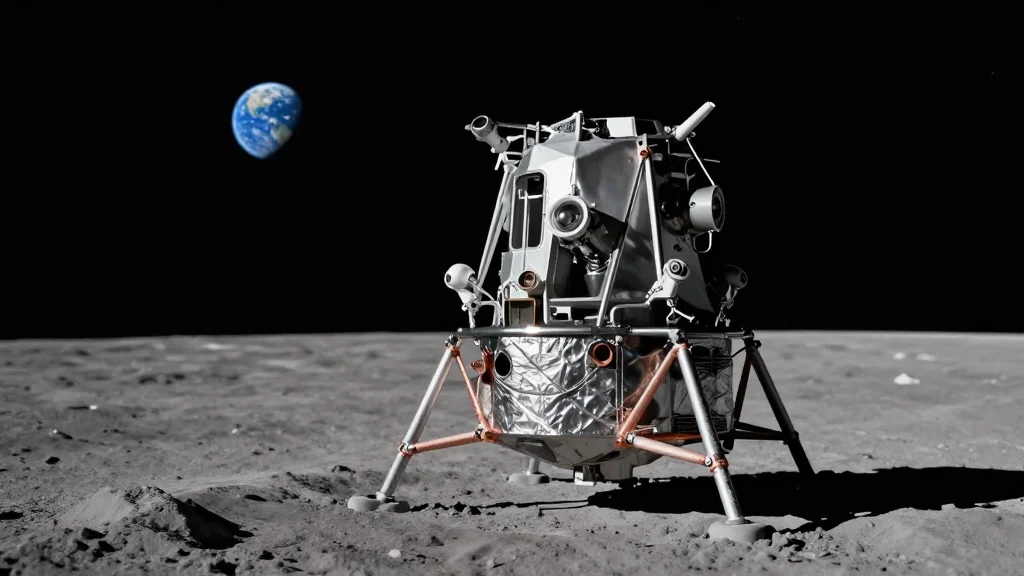
NASA Awards Nearly $1 Billion to Blue Origin, Astrolab, Lunar Outpost for First Moon Base Missions

Companies Mentioned

Why It Matters
The infusion of almost $1 billion into commercial lunar hardware marks a watershed for the Artemis program, shifting the burden of early‑stage development from NASA to private firms. By locking in multi‑year contracts, the agency is creating a nascent lunar supply chain that could underpin future in‑situ resource utilization, scientific research, and even tourism. The success—or failure—of these first Moon Base missions will set the technical and financial precedent for the next phases of lunar habitation, influencing how quickly the United States can transition from short‑duration visits to a permanent presence. Beyond the United States, the contracts send a clear message to international partners and competitors that NASA is willing to leverage market forces to achieve its deep‑space objectives. If the commercial partners deliver on schedule, it could accelerate global interest in lunar mining, habitat construction, and the development of a lunar economy that extends beyond government‑funded projects.
Key Takeaways
- •NASA awarded $188 million to Blue Origin for the Blue Moon Mk 1 Endurance lander, with a $280.4 million option for additional task orders.
- •Astrolab and Lunar Outpost each secured contracts worth $219 million and $220 million respectively to build Lunar Terrain Vehicles.
- •Phase 1 of the Moon Base program targets 25 launches, 21 landings and delivery of ~4 metric tons of cargo by the end of 2026.
- •Astrobotic’s Griffin lander will transport over 1,100 pounds of cargo, including the FLIP rover, for Moon Base II.
- •The contracts represent the largest single‑year commercial procurement in the Artemis program, signaling a shift toward private‑sector risk sharing.
Pulse Analysis
NASA’s decision to allocate nearly a billion dollars to a handful of commercial partners reflects a strategic pivot from pure government‑led development to a hybrid model that leverages private‑sector agility. Historically, NASA’s lunar initiatives—Apollo, the Lunar Reconnaissance Orbiter—were fully funded and executed in‑house. The Artemis era, however, is built on the Commercial Lunar Payload Services (CLPS) framework, which treats lunar delivery as a market commodity. By bundling lander, rover and cargo contracts into a single procurement wave, NASA is effectively creating a de‑facto lunar logistics platform that could lower the cost per kilogram for future missions.
The competitive dynamics are also noteworthy. Blue Origin, once the dominant lunar lander contender, now shares the stage with Astrobotic and newer entrants like Astrolab. This diversification reduces the risk of a single‑point failure but also introduces coordination challenges—different lander architectures, payload interfaces, and mission timelines must be harmonized. The $280.4 million option attached to Blue Origin’s award could become a lever for NASA to enforce performance standards, but it may also raise concerns about market concentration if the option is exercised.
Looking ahead, the success of the first three Moon Base missions will be a litmus test for the commercial lunar supply chain. If the LTVs demonstrate reliable mobility and the landers achieve precise plume‑mitigation, it will validate the CLPS model and likely unlock additional private investment in lunar mining, habitat construction, and even tourism. Conversely, any major setbacks could force NASA to re‑evaluate its reliance on commercial partners and potentially re‑inject government funding into critical technology gaps. The next six months—culminating in the launch windows for Moon Base I, II and III—will therefore be pivotal not just for Artemis, but for the broader vision of a sustainable lunar economy.
NASA Awards Nearly $1 Billion to Blue Origin, Astrolab, Lunar Outpost for First Moon Base Missions
Comments
Want to join the conversation?
Loading comments...