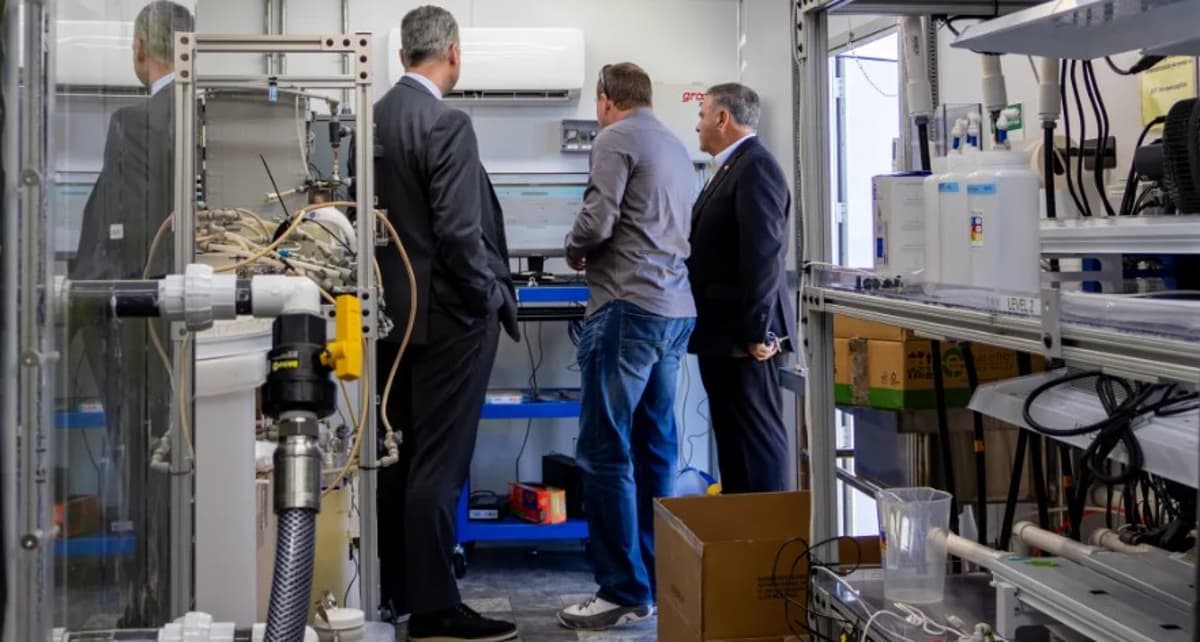
NASA Begins Testing Lunar Wastewater Processing Station
Companies Mentioned

Why It Matters
Demonstrating compact, energy‑efficient wastewater recycling reduces reliance on Earth resupply, a prerequisite for long‑duration lunar and Martian missions. It also validates technologies that could underpin commercial off‑world habitats.
Key Takeaways
- •NASA's mobile wastewater plant arrives at University of North Dakota
- •Facility will process crew waste into nutrients for plants
- •System separates waste streams to maximize resource recovery
- •Tests integrate the plant with an analog lunar habitat
- •Success supports Artemis goal of sustainable lunar presence
Pulse Analysis
Life‑support systems are the linchpin of any deep‑space endeavor, and water recycling sits at the heart of that challenge. While the International Space Station has proven that urine and humidity can be reclaimed, scaling those processes for a lunar base demands new engineering. NASA’s Divergent Deployable Wastewater Treatment Facility tackles this by shrinking the footprint and slashing power draw, allowing a habitat to operate with minimal external inputs. By testing the unit in a terrestrial analog, engineers can observe real‑time performance under habitat‑like loads, identifying bottlenecks before committing hardware to the Moon.
The facility’s core innovation lies in its waste‑stream segregation. Instead of treating all effluent as a single slurry, the system isolates organic, mineral, and microbial fractions, applying tailored biochemical and physical processes to each. This approach maximizes nutrient extraction—producing nitrogen‑rich fertilizers for hydroponics and carbon sources for biomanufacturing—while also generating clean water for drinking and hygiene. Energy efficiency is achieved through modular reactors that recycle heat and leverage low‑temperature membrane technologies, crucial for the limited power budgets of lunar habitats where solar availability fluctuates.
For Artemis, the stakes are high. A reliable, closed‑loop wastewater system means fewer cargo launches, lowering mission costs and enabling longer stays on the lunar surface. Moreover, the technology has commercial spillover potential, from remote Earth outposts to space tourism habitats. The University of North Dakota’s analog tests provide a low‑risk proving ground, delivering data that can accelerate certification and integration into future lunar landers and habitats. As NASA refines these capabilities, the vision of a self‑sustaining Moon colony moves from concept to operational reality.
NASA Begins Testing Lunar Wastewater Processing Station
Comments
Want to join the conversation?
Loading comments...