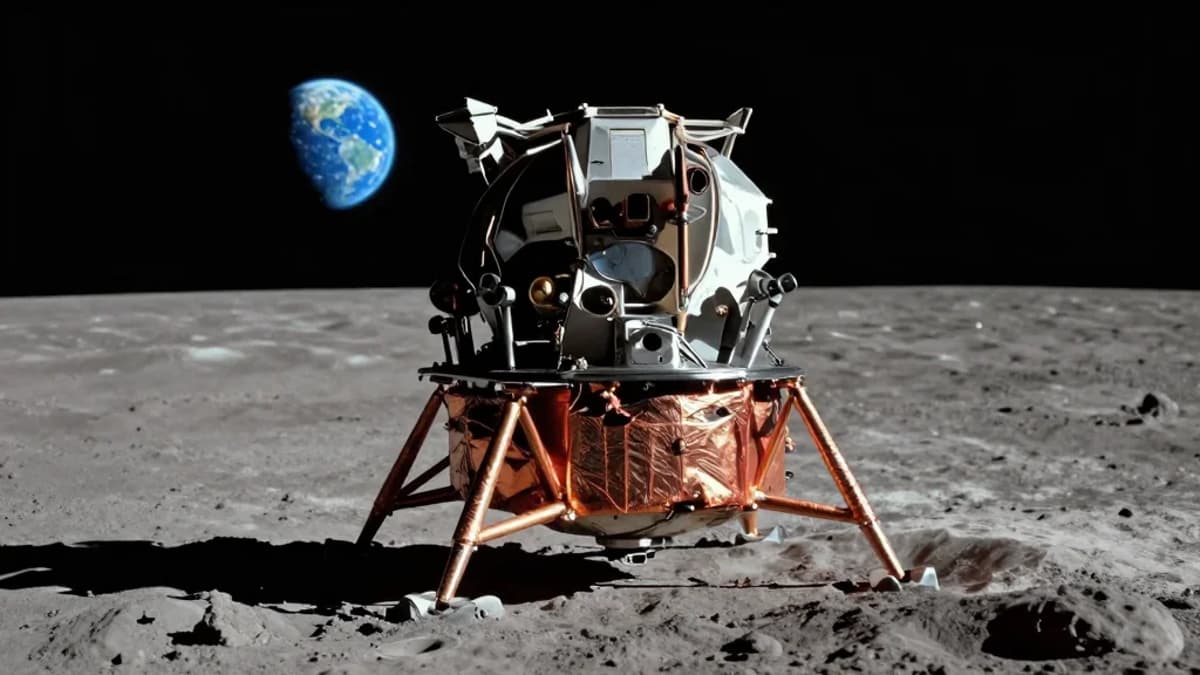
NASA Chief: Artemis Moon Landing Is Litmus Test for ‘American Exceptionalism’
Companies Mentioned


Why It Matters
Landing before China would reinforce U.S. leadership in space and validate NASA’s technical roadmap, while workforce reforms aim to secure critical expertise for future deep‑space missions.
Key Takeaways
- •Artemis III now targeted for 2028, not 2024
- •NASA re‑evaluating SpaceX lander due to refueling complexity
- •Competition with China accelerates lunar program timelines
- •75% of NASA workforce currently contracted, shift to civil servants
- •On‑orbit propellant transfer key for sustained lunar presence
Pulse Analysis
The Artemis program has become more than a scientific endeavor; it is a geopolitical signal. As China races toward a 2030 crewed lunar landing, the United States faces pressure to demonstrate that its space infrastructure remains cutting‑edge. Delaying Artemis III to 2028 compresses the timeline, forcing NASA to streamline development and leverage competition as a catalyst for innovation. This urgency underscores the broader narrative that space achievements are intertwined with national prestige and strategic advantage.
Technical hurdles dominate the conversation, especially the choice of lunar lander. NASA’s original contract with SpaceX relies on a Starship variant that must perform on‑orbit cryogenic methane refueling—a capability never demonstrated in space. Critics argue that this adds risk and complexity, prompting the agency to solicit alternative designs from SpaceX and Blue Origin that avoid refueling. The outcome of this procurement review will shape not only the Artemis III mission but also the architecture of future lunar bases, where reliable propellant transfer could become a cornerstone of sustained presence.
Beyond hardware, Isaacman’s recent workforce directive signals a cultural shift within the agency. With roughly three‑quarters of NASA’s labor outsourced, the push to convert critical flight‑test and operations roles to civil servants aims to rebuild in‑house expertise. This move is intended to safeguard mission continuity, reduce reliance on external contractors, and ensure that the agency retains the institutional knowledge needed for long‑term exploration goals. Together, these strategic, technical, and human‑resource adjustments illustrate how Artemis serves as a barometer for America’s broader space ambitions.
NASA chief: Artemis moon landing is litmus test for ‘American exceptionalism’


Comments
Want to join the conversation?
Loading comments...