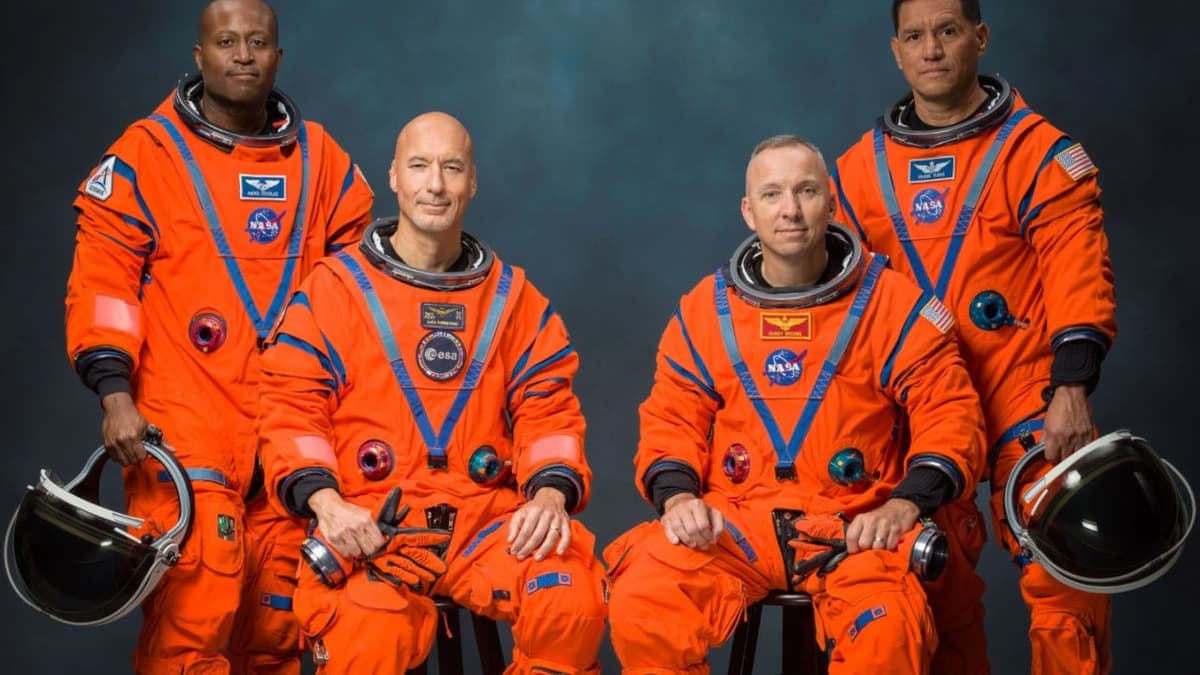
Nasa Chief Defends Choice of All-Male Artemis III Crew
Why It Matters
The decision underscores a clash between NASA’s operational goals and rising expectations for diversity, influencing public perception and future talent recruitment.
Key Takeaways
- •NASA's Artemis III crew announced as all-male, sparking diversity criticism
- •Administrator Isaacman says crew chosen for expertise, not political influence
- •Artemis III will test Orion and lunar docking, no moon landing planned
- •ESA astronaut Luca Parmitano becomes first European on Artemis mission
- •Artemis II previously featured first Black man and first woman orbiting Moon
Pulse Analysis
The Artemis program, NASA’s flagship effort to return humans to the Moon, has become a barometer for how the agency balances technical ambition with evolving societal expectations. Since President Trump’s 2020 directive to strip federal agencies of diversity, equity and inclusion language, NASA has quietly revised its public commitments, prompting watchdogs and advocacy groups to scrutinize every crew announcement. The latest Artemis III roster arrives amid a broader debate about whether space exploration should mirror the nation’s demographic mosaic or prioritize purely mission‑critical criteria.
Isaacman’s defense of the all‑male crew rests on a conventional astronaut‑selection framework: test‑pilot experience, specific program development work, and immediate availability. The three NASA astronauts—Commander Randy Bresnik, Mission Specialists Andre Douglas and Frank Rubio—bring deep operational expertise, while ESA’s Luca Parmitano adds international partnership value as the first European to fly on an Artemis mission. Artemis III’s objectives are technical rather than historic; the flight will validate Orion’s performance and execute rendezvous and docking with lunar landers, setting the stage for subsequent surface missions. By emphasizing expertise over representation, NASA signals that mission success remains its top priority, even as critics argue that a more diverse crew could inspire broader public engagement.
The controversy, however, may have lasting repercussions for NASA’s brand and its talent pipeline. Public confidence in the agency often hinges on its ability to embody American ideals of inclusion, especially as private players like SpaceX and Blue Origin vie for commercial contracts. A perceived retreat from diversity could dampen enthusiasm among underrepresented groups, narrowing the future astronaut pool and inviting legislative scrutiny. Conversely, NASA’s insistence on a merit‑based selection could reinforce its reputation for rigorous standards, reassuring stakeholders that safety and mission objectives are paramount. The agency’s next steps—whether to publicly reaffirm diversity goals or to integrate more varied crews in upcoming Artemis flights—will shape its standing in both the scientific community and the broader public arena.
Nasa chief defends choice of all-male Artemis III crew
Comments
Want to join the conversation?
Loading comments...