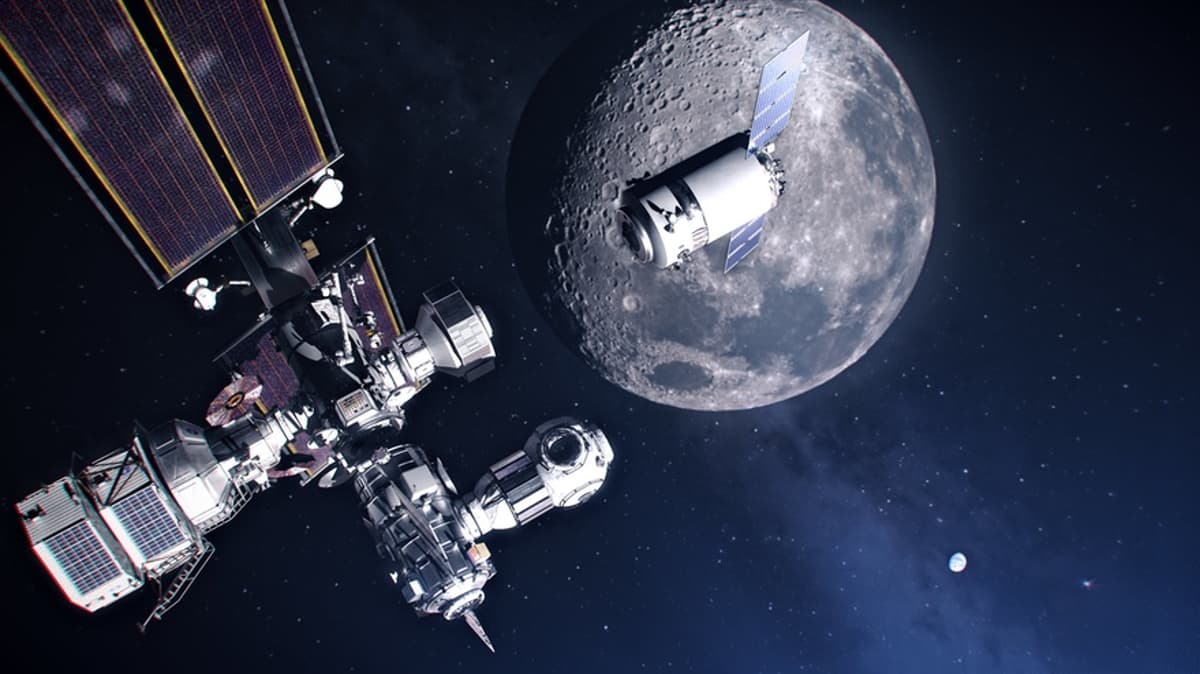
NASA Considering Alternatives for Gateway Logistics
•January 29, 2026
0
Companies Mentioned


Why It Matters
The choice of logistics provider will shape the commercial cislunar market and affect Artemis mission timelines, influencing U.S. leadership in deep‑space operations.
Key Takeaways
- •NASA re‑evaluates Gateway logistics after budget uncertainty
- •SpaceX’s Dragon XL may be replaced by Starship
- •Six firms received $1.4 M for cislunar transport studies
- •NASA expects decision post‑Artemis 2 launch
- •Congress funded Gateway despite proposed cancellation
Pulse Analysis
The lunar Gateway, envisioned as a modular outpost orbiting the Moon, relies on a reliable cargo pipeline to sustain scientific experiments, habitation modules, and resupply for Artemis missions. In 2020 NASA awarded SpaceX the Gateway Logistics Services contract, planning to adapt the Dragon XL spacecraft—an enlarged version of the crewed Dragon that already services the International Space Station. While the contract secured a commercial partner early, development lagged as the Gateway’s own schedule slipped, leaving the cargo service idle for years. This delay prompted NASA officials to question whether the original architecture still fits the agency’s evolving deep‑space strategy.
Recent internal reviews have opened the door to SpaceX’s Starship as an alternative to Dragon XL, leveraging the heavy‑lift vehicle’s larger payload capacity and reusability. A shift to Starship could compress timelines, reduce per‑kilogram costs, and align Gateway logistics with the broader Artemis launch architecture that already incorporates Starship for lunar lander concepts. However, the move also raises regulatory, safety, and integration challenges, especially given Starship’s still‑pending certification for crewed flights. NASA’s decision, slated for after Artemis 2, will signal how aggressively the agency will embrace next‑generation commercial launch systems for cislunar operations.
Parallel to the logistics debate, NASA completed $1.4 million feasibility studies with six companies—including Blue Origin, Rocket Lab, and United Launch Alliance—to explore orbital transfer vehicles capable of shuttling payloads between Earth orbit, the Gateway, and deeper lunar trajectories. These studies aim to incubate a competitive market for cislunar transportation, reducing reliance on a single provider and fostering innovation in propulsion, autonomous rendezvous, and in‑space refueling. By coupling a clear logistics contract with a diversified ecosystem of transfer services, NASA hopes to lower mission costs, accelerate Artemis timelines, and cement U.S. leadership in the emerging cislunar economy.
NASA considering alternatives for Gateway logistics
0
Comments
Want to join the conversation?
Loading comments...