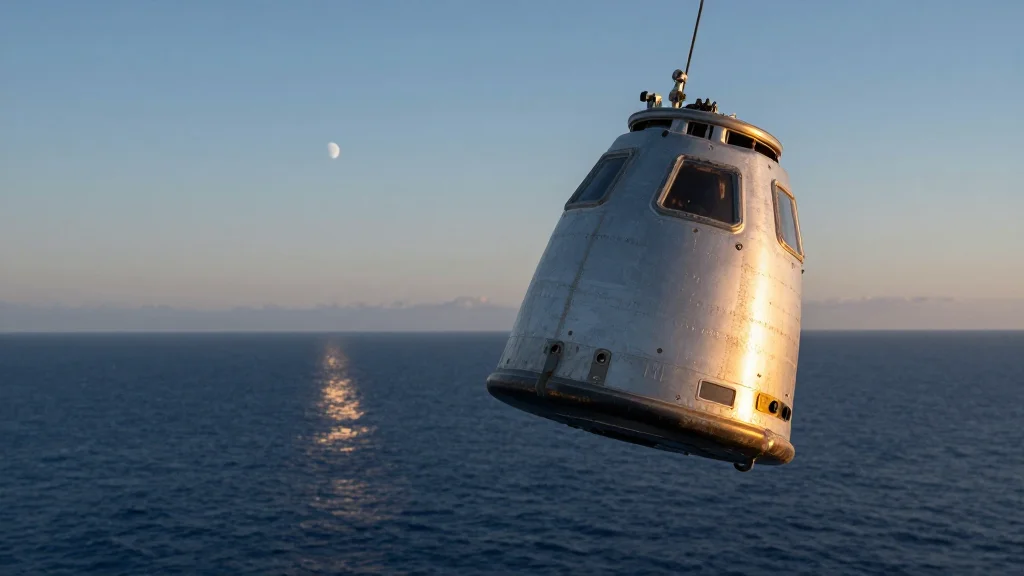
NASA Declares Artemis II a Success, Sets Aggressive Timeline for Moon Return

Companies Mentioned


Why It Matters
Artemis II’s success validates the Orion spacecraft and SLS rocket, the two pillars of NASA’s deep‑space strategy. By proving that a crewed vehicle can operate safely beyond low Earth orbit, the mission clears a critical hurdle for the Artemis III test flight and the eventual establishment of a lunar outpost. The accelerated timeline also pressures commercial partners to deliver landers and habitats on tighter schedules, potentially reshaping the economics of low‑cost lunar access. Geopolitically, the flight reasserts U.S. leadership in human spaceflight at a moment when China, Russia, and emerging private actors are expanding their lunar ambitions. The demonstrated capability may influence policy decisions, funding allocations, and international collaborations, making the Moon a focal point of national prestige and strategic resource competition.
Key Takeaways
- •Artemis II completed a 10‑day lunar flyby, reaching >406,000 km from Earth
- •Splashdown on April 10 was viewed by ~18 million live spectators
- •NASA announced Artemis III for 2027 and Artemis IV lunar landing for 2028
- •China aims to land astronauts on the Moon before 2030, intensifying competition
- •NASA plans a lunar fire‑safety test via CLPS later in 2026
Pulse Analysis
The Artemis II milestone marks a turning point not just for NASA but for the entire commercial space ecosystem. By confirming that Orion can survive a deep‑space mission, the agency reduces technical risk for private firms that will supply landers, habitats, and in‑situ resource utilization kits. This risk reduction could lower insurance premiums and attract new investors to lunar infrastructure projects, accelerating the transition from government‑led exploration to a mixed‑public‑private economy.
Historically, each major human‑spaceflight program has spurred a cascade of technological spin‑offs and industrial growth. The Apollo era birthed satellite communications, while the Space Shuttle era seeded the International Space Station and commercial crew services. Artemis is poised to do the same, especially with the SR‑1 Freedom nuclear propulsion concept, which could redefine interplanetary travel economics. If NASA can demonstrate safe nuclear propulsion by 2028, the cost per kilogram to Mars could drop dramatically, opening the market to scientific, commercial, and even tourism ventures.
However, the accelerated schedule introduces operational tension. The SLS production line, already criticized for cost overruns, must now deliver a new core stage within a year. Simultaneously, commercial lander providers must meet stringent safety standards while competing for limited launch slots. Any delay could cascade into missed windows for lunar surface operations, giving rivals like China a chance to claim strategic footholds. The upcoming lunar fire‑safety experiment underscores that safety margins cannot be compromised; a single mishap could erode public and political support, jeopardizing funding for the broader Artemis architecture.
In sum, Artemis II’s success is a catalyst that could reshape the economics, geopolitics, and technology pathways of space exploration. The next few years will test whether NASA and its partners can translate this momentum into a sustainable, multi‑actor lunar economy before rival powers catch up.
NASA Declares Artemis II a Success, Sets Aggressive Timeline for Moon Return
Comments
Want to join the conversation?
Loading comments...