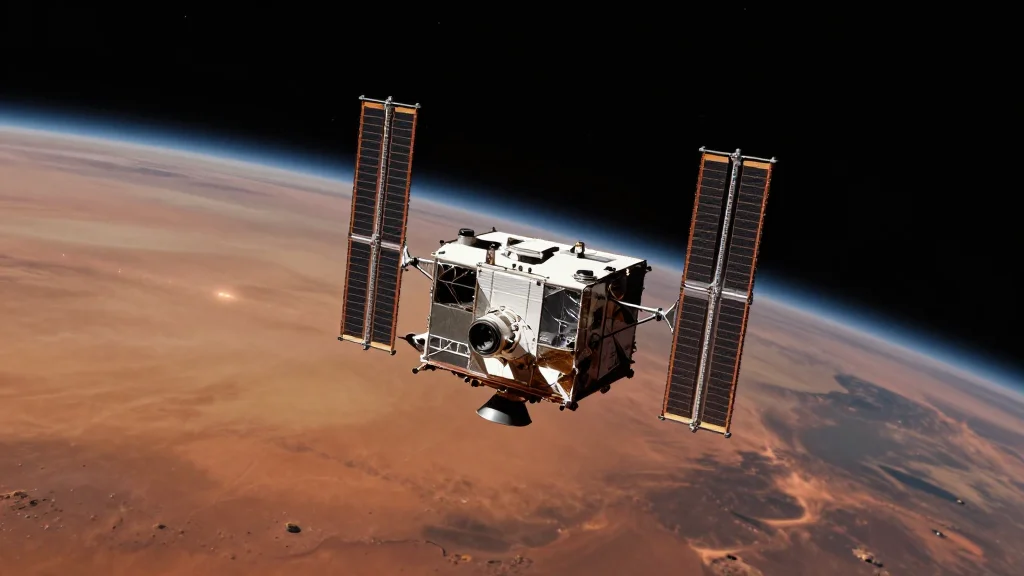
NASA Declares MAVEN Mars Orbiter Mission Officially Ended After 11 Years

Why It Matters
MAVEN’s decade‑long record of the Martian upper atmosphere provides the only continuous dataset on how solar activity erodes a planet’s climate. That knowledge is critical for assessing the habitability of Mars and for designing safe pathways for human explorers. The mission’s termination also highlights the fragility of deep‑space assets, prompting engineers to revisit fault‑tolerance and spin‑control mechanisms for future orbiters. Beyond Mars, MAVEN’s legacy influences broader planetary science. The techniques developed to monitor atmospheric escape are now being applied to studies of Venus, Titan, and exoplanets, expanding our ability to gauge planetary evolution across the solar system and beyond.
Key Takeaways
- •MAVEN launched on Nov. 18, 2013 and operated for 11 years, far exceeding its one‑year design life.
- •The spacecraft lost contact on Dec. 6 after entering an unexpected high‑rate spin that drained its batteries.
- •MAVEN provided the first continuous measurements of how solar wind strips Mars’ atmosphere.
- •NASA officials are still investigating the root cause of the spin‑up anomaly.
- •Archived MAVEN data will support upcoming crewed Mars missions and inform radiation‑protection strategies.
Pulse Analysis
MAVEN’s premature demise is a reminder that even well‑engineered spacecraft can succumb to unforeseen dynamics in deep space. The high‑rate rotation that doomed the orbiter points to a gap in our understanding of attitude‑control system resilience when a probe passes behind a planet and loses line‑of‑sight to ground stations. Future missions will likely incorporate redundant spin‑damping hardware and more robust fault‑detection algorithms to mitigate similar risks.
From a strategic perspective, the mission’s extended lifespan delivered a data return that far outstripped its original budget, reinforcing the value of designing for longevity. NASA’s decision to archive the full dataset rather than decommission it quietly reflects a shift toward open‑science policies that accelerate downstream research. As private actors like SpaceX and Blue Origin gear up for crewed Mars flights, MAVEN’s atmospheric loss rates will become a cornerstone of risk assessments for crew health and vehicle design.
Finally, MAVEN’s closure dovetails with a broader acceleration in planetary exploration funding. The agency’s simultaneous push on lunar Artemis missions, the Europa Clipper, and the Roman Space Telescope suggests a diversified portfolio aimed at reducing reliance on any single mission’s success. By learning from MAVEN’s end‑of‑life scenario, NASA can better balance ambition with reliability, ensuring that the next generation of interplanetary probes remains both groundbreaking and durable.
NASA Declares MAVEN Mars Orbiter Mission Officially Ended After 11 Years
Comments
Want to join the conversation?
Loading comments...