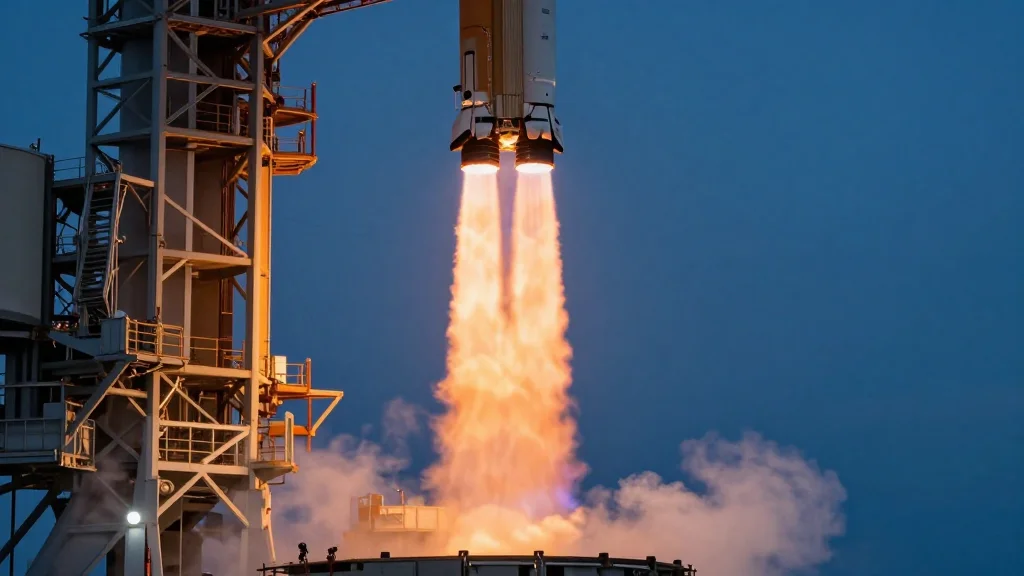
NASA Demonstrates New Prescribed Burn Capability for Spaceport
Why It Matters
By integrating land‑management fires with launch schedules, NASA mitigates wildfire risk to critical infrastructure while preserving endangered habitats, ensuring the spaceport can sustain a higher launch cadence.
Key Takeaways
- •NASA burned 2,600 acres during an active launch countdown
- •Burn aimed to reduce wildfire fuel near launch pads
- •Collaboration with U.S. Fish and Wildlife Service protected scrub‑jay habitat
- •Smoke prompted temporary road closures and remote work for staff
- •Prescribed burns scheduled every 2‑3 years to sustain refuge health
Pulse Analysis
As NASA’s Kennedy Space Center pushes past the 100‑launch milestone, the agency faces a paradox: more rockets mean more exposure to natural fire hazards. In January 2026, NASA’s Spaceport Integration Directorate coordinated with the U.S. Fish and Wildlife Service to ignite two prescribed burns—totaling about 2,600 acres—while a launch countdown was underway. This unprecedented timing demonstrates a proactive shift from reactive fire suppression to strategic fuel reduction, aligning land‑management cycles with the spaceport’s accelerating launch cadence. By clearing excess scrub in the Happy Creek area and near critical facilities such as the Neil A. Armstrong Operations and Checkout Building, NASA reduces the likelihood that a stray lightning strike or rogue ember could ignite an uncontrolled wildfire that would jeopardize both payloads and costly infrastructure.
Beyond safety, the burns serve a vital ecological purpose. The Merritt Island National Wildlife Refuge, home to the federally protected Florida scrub‑jay, depends on periodic fire to maintain its open‑habitat ecosystem. Partnering with the Fish and Wildlife Service ensures that burn intensity and timing support the species’ breeding cycles while preventing fuel buildup that could threaten the refuge. The coordinated effort illustrates how federal agencies can balance high‑tech aerospace operations with conservation goals, setting a precedent for other spaceports that sit within sensitive environments.
Operationally, NASA implemented a suite of precautions: real‑time wind monitoring, smoke alerts, temporary road closures, and remote work assignments for staff in affected zones. These measures minimized disruption to launch preparations and protected personnel health. Looking ahead, the agency plans to schedule prescribed burns every two to three years, integrating them into the launch calendar as a standard risk‑mitigation tool. This model could be replicated at other high‑traffic launch sites worldwide, where the convergence of aerospace activity and wildfire‑prone landscapes demands innovative, collaborative solutions.
NASA Demonstrates New Prescribed Burn Capability for Spaceport
Comments
Want to join the conversation?
Loading comments...