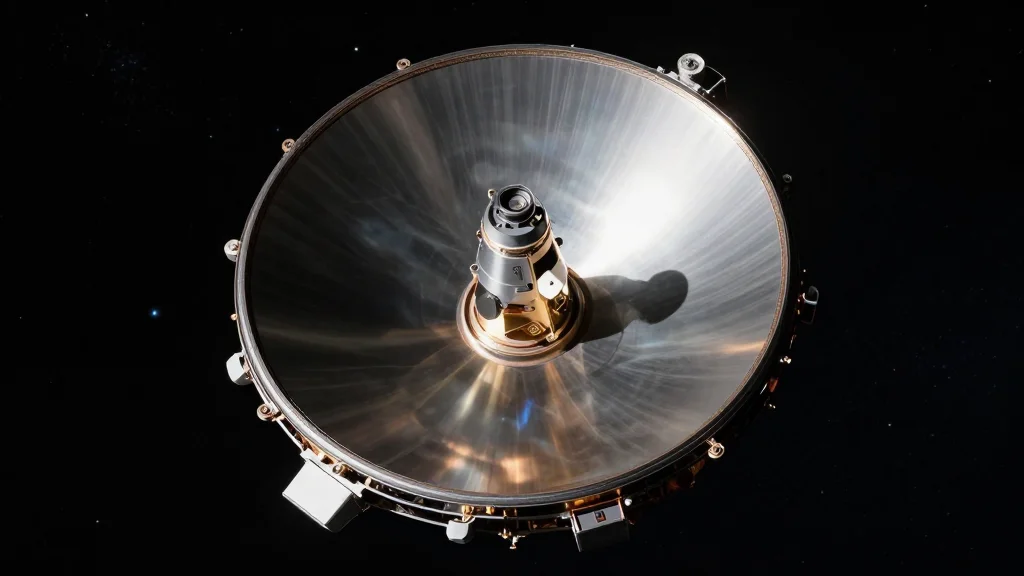
NASA Finishes Roman Space Telescope Construction Early, Sets September Launch

Companies Mentioned
Why It Matters
The Roman telescope’s early completion accelerates the timeline for answering fundamental questions about the universe’s expansion and the prevalence of Earth‑like planets. By delivering a powerful, wide‑field observatory ahead of schedule, NASA can capitalize on the momentum generated by the James Webb mission and maintain U.S. leadership in space science. The partnership with SpaceX also showcases a maturing commercial launch ecosystem that could lower costs and increase launch cadence for future flagship missions. Beyond scientific returns, the project’s budget performance sets a precedent for managing large, complex space hardware within fiscal constraints. If NASA can replicate this efficiency across other programs, it may unlock additional funding for ambitious concepts that have been stalled by cost concerns.
Key Takeaways
- •NASA completed construction of the Nancy Grace Roman Space Telescope months ahead of the original May 2027 schedule.
- •The telescope will launch on a SpaceX Falcon Heavy in September, earlier than planned.
- •Roman’s 7.9‑foot primary mirror is as large as Hubble’s but weighs only 25% of it.
- •The Wide Field Instrument features a 300‑megapixel camera for unprecedented sky surveys.
- •The mission stays under budget, marking a rare cost‑saving success for a NASA flagship program.
Pulse Analysis
NASA’s ability to finish the Roman telescope ahead of schedule reflects a shift toward tighter project controls and deeper integration with commercial partners. Historically, flagship missions have suffered from schedule slips and budget overruns; Roman’s performance suggests that lessons learned from the James Webb program—particularly in risk management and contractor oversight—are bearing fruit. The decision to use a Falcon Heavy for launch also underscores SpaceX’s emergence as the de facto heavy‑lift provider for U.S. science missions, a role previously dominated by United Launch Alliance.
Scientifically, Roman’s wide‑field capability fills a critical gap in the astrophysics toolbox. While Webb provides high‑resolution, narrow‑field observations, Roman will generate massive datasets that can identify targets for deeper study. This complementary approach could accelerate discoveries in dark energy research, where statistical power from millions of galaxies is essential, and in exoplanet science, where direct imaging of planets remains a frontier.
Looking forward, the early launch may compress the timeline for data analysis and community engagement. Researchers will have access to fresh survey data sooner, potentially influencing the design of subsequent missions. If Roman delivers on its promise, it could justify increased investment in next‑generation observatories, reinforcing the United States’ position at the forefront of space science.
NASA Finishes Roman Space Telescope Construction Early, Sets September Launch
Comments
Want to join the conversation?
Loading comments...