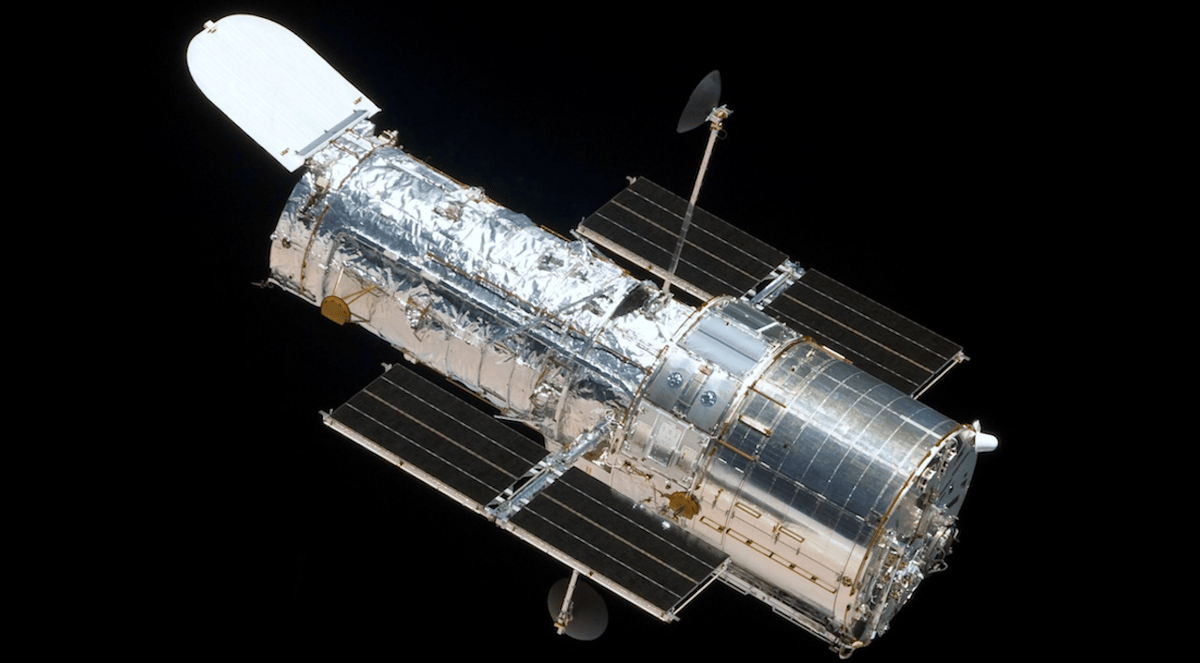
NASA Interested in Hubble Reboost if Costs Can Be Reduced
Companies Mentioned

Why It Matters
Extending Hubble’s service life preserves a premier scientific platform while avoiding the expense of a full replacement, and it signals NASA’s willingness to leverage commercial servicing for legacy assets.
Key Takeaways
- •NASA awarded Katalyst a $30 million contract to build the Link servicer.
- •Link will attempt to reboost the Swift Observatory’s low‑Earth orbit.
- •Hubble’s orbit could decay by 2033 without intervention.
- •NASA spent $98.8 million on Hubble operations in FY 2025.
- •A cost‑reduction plan is required before a Hubble reboost can proceed.
Pulse Analysis
On‑orbit servicing has moved from concept to reality with the upcoming launch of Link, a modestly sized spacecraft designed to dock with NASA’s aging Swift observatory. While Swift was never built for such missions, the $30 million effort reflects a growing confidence in commercial partners like Katalyst and Northrop Grumman to execute high‑risk maneuvers quickly. Success would demonstrate that even legacy satellites can receive life‑extending boosts without the expense of a full replacement, reshaping how agencies approach satellite longevity.
Hubble’s orbit, gradually lowering due to atmospheric drag, is projected to intersect Earth’s atmosphere by 2033 if left unattended. Maintaining the telescope is costly—nearly $99 million annually—making any extension a delicate balance between scientific return and budget constraints. Reducing operational overhead could unlock a reboost, allowing Hubble to continue delivering ultraviolet and optical data that remain unmatched by newer platforms. The prospect of keeping Hubble operational also preserves a unique data set crucial for long‑term astrophysical studies.
If NASA can trim Hubble’s expenses, the agency may set a precedent for future legacy missions, using commercial servicers to bridge gaps between flagship programs. A successful Hubble reboost would buy time for the Habitable Worlds Observatory, slated for the 2040s, ensuring continuous high‑resolution space imaging. Moreover, demonstrating cost‑effective servicing could attract private investment, fostering a market where satellite life‑extension becomes a standard service, ultimately enhancing the return on public space science funding.
NASA interested in Hubble reboost if costs can be reduced
Comments
Want to join the conversation?
Loading comments...