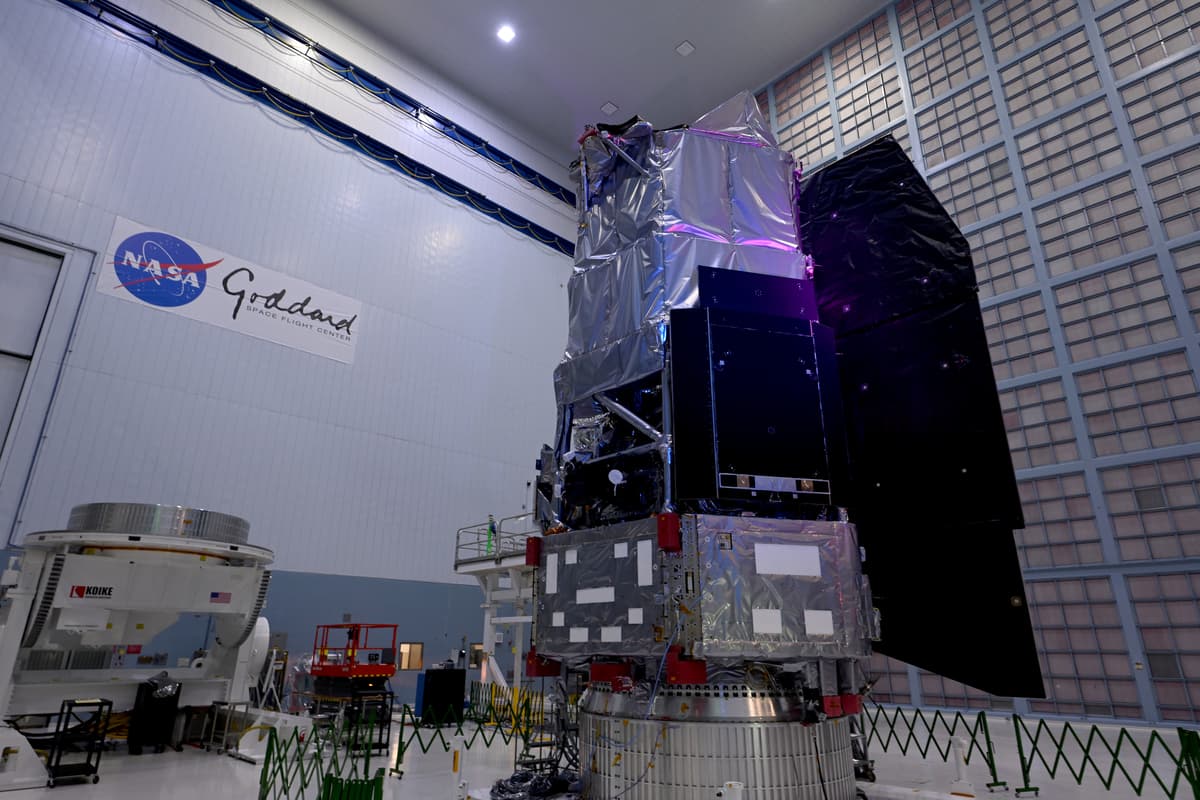
NASA Invites Media to See Roman Space Telescope Arrive at Kennedy
Companies Mentioned


Why It Matters
The event spotlights a next‑generation space telescope that could reshape cosmology and exoplanet science, while media access amplifies public engagement ahead of a high‑profile Falcon Heavy launch.
Key Takeaways
- •Media can attend Roman telescope arrival at Kennedy before September launch
- •Telescope transports via Pegasus barge from Goddard to Kennedy
- •Launch slated for early September on SpaceX Falcon Heavy from LC-39A
- •Roman will map billions of objects, probing dark energy and exoplanets
- •International partners include ESA, JAXA, CNES, and Max Planck Institute
Pulse Analysis
The Nancy Grace Roman Space Telescope represents NASA’s most ambitious wide‑field observatory to date, marrying a 2.5‑meter mirror with cutting‑edge coronagraph technology. By surveying a swath of sky ten times larger than the Hubble Space Telescope, Roman will generate a catalog of billions of galaxies, enabling researchers to refine measurements of dark energy’s influence on cosmic expansion. Its coronagraph instrument, the most advanced ever flown, aims to directly image planets around nearby stars, a critical step toward detecting biosignatures and informing future flagship missions.
Beyond its scientific payload, Roman’s journey to launch underscores the collaborative nature of modern space endeavors. Constructed at Goddard, the telescope’s integration involved aerospace giants BAE Systems, L3Harris, and Teledyne, while international agencies such as ESA, JAXA, and CNES contributed hardware and expertise. The upcoming transport aboard the Pegasus barge and subsequent processing at Kennedy’s Payload Hazardous Servicing Facility illustrate the logistical choreography required for a mission of this scale. By inviting U.S. media to observe these steps, NASA leverages transparency to build public enthusiasm and maintain stakeholder confidence.
The timing of the media event dovetails with a broader push to showcase NASA’s partnership with commercial launch providers. The Roman telescope’s scheduled lift‑off on a SpaceX Falcon Heavy from historic Launch Complex 39A not only highlights the reusability and payload capacity of private rockets but also signals a new era where government‑led science missions rely on commercial launch services. As the telescope prepares to probe the universe’s deepest mysteries, the coverage generated by this credentialed access will help translate complex astrophysical goals into compelling narratives for a global audience.
NASA Invites Media to See Roman Space Telescope Arrive at Kennedy
Comments
Want to join the conversation?
Loading comments...