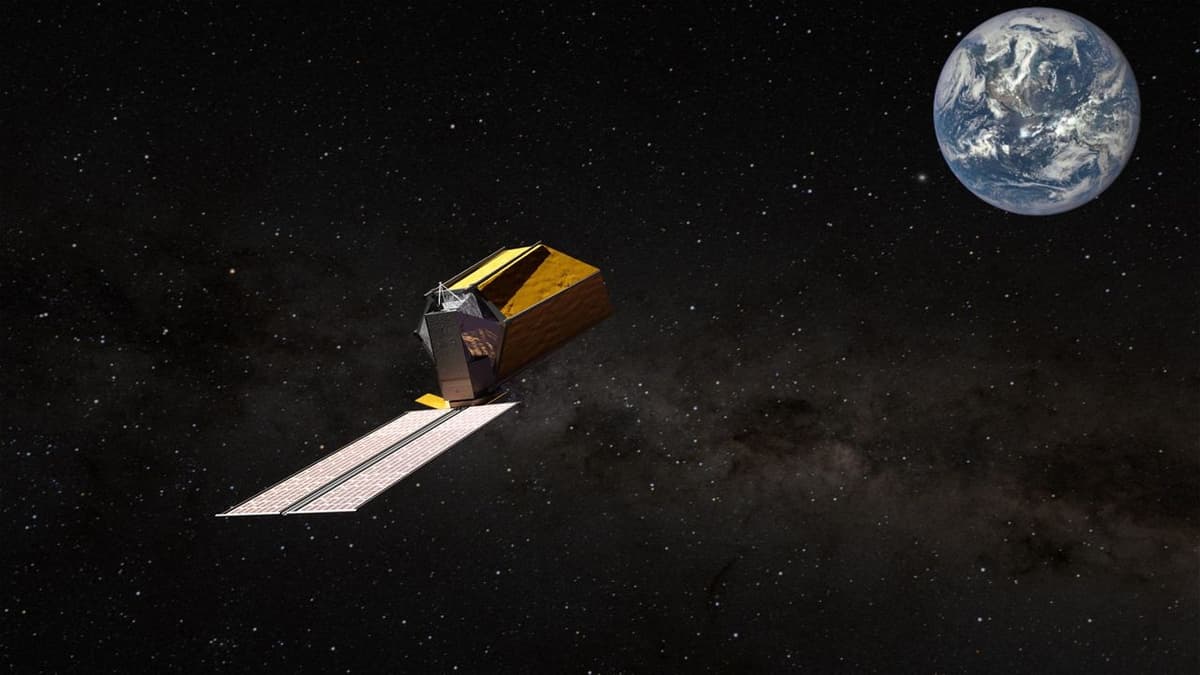
NASA Is Building a New Space Telescope to Search for Life on Nearby Planets. What Would It See on Ancient Earth?
Why It Matters
Meeting these resolution thresholds will make HWO a practical tool for identifying life‑bearing worlds, while keeping the mission’s schedule and budget realistic.
Key Takeaways
- •Visible‑light resolution of ~140 needed for oxygen detection
- •Ultraviolet resolving power of 7 suffices to spot ozone
- •Near‑infrared resolution of 70 captures Earth’s full geological spectrum
- •Higher resolution dramatically increases exposure time and detector noise
Pulse Analysis
The Habitable Worlds Observatory (HWO) represents NASA’s most ambitious attempt to move beyond indirect planet detection and directly image Earth‑like worlds orbiting nearby stars. By separating the faint reflected light of a planet from its bright host star, the telescope can obtain a spectrum that reveals atmospheric composition. In the search for life, scientists focus on gases such as oxygen, ozone, methane and water vapor, which together form a compelling biosignature suite. HWO’s ability to capture these signals will set a new benchmark for astrobiology and could redefine the criteria for habitability in the coming decade.
Spectral resolution—how finely a spectrograph can split incoming light—lies at the heart of that capability. A recent arXiv study modeled HWO observations of Earth at various geological epochs and ran retrieval algorithms to test detection limits. The authors concluded that a visible‑light resolving power of roughly 140 is sufficient to isolate molecular oxygen, while ultraviolet resolution as low as 7 can reveal ozone. In the near‑infrared, a power of 70 is needed to disentangle overlapping carbon‑dioxide and carbon‑monoxide bands, preventing false positives from volcanic worlds. Pushing beyond these thresholds would double exposure times and demand a ten‑fold reduction in detector dark current, straining mission budgets.
The paper’s quantitative targets give engineers a clear performance envelope, accelerating hardware development and risk assessment. More importantly, they temper expectations: even a robust detection of oxygen, ozone, methane and water does not guarantee biology, as abiotic processes can mimic these gases. By establishing realistic resolution goals, HWO will prioritize the most promising candidates for follow‑up with future observatories such as the Large UV/Optical/IR Surveyor. For investors and industry partners, the specifications translate into concrete technology roadmaps for high‑efficiency detectors, low‑noise optics, and advanced data‑processing pipelines, all of which will ripple through the broader space‑instrument market.
NASA is building a new space telescope to search for life on nearby planets. What would it see on ancient Earth?
Comments
Want to join the conversation?
Loading comments...