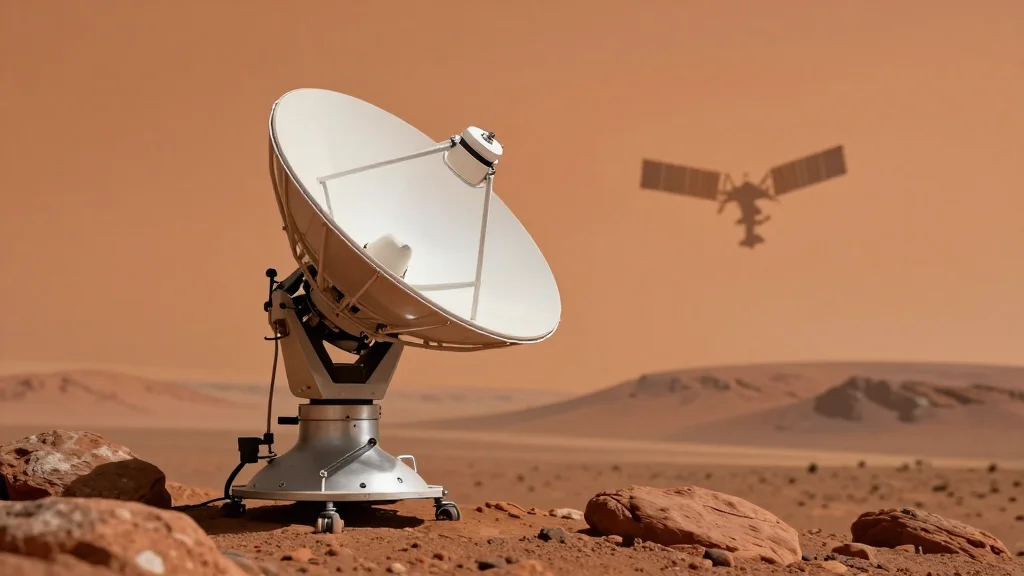
NASA Issues Final RFP for $700 M Mars Communications Orbiter, Limiting Bidders


Why It Matters
The MTN contract will be the backbone of all future Mars missions, enabling high‑bandwidth data transfer, navigation support, and real‑time command for both NASA and commercial explorers. By tying eligibility to prior sample‑return studies, NASA is effectively rewarding firms that have already invested in deep‑space technology, potentially accelerating the commercialization of Mars infrastructure. However, the narrowed competition raises concerns about market concentration and could limit innovation if only a few large players dominate the service. Furthermore, the integration of a dedicated science payload signals a shift toward multi‑mission platforms, where communications assets also serve as research laboratories. This dual‑use approach could lower overall mission costs and attract a broader array of scientific customers, from university teams to private research firms, expanding the economic ecosystem around Mars exploration.
Key Takeaways
- •NASA released final MTN RFP on May 14, with proposals due June 15 and award by Oct. 1.
- •Funding of $700 million was secured in the 2024 budget reconciliation act.
- •Eligibility limited to eight firms that received 2024‑25 Mars sample‑return study funding.
- •Blue Origin proposes a 500 kg Blue Ring‑based orbiter carrying a 20 kg science payload.
- •Contract aims for launch and operational readiness by the end of 2028.
Pulse Analysis
NASA’s decision to bind MTN eligibility to prior sample‑return work is a calculated gamble. On one hand, it ensures that bidders have already de‑risked critical deep‑space subsystems, shortening development cycles and protecting the $700 million investment. On the other, it narrows the field to incumbents with established government contracts, potentially sidelining emerging players that could bring disruptive technologies or lower‑cost solutions. Historically, NASA’s open‑competition model for lunar landers spurred a surge of new entrants; the MTN approach may produce the opposite effect, consolidating market power among a handful of giants.
The inclusion of a 20‑kg science payload is a subtle but strategic move. By reserving space for instruments, NASA is signaling that future Mars orbiters will be more than data relays—they will be platforms for scientific discovery, attracting academic and commercial research funding. This could create a virtuous cycle: more payloads mean more data, which fuels interest in Mars missions, which in turn justifies further investment in orbital infrastructure.
Looking ahead, the contract’s timeline—award by Oct. 1, launch by 2028—compresses a typical deep‑space development schedule. Companies will need to leverage existing hardware, like Blue Origin’s Blue Ring, to meet the deadline. If successful, the MTN could become a template for future planetary communication networks, extending the commercial model to Europa, the Moon, or even asteroid belts. Conversely, any delays or cost overruns could erode confidence in NASA’s partnership strategy, prompting a policy rethink. The next few months will be a litmus test for how well the agency can balance regulatory intent, market dynamics, and the urgent need for robust Mars communications.
NASA Issues Final RFP for $700 M Mars Communications Orbiter, Limiting Bidders
Comments
Want to join the conversation?
Loading comments...