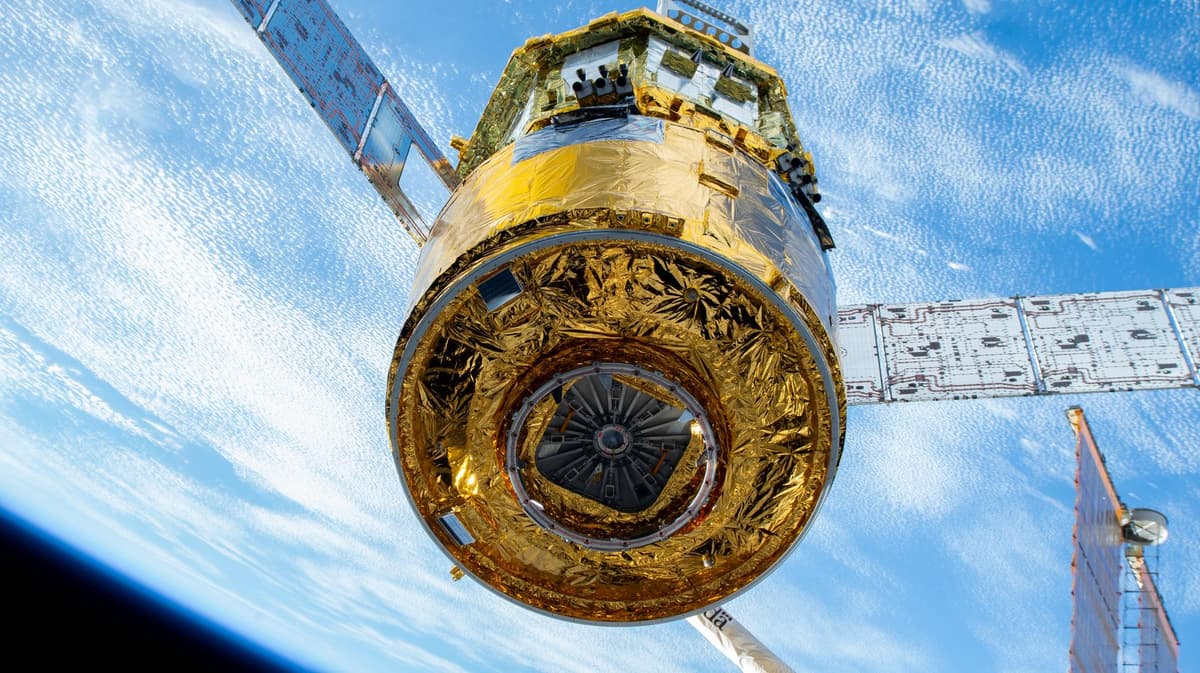
NASA, JAXA to Cover HTV-X1 Spacecraft Departure From Space Station
•March 2, 2026
0
Why It Matters
The HTV‑X1 flight validates a new generation of Japanese cargo vehicles and demonstrates how ISS resources can be leveraged for low‑Earth‑orbit research and debris disposal, supporting the broader LEO economy and NASA’s deep‑space agenda.
Key Takeaways
- •HTA‑X1 delivered ~12,000 lb of supplies to ISS.
- •Departure scheduled March 6, 2026, via Canadarm2 release.
- •Spacecraft will serve as orbital lab for three months.
- •Post‑mission deorbit will dispose of several thousand pounds of trash.
- •Event highlights NASA‑JAXA collaboration amid Artemis focus.
Pulse Analysis
The HTV‑X1 mission marks a milestone for JAXA’s next‑generation cargo system, building on the legacy of the original H‑II Transfer Vehicle. Launched on an H3 rocket, the spacecraft docked with the Harmony module and transferred nearly 12,800 pounds of scientific payloads, hardware and consumables to support Expedition 73. By using the station’s Canadarm2 for undocking, the operation showcases the flexibility of robotic servicing and the seamless integration of international partners in maintaining a continuously crewed orbiting laboratory.
Beyond the cargo delivery, HTV‑X1’s extended free‑flight phase transforms the vehicle into a temporary orbital laboratory. Researchers can conduct microgravity experiments that require isolation from the station’s environment, expanding the scientific return of each launch. The mission also illustrates a practical approach to orbital debris mitigation: after its research stint, the spacecraft will execute a controlled re‑entry, burning up thousands of pounds of waste. This dual‑use model aligns with growing commercial interest in low‑Earth‑orbit (LEO) services, where satellite operators seek reliable disposal solutions and governments prioritize sustainable space operations.
Strategically, the HTV‑X1 departure reinforces the collaborative framework that underpins the ISS while freeing NASA to concentrate on Artemis and future Mars endeavors. Demonstrating reliable cargo transport and disposal capabilities strengthens confidence in a burgeoning LEO economy, encouraging private investment in cargo, research, and debris‑removal ventures. As NASA reallocates crew‑transport resources to lunar missions, partnerships like the NASA‑JAXA HTV‑X1 program become essential for sustaining scientific activity and commercial growth in Earth’s orbit.
NASA, JAXA to Cover HTV-X1 Spacecraft Departure from Space Station
0
Comments
Want to join the conversation?
Loading comments...